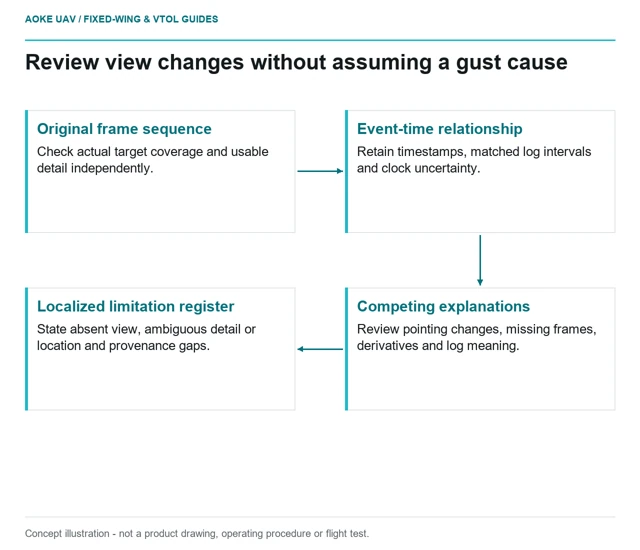
Gusts and Inspection Image Consistency
Review time-linked original frames to distinguish missing coverage, weak visibility and possible attitude-related acquisition problems without inventing a cause.
GAUTEN UAV / TOPIC ARCHIVE
Review time-linked original frames to distinguish missing coverage, weak visibility and possible attitude-related acquisition problems without inventing a cause.
Required views and measurement methods can rule out a conventional fixed-wing overview even when the assignment covers a large area.
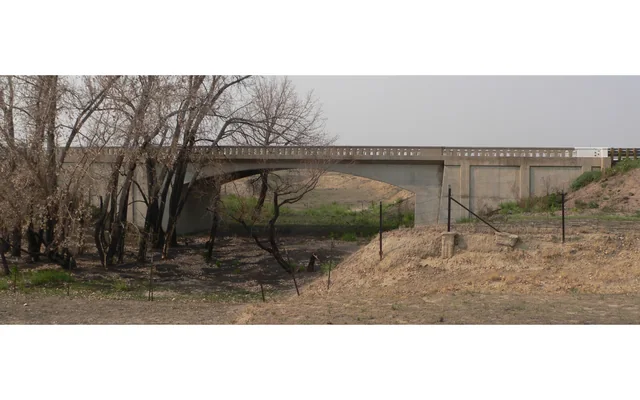
Image: Ammodramus / CC0. Resized for this page.
Use ridges, valleys and roughness changes to organise questions about local airflow and evidence continuity, not to derive a clearance or safe-flight assessment.
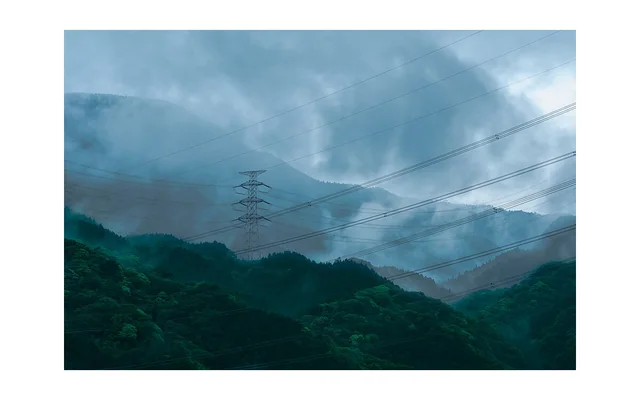
Image: Charles Devaux (mclytir) / CC0. Resized for this page.
A wind reading at the departure site cannot describe every route height and terrain setting. Organise weather evidence around the actual fixed-wing monitoring question.
Image: Charles Devaux (mclytir) / CC0. Resized for this page.
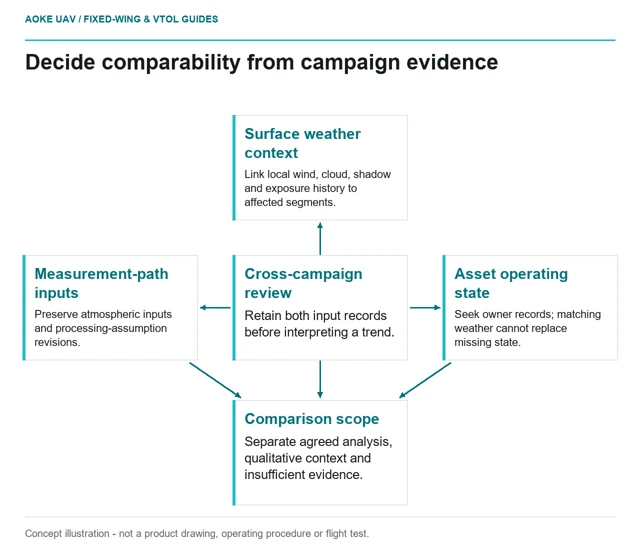
Repeat thermal campaigns need comparable evidence, not merely matching flight paths. Record weather, timing and operating-state differences before interpreting change.
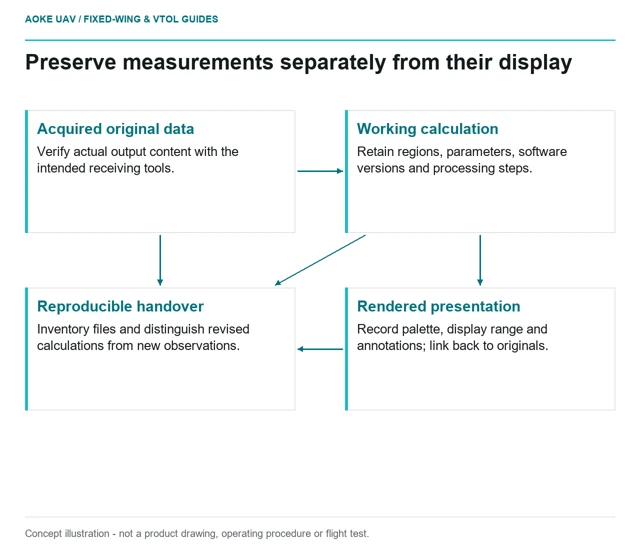
A rendered thermal image helps communication, but a defensible handover must identify the original measurement output, settings and processing history.
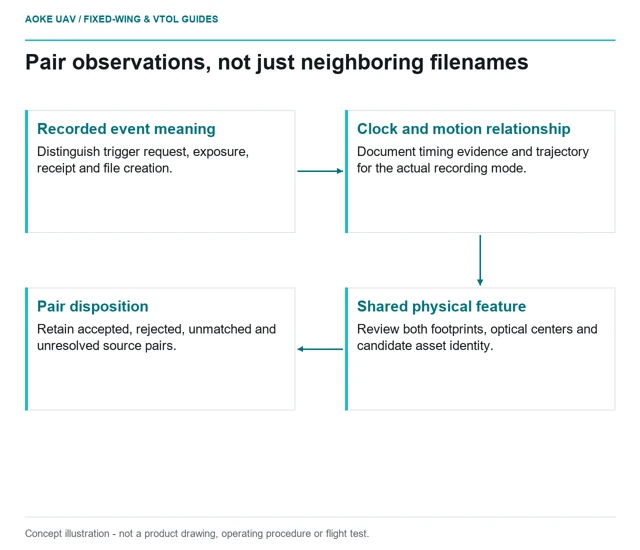
Pair thermal and RGB evidence through verified event timing and geometry, not filename order or the assumption that two cameras saw the same place.
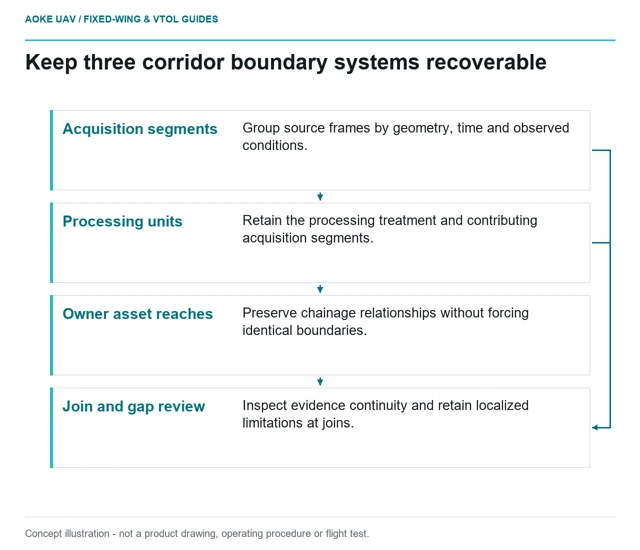
Long monitoring routes can be divided into review units that preserve changing acquisition conditions, boundary evidence and targeted reacquisition needs.
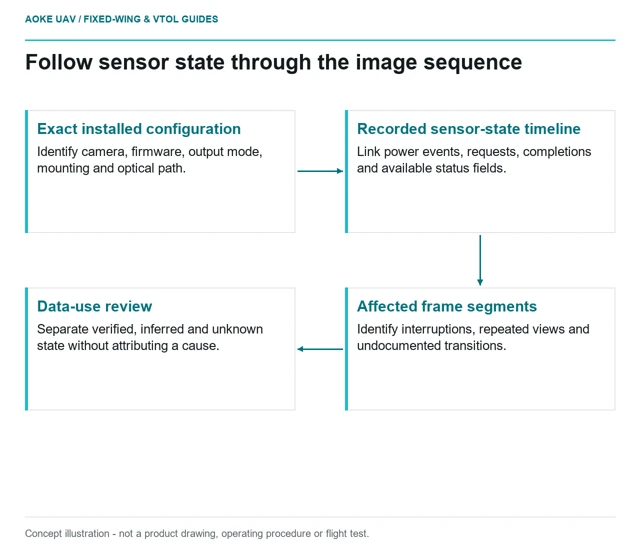
Long thermal acquisitions need records of camera state, correction events and installation conditions, not an invented universal warmup countdown.
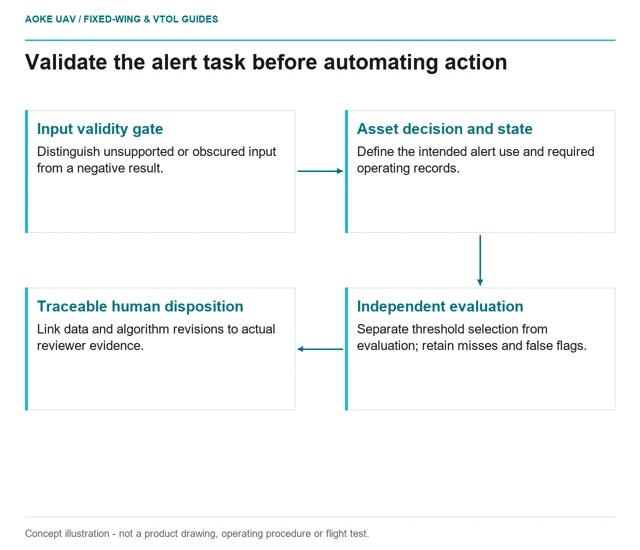
A thermal alert is a review candidate until its measurement assumptions, operating context and asset-specific validation evidence support a stronger conclusion.