Let the required evidence reject a platform
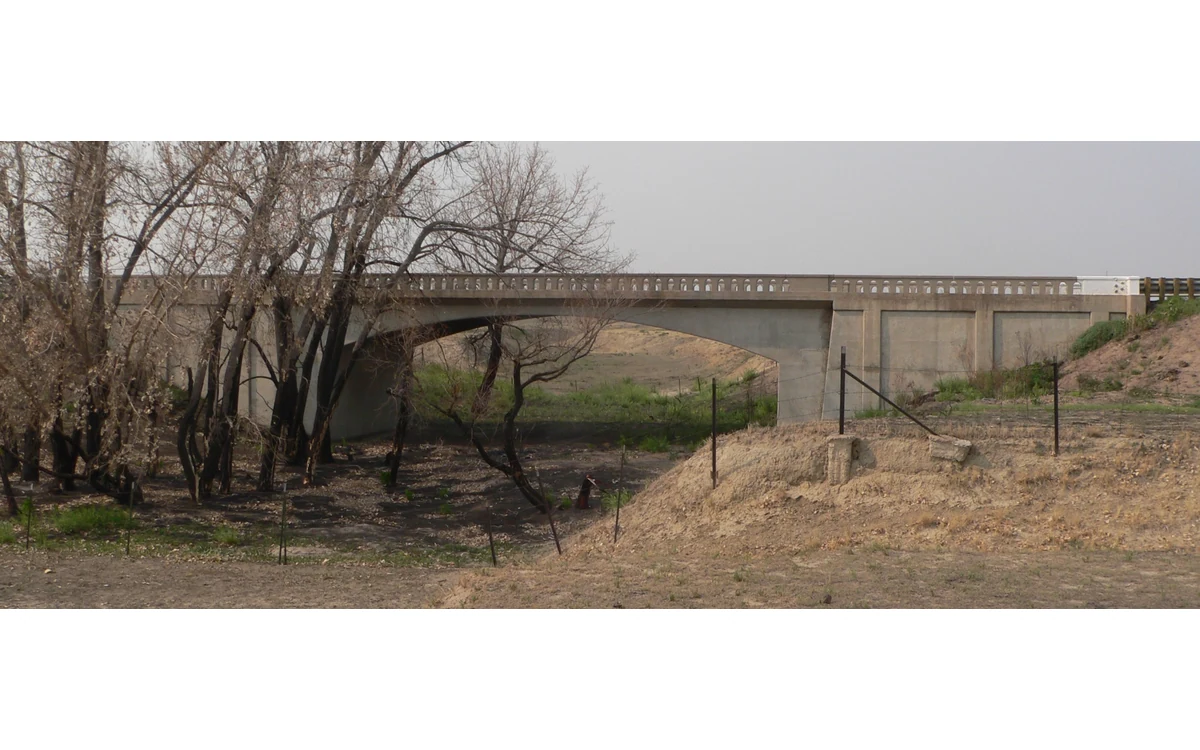
Imagine a hypothetical civil authority commissioning an overview of a long viaduct approach and nearby drainage corridors. It also requests sustained close views of concealed connection faces under a structure. A large industrial fixed-wing aircraft is proposed for the entire assignment. The right first question is whether those are compatible evidence tasks, not whether one aircraft can be made to appear versatile enough. This example is not an GAUTEN capability statement or a real bridge inspection plan.
Separate the broad-area context requirement from the concealed-face requirement. Ask the responsible asset specialist to define the required view, observation duration and measurement method for each. If the proposed conventional fixed-wing collection cannot provide that evidence within its documented limits, reject it for that portion of the work. An attractive route map does not resolve a missing observation method.
Do not confuse architecture with site suitability
ArduPilot’s QuadPlane overview describes a combined fixed-wing and multicopter architecture with distinct operating modes and multiple configurations. It is architecture documentation, not evidence that any specific large VTOL aircraft can conduct a close-access industrial task or operate safely at a particular site. A VTOL label alone does not settle the scenario’s method-selection question. [1]
Request the actual aircraft and payload documentation for the proposed operation. Establish whether a claimed capability applies to the relevant mode and installed configuration. Do not transfer a hover-like task to conventional fixed-wing flight, or assume that adding vertical takeoff and landing makes an aircraft suitable for every stationary observation. The claimed view still needs task-specific evidence and the relevant operational assessment.
In this example, keep launch and recovery convenience separate from evidence acquisition. A platform’s means of reaching the site is not a demonstration of the view obtainable at the asset. Ask for a traceable sample of the required output under applicable conditions rather than a general statement about aircraft type. No platform-specific flight envelope is supplied here.
Test visibility before discussing efficiency
For the illustrative approach corridor, identify which target surfaces are visible from the proposed collection geometry and which are concealed. Keep broad surface context and close component assessment in separate scope rows. Do not claim that small-UAS close inspection research establishes equivalent capability for a large fixed-wing overview; this article makes no such substitution.
USGS imagery guidance connects data quality to acquisition configuration, calibration and verification, and treats metadata as information for deciding whether data suit an application. It also distinguishes pixel sampling from accuracy. These principles support an output-focused review, not a bridge inspection procedure or permission to reduce standoff to obtain a missing view. [2]
Ask what an accepted sample must demonstrate: the intended feature present, adequate visibility for the defined question, correct association and any required measurement evidence. Record failures as well as selected successes. If the geometry cannot show the requested surface, more favorable image styling or an advertised camera resolution cannot answer the visibility question.
Divide the work without overstating either method
The proposed fixed-wing role in this scenario may remain valuable for corridor context and accessible surface observations. Give the concealed connection faces to a separately assessed method chosen by the owner and qualified inspection team. That method might involve different access or equipment, but this article does not prescribe it or imply that a replacement UAV automatically satisfies the requirement.
Record the boundary between methods in the coverage and handover documents. Identify which output answers each asset question and where follow-up remains pending. The combined report should not turn an incomplete fixed-wing component into a complete inspection simply by attaching another contractor’s name. Each portion needs its actual evidence and review status.
A defensible platform decision can therefore be partly negative: the selected fixed-wing aircraft is not supported for a particular observation. That is a useful engineering conclusion, not a failure to exploit the aircraft. It prevents broad-area acquisition advantages from obscuring a more important requirement for a view or measurement the proposed configuration cannot demonstrate.
Related reading
- Vertical Faces and the Blind Spots of Nadir Mapping
- A Mission-First Power Architecture for Large Fixed-Wing UAVs
Sources
Visual summary
Concept illustration
Read diagram notes
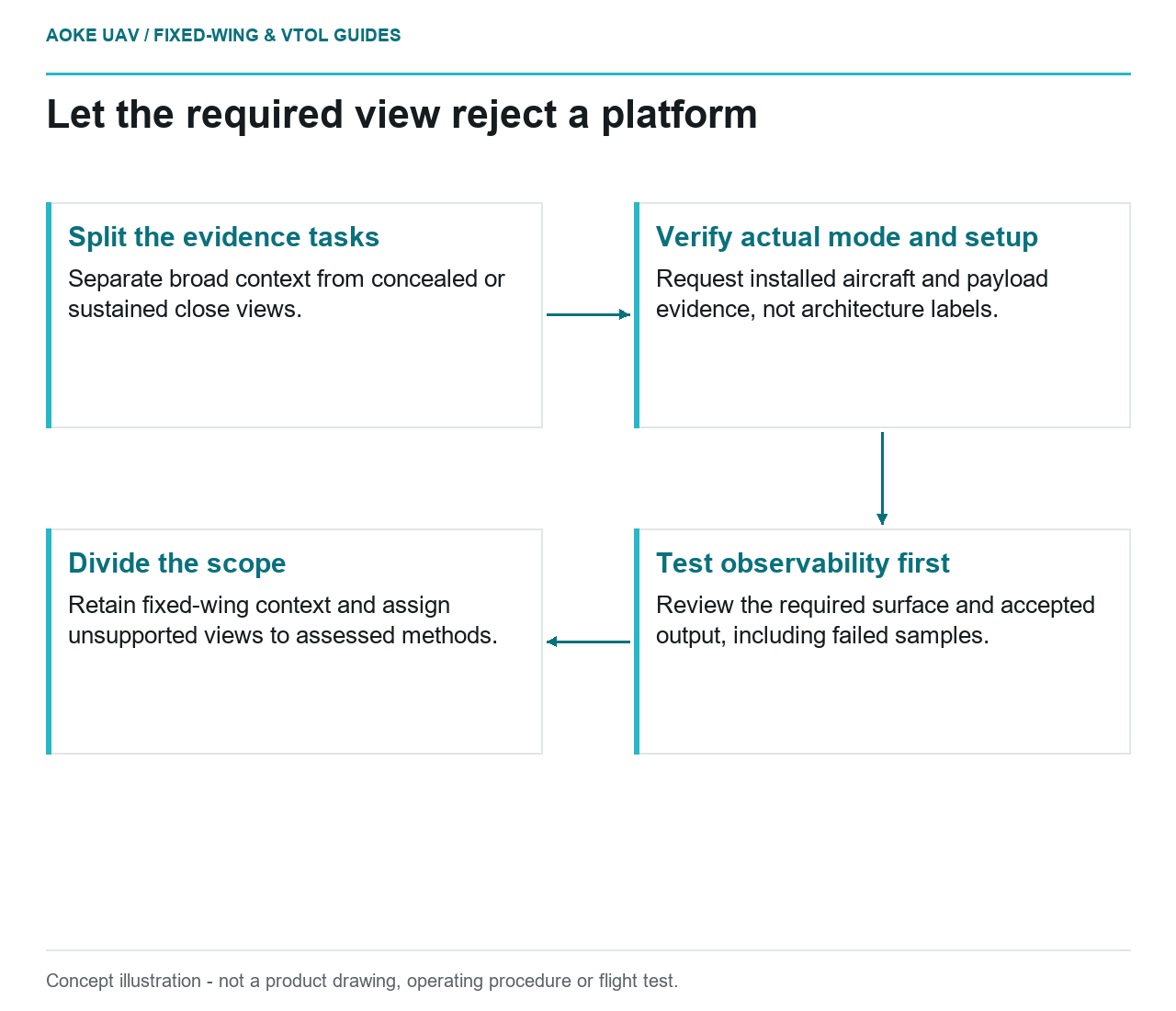
- Split the evidence tasks: Separate broad context from concealed or sustained close views.
- Verify actual mode and setup: Request installed aircraft and payload evidence, not architecture labels.
- Test observability first: Review the required surface and accepted output, including failed samples.
- Divide the scope: Retain fixed-wing context and assign unsupported views to assessed methods.