A Mission-First Power Architecture for Large Fixed-Wing UAVs
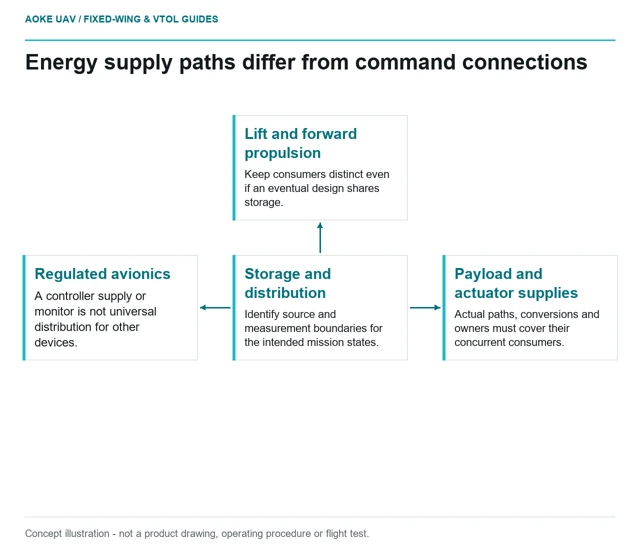
Build an aircraft-wide power architecture from mission phases, simultaneous loads and documented interfaces before comparing propulsion components.
GAUTEN UAV / TOPIC ARCHIVE
Build an aircraft-wide power architecture from mission phases, simultaneous loads and documented interfaces before comparing propulsion components.
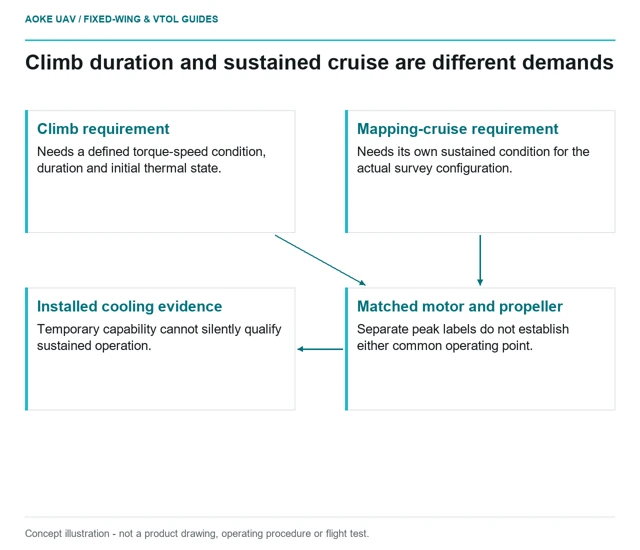
Compare climb and cruise as separate operating points, with duration, thermal conditions and installed aircraft evidence attached to each.
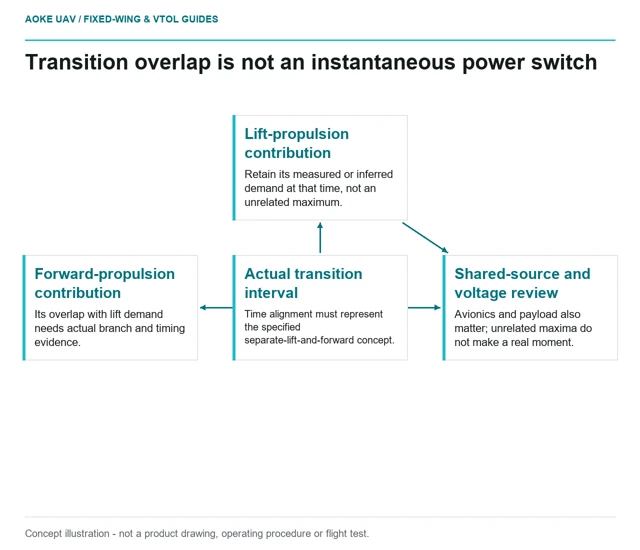
Review transition as a simultaneous-load state, linking propulsion overlap and voltage observations to the actual fixed-wing VTOL configuration.
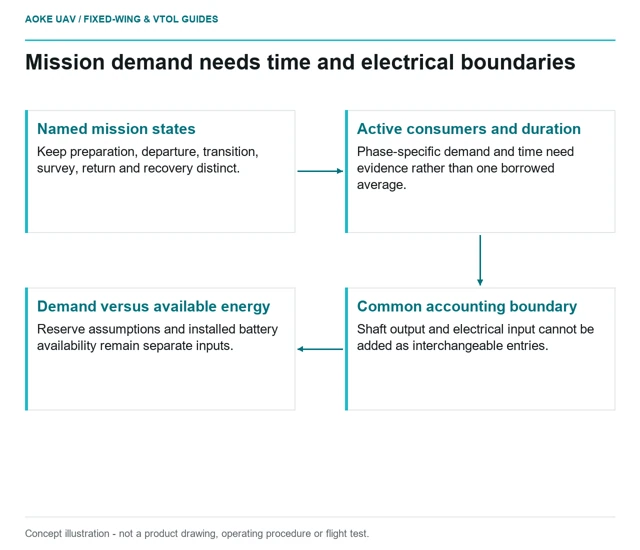
Use a phase-based demand ledger to expose payload consumption, conversion boundaries and uncertainty before making any aircraft endurance claim.
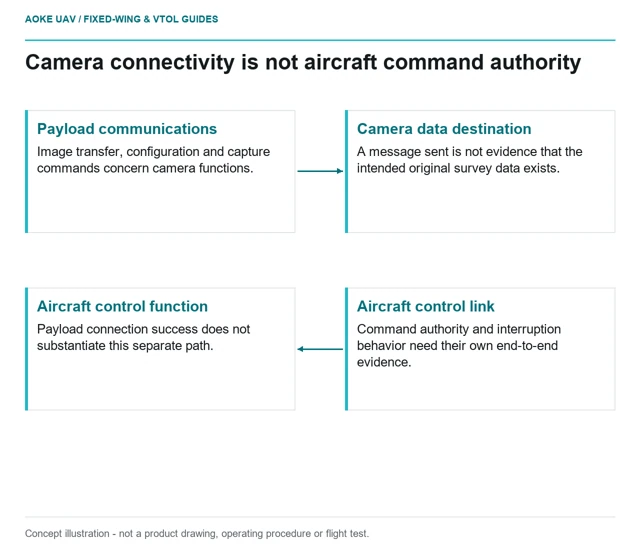
Payload communications should be documented by function and failure behavior rather than assumed to provide aircraft command authority or operational permission.
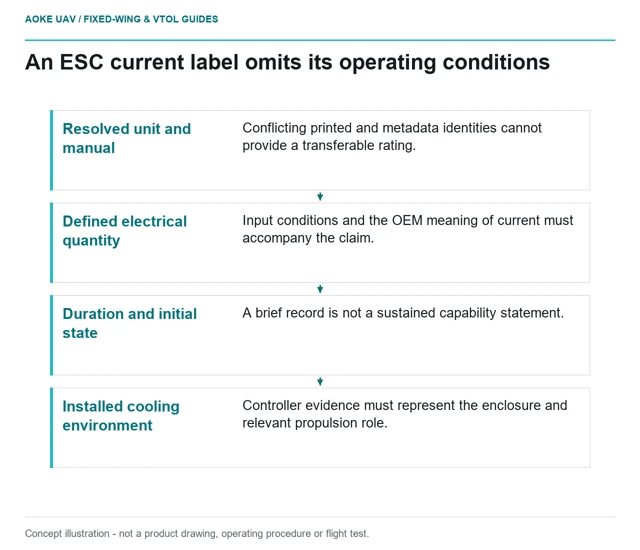
An ESC current label needs model identity, voltage, duration and cooling context before it can inform a large-aircraft integration review.
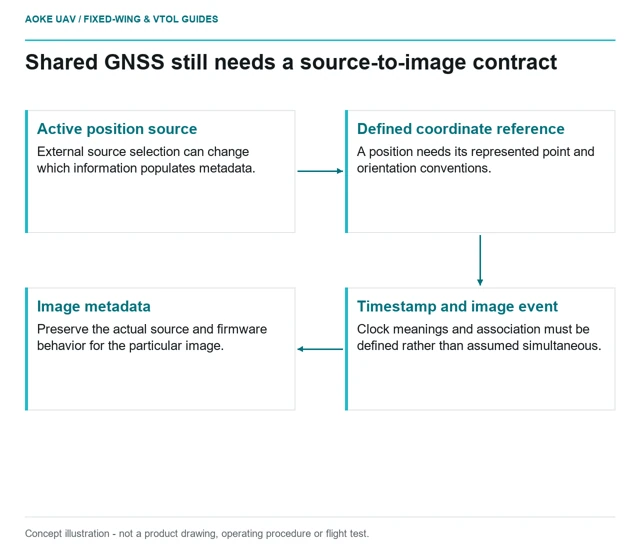
Shared GNSS data needs a documented source, reference point and event association before aircraft navigation information can be interpreted as camera metadata.
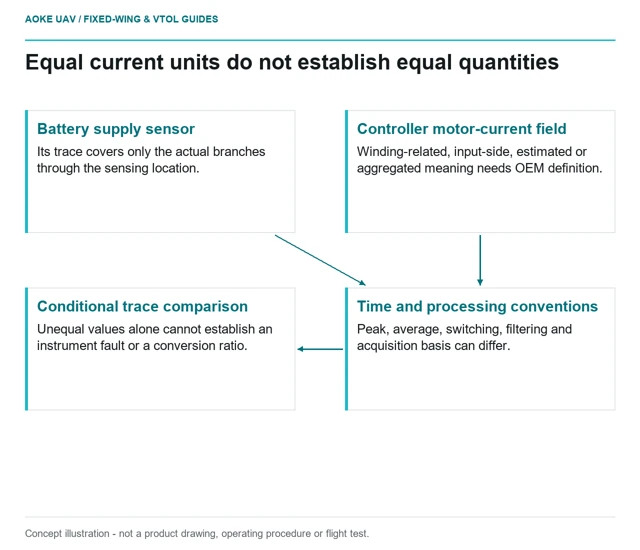
Identify the electrical path, reported quantity and time basis before comparing a battery-bus current log with a motor or controller current field.
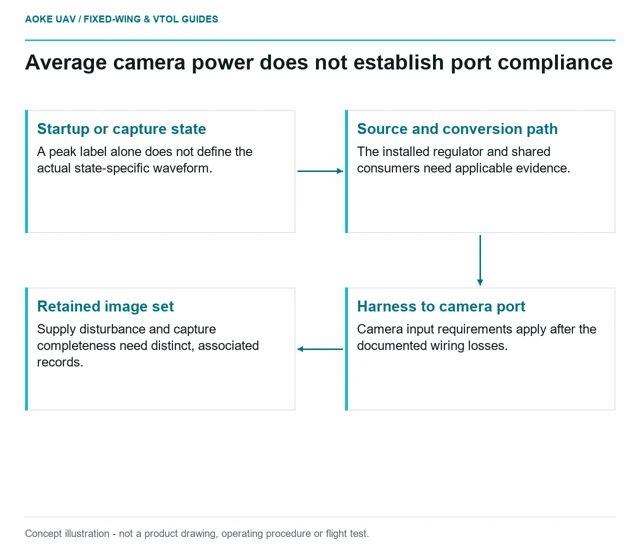
A payload average-power figure leaves its supply range, peak demands, connection losses and interruption behavior as separate integration questions.
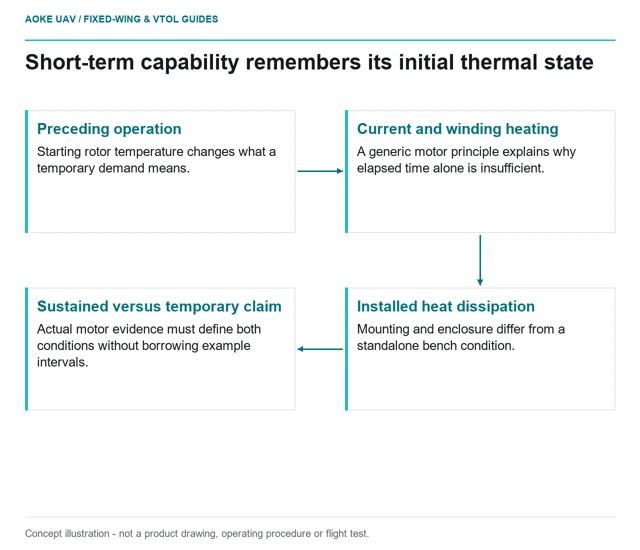
Continuous and peak motor ratings depend on duration, thermal state and installation conditions. Preserve those qualifications in aircraft reviews.