Tail-Boom Joint Alignment and Composite Interfaces
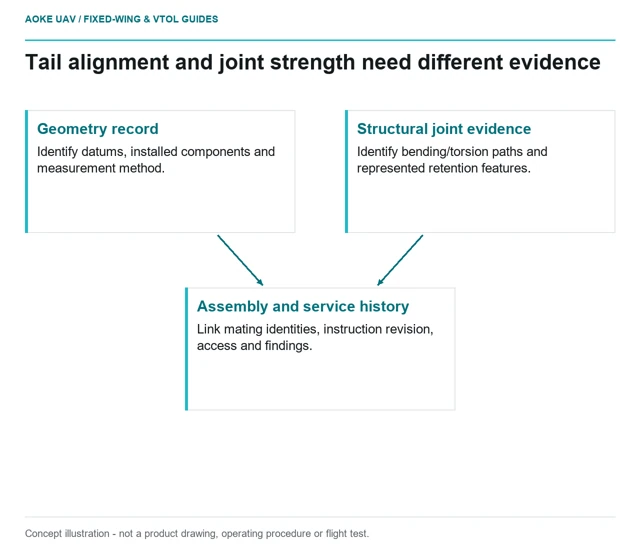
How datum definitions, retention evidence and assembly history belong together in a detachable tail-boom review.
GAUTEN UAV / TOPIC ARCHIVE
How datum definitions, retention evidence and assembly history belong together in a detachable tail-boom review.
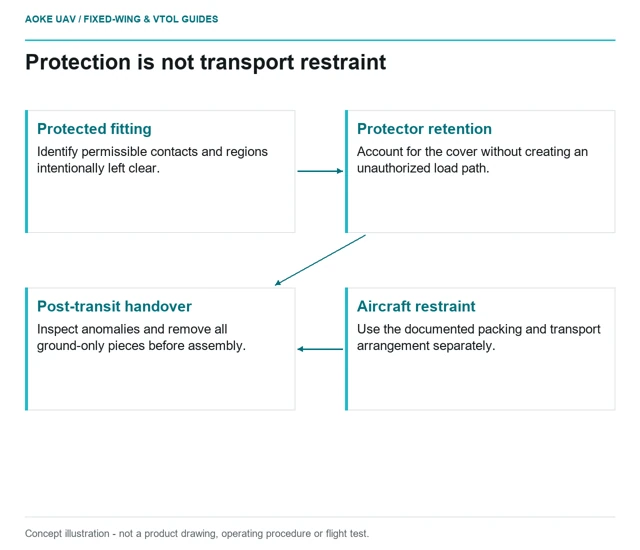
A transport protector should preserve access to fitting condition and avoid becoming an undocumented load path into a wing-root interface.
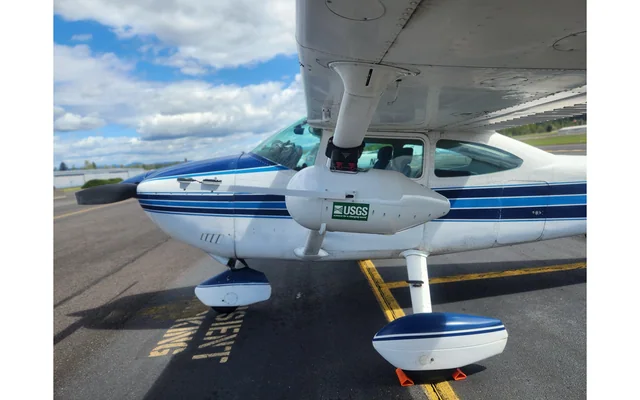
A survey payload-bay review connects the installed view, mounting interfaces, power and data paths with calibration and service access before procurement.
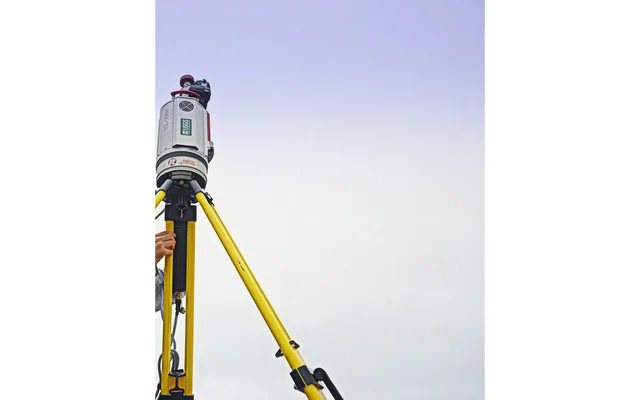
Image: U.S. Geological Survey, Oregon Water Science Center (individual photographer not credited on asset page) / public-domain. Resized for this page.
A repeat inspection series must distinguish internal model consistency, external reference quality and cross-date alignment before reporting physical change.
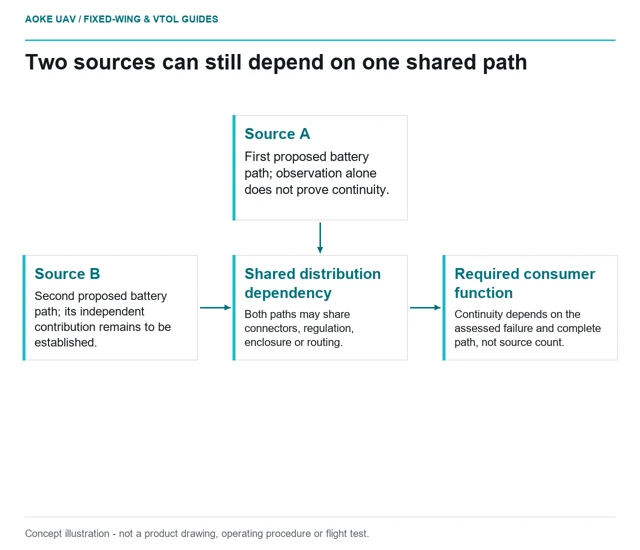
Two nominal power sources require a dependency review before the aircraft can rely on them as separate supply paths.
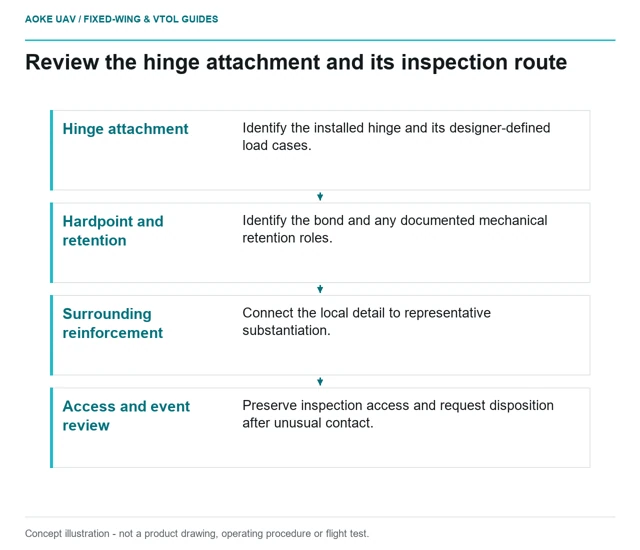
The local attachment evidence needed around a control hinge, distinct from whole-wing stiffness or actuator sizing.
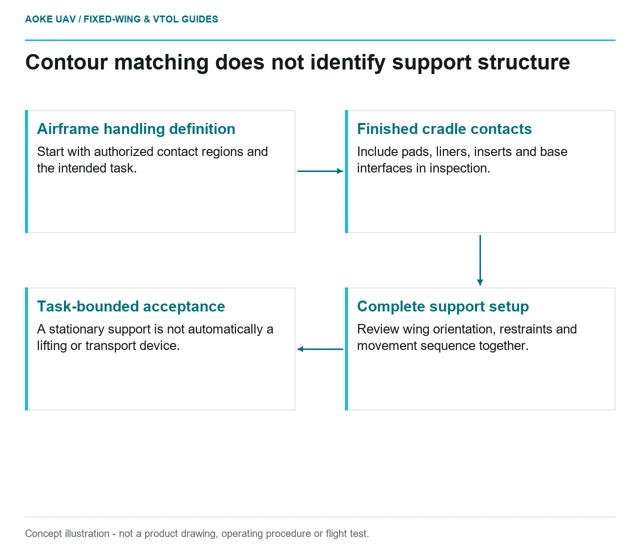
A printed wing cradle needs verification of its contacts, assembly stability, and condition without inventing airframe handling limits.
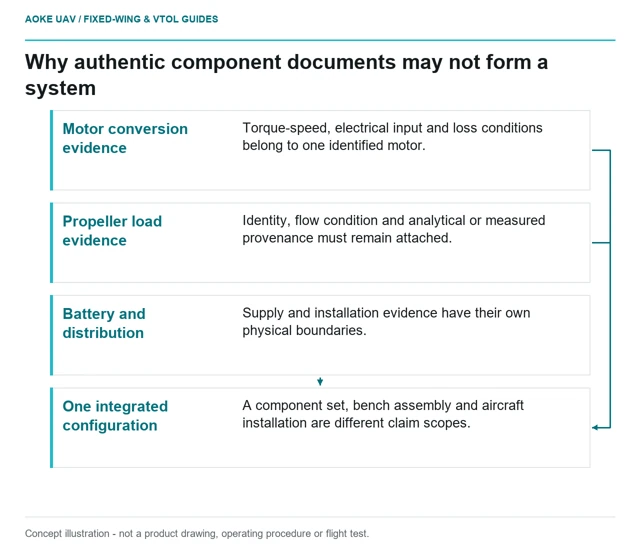
Procurement can make propulsion claims auditable by requesting exact configuration identities, primary test conditions and clear installed-system evidence boundaries.
LiDAR strip agreement measures internal consistency; independent checkpoints test whether the dataset also agrees with an external reference.
Image: Amy West / U.S. Geological Survey / public-domain. Resized and cropped.
Repeat stockpile results need comparable boundaries, base definitions and reference evidence before a volume difference can be interpreted as material movement.