Concept illustration
Read diagram notes
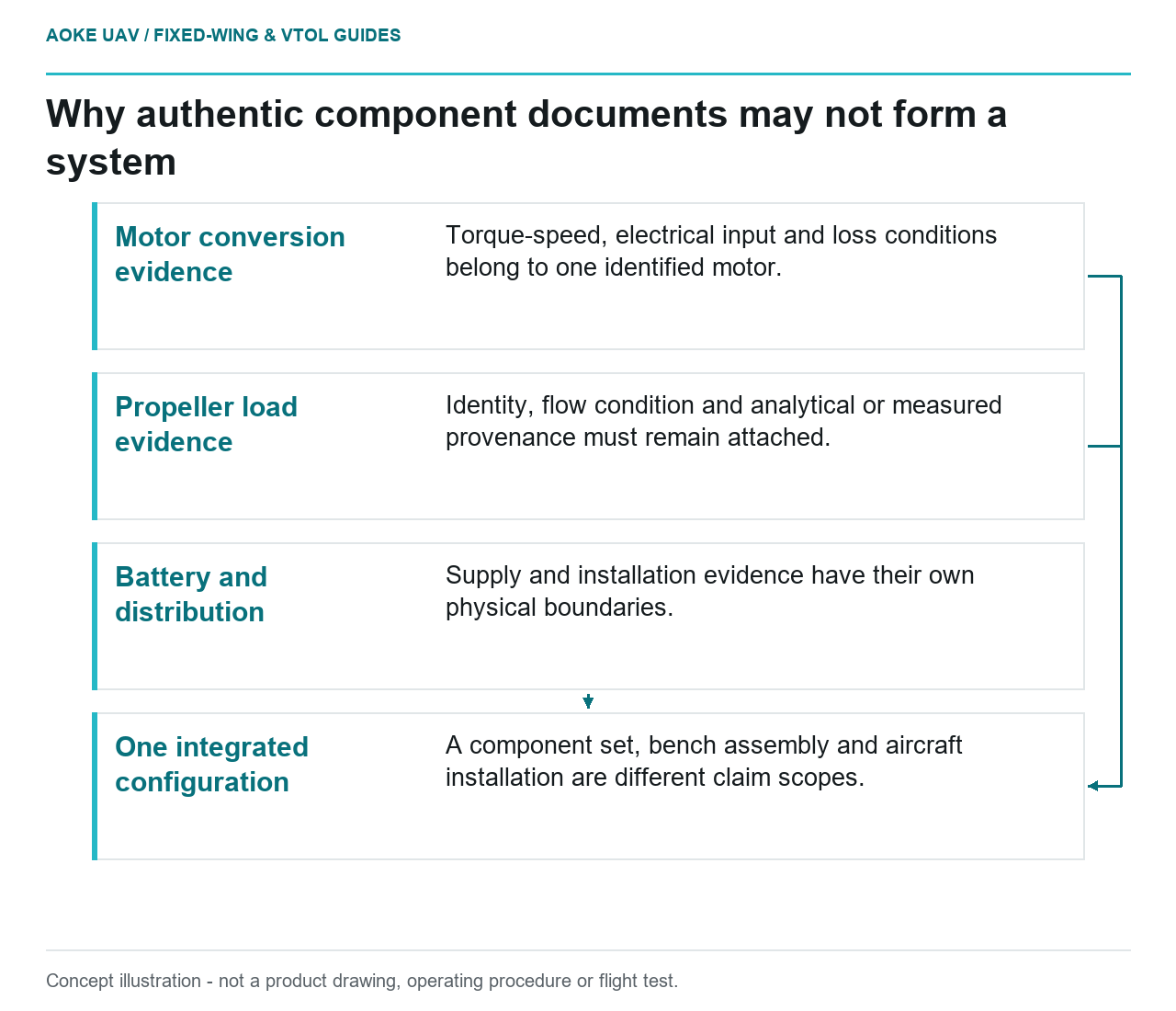
- Motor conversion evidence: Torque-speed, electrical input and loss conditions belong to one identified motor.
- Propeller load evidence: Identity, flow condition and analytical or measured provenance must remain attached.
- Battery and distribution: Supply and installation evidence have their own physical boundaries.
- One integrated configuration: A component set, bench assembly and aircraft installation are different claim scopes.
A buyer is reviewing a hypothetical propulsion proposal for a large civil fixed-wing survey aircraft. The package includes a motor chart, propeller data and a battery label, yet it does not show whether the documents describe one integrated configuration. A useful procurement checklist should expose that gap without pretending to design the aircraft. This article organizes a supplier evidence request for the physical propulsion system, distinct from structural laminate procurement or acceptance of survey measurements.
Exact configuration and document revisions
Request a configuration index identifying the offered motor, controller, propeller, hub, battery and relevant distribution equipment. Link each identity and revision to an applicable primary document. Ask the supplier to distinguish delivered hardware from examples used in a brochure. If a manual filename disagrees with its body, require identity resolution before using it as a source of ratings or integration limits.
The index should also define the boundary of the integrated claim: component set, bench assembly or installed aircraft arrangement. For the fixed-wing example, record what installation information has actually been supplied. A phrase such as matched system does not explain whether mounts, cooling, wiring and protection interactions are included. Missing boundaries should be listed as unresolved items, not interpreted in the supplier’s favor by default.
Data provenance and test conditions
For each chart or result, ask whether it is calculated or measured, what configuration it represents and which conditions accompanied it. APC states that its performance data are analytical and based on standard-atmosphere conditions.[2] That is legitimate component information within its stated scope, not measured performance of the hypothetical large fixed-wing aircraft. Retain that distinction in any procurement comparison.
Request operating-point and duration information instead of accepting one attractive maximum. The maxon reference distinguishes motor operating ranges and explains the relationship between electrical input, mechanical output and losses.[1] It supplies generic motor concepts, not a capability map for the offered aircraft motor. Use it to frame precise supplier questions, not to fill absent values with unrelated catalog data.
Installation requirements and limits
Ask which exact OEM requirements govern cooling, power interfaces, mounting, protection and maintenance for the offered configuration. Keep component ratings separate from aircraft capability. AC 20-184A addresses battery testing and installation information within an aircraft certification context.[3] It does not substantiate the proposed UAV battery or confer approval on an integrated propulsion offer. The actual pack’s primary documents remain necessary.
For the fixed-wing installation, request an evidence cross-reference showing which requirements are covered by which reports or assessments. Identify excluded configurations and unsupported operating states rather than reducing the response to a pass/fail label. This checklist prescribes no battery setting, connector rating or propeller limit. It asks for the actual applicable sources and their documented relationship to the hardware being purchased.
Unsupported claims and follow-up questions
Use a claim register with separate entries for the supplier statement, supporting document, configuration match and missing evidence. A component curve may support one narrow statement while leaving endurance, thermal adequacy or integrated reliability unresolved. This prevents the presence of authentic documents from becoming a blanket endorsement of everything in the offer. It also gives procurement specific follow-up questions rather than a vague demand for more technical detail.
The large fixed-wing buying decision can then distinguish documentary completeness from aircraft engineering acceptance. A complete supplier response is not proof of certification, and an incomplete response is not a measured demonstration of poor performance. The defensible deliverable is a traceable record of what is supported, under what conditions and by whom. No GAUTEN product ownership, test result or approval claim is implied by this hypothetical checklist.