Folding Propellers: Questions Beyond Cruise Drag
Treat folding blades and their hub as a documented combination, with deployment, stopped states and installation evidence reviewed separately from drag expectations.
GAUTEN UAV / TOPIC ARCHIVE
Treat folding blades and their hub as a documented combination, with deployment, stopped states and installation evidence reviewed separately from drag expectations.
Trace lift-boom attachment reactions through a hypothetical fixed-wing VTOL airframe while separating software architecture from structural qualification.
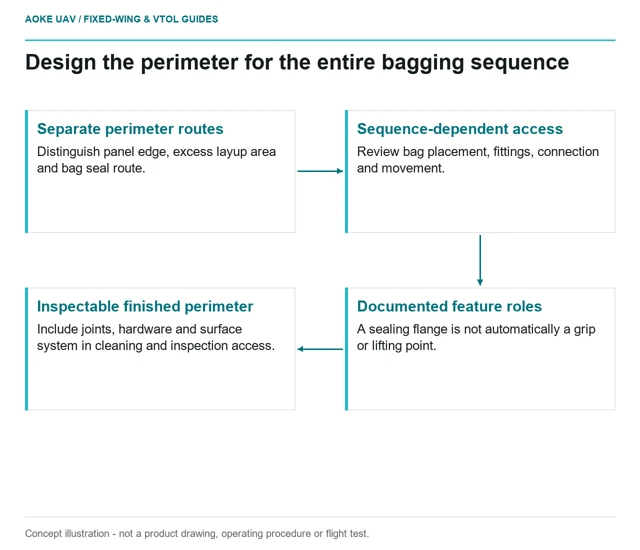
Check printed wing-tool perimeters for bag seal routing, fittings, handling, local hardware support and inspection access.
Precise camera-position records are an input to mapping, not independent proof that timing, orientation, calibration and final-product accuracy are correct.
Image: Dann Blackwood / U.S. Geological Survey / public-domain. Resized and cropped.
Right-of-way context, component visibility and electrical condition are different deliverables. Keep distant visual records and thermal observations within their demonstrated scope.
Image: Charles Devaux (mclytir) / CC0. Resized for this page.
Match rotational-speed guidance to the exact propeller family and revision, then keep that component limit separate from installed-system approval.
Ask which configurations, damage assumptions and change controls support aeroelastic assessment rather than inferring it from static strength.
Review FDM mold sealing through the vacuum boundary, surface-stack compatibility, segment joints and process-specific checks.
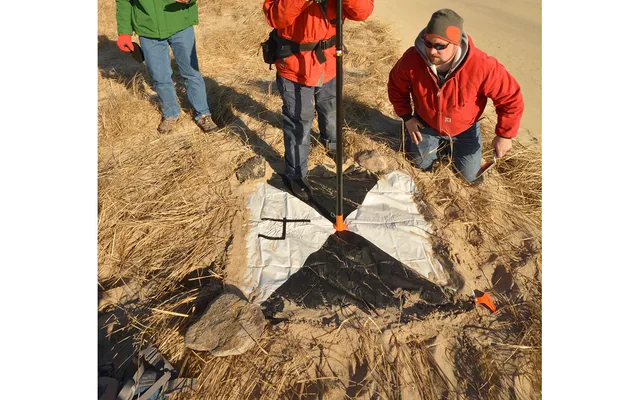
Keep independent reference observations distinct from adjustment control and report what the checks actually test in the delivered product.
Image: Dann Blackwood / U.S. Geological Survey / public-domain. Resized and cropped.
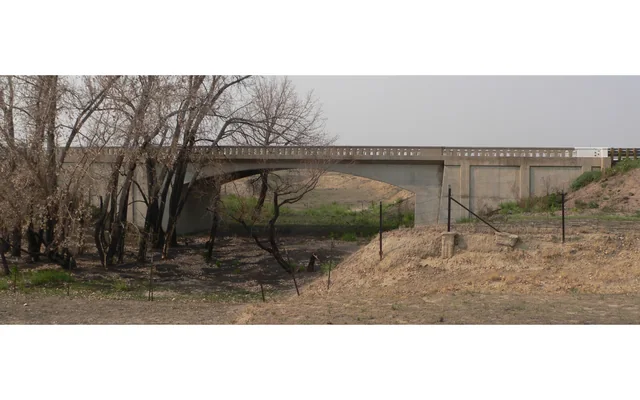
Assign large fixed-wing imagery to bridge-site context and demonstrable overview evidence, while keeping underdeck views, contact methods and inspection requirements separate.
Image: Ammodramus / CC0. Resized for this page.