Propeller Diameter Is an Airframe Integration Choice
Review a proposed diameter change as a configuration change across clearances, mounts, handling interfaces and performance substantiation.
GAUTEN UAV / TOPIC ARCHIVE
Review a proposed diameter change as a configuration change across clearances, mounts, handling interfaces and performance substantiation.
Trace wing-section torsion, hinge and actuator reactions, access-panel assumptions and the boundary of aeroelastic evidence.
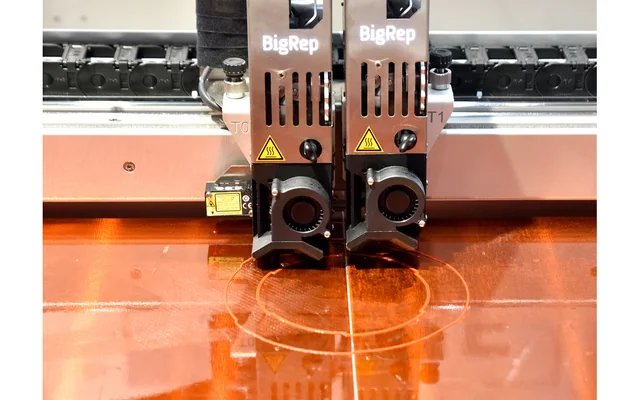
Compare mold build orientations through curved-surface texture, mechanical response, support access and final dimensional verification.
Image: Frank Schwichtenberg / CC-BY-4.0. Resized for this page.
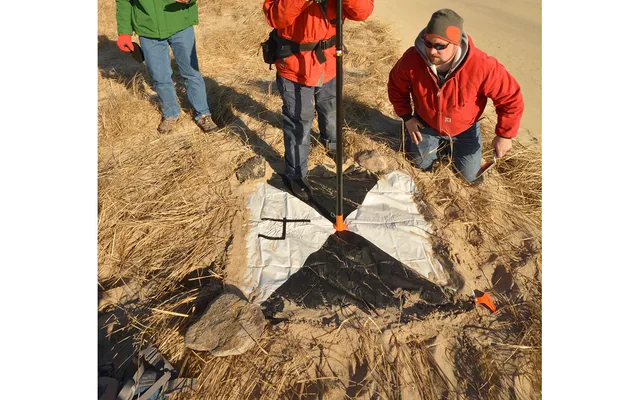
Judge control by its survey quality, spatial distribution and image support across the large fixed-wing mapping block, not its count alone.
Image: Dann Blackwood / U.S. Geological Survey / public-domain. Resized and cropped.
A hypothetical retaining-wall repair patch shows why equal standoff does not mean equal visibility: compare face-facing and grazing views, a hidden edge and a display crop.
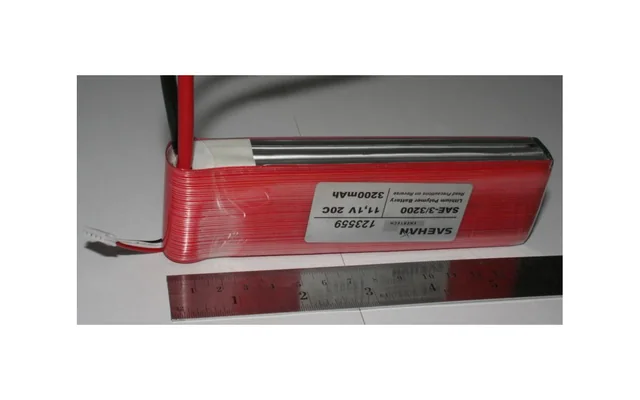
Charging and storage requirements belong to the exact battery, charger and applicable maintenance instructions, not a universal UAV recipe.
Image: Achimd / public-domain. Resized for this page.
Interpret nominal pitch speed as a geometric reference rather than a guaranteed aircraft airspeed, with camber and operating-point evidence kept visible.
Coordinate structural deformation questions with payload geometry, calibration assumptions and independently checked survey output.
Read printed-tool temperature claims through property definitions, sustained exposure, pressure support and the complete assembled surface system.
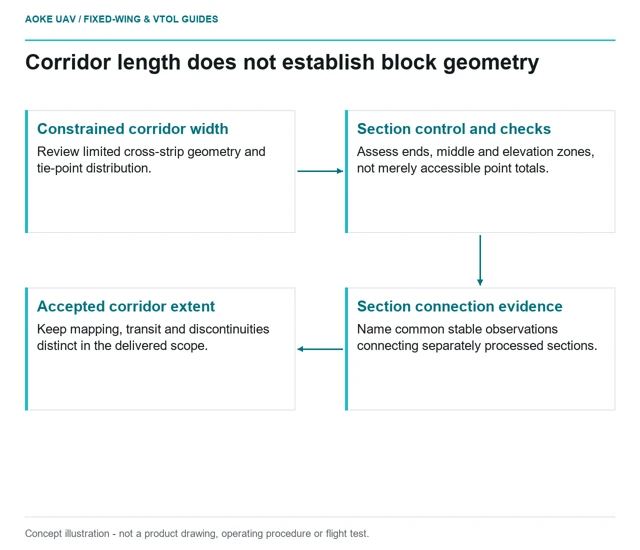
Review long narrow fixed-wing surveys for cross-strip geometry, control access and representative independent checks, not only route length.