Reading Propeller Data Across Advance Ratio
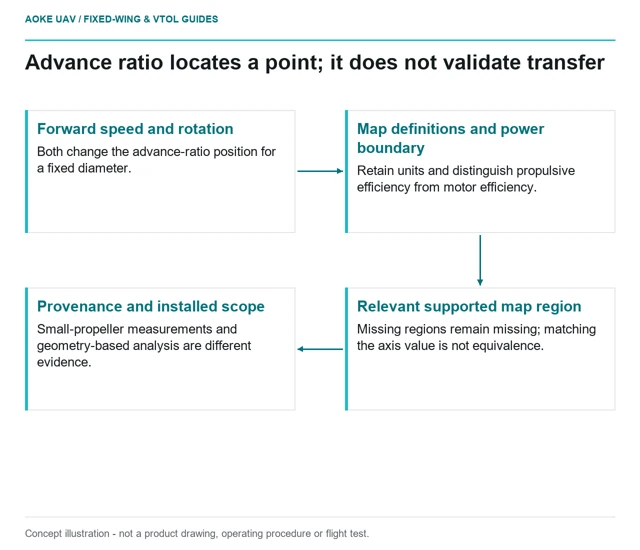
Read advance ratio and power definitions before comparing propeller-map points, keeping measured and analytical data within their documented scope.
GAUTEN UAV / TOPIC ARCHIVE
Read advance ratio and power definitions before comparing propeller-map points, keeping measured and analytical data within their documented scope.
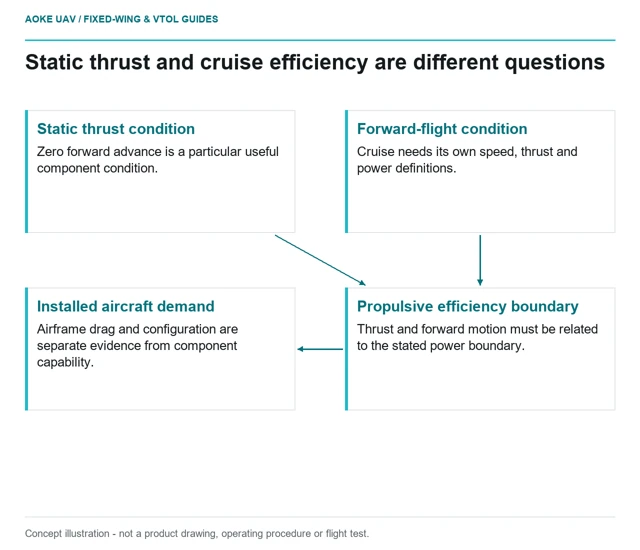
Understand what static thrust does and does not describe before using it to compare forward-flight propulsion proposals for a large fixed-wing aircraft.
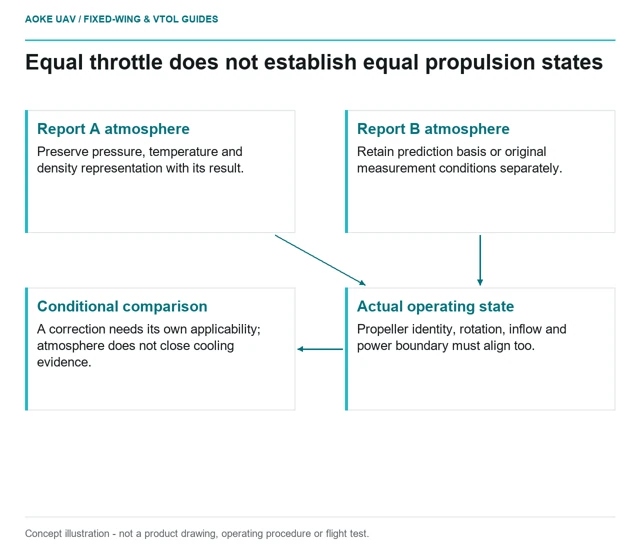
Compare propulsion evidence with atmosphere, rotational state and cooling assumptions intact instead of treating equal throttle labels as equal conditions.
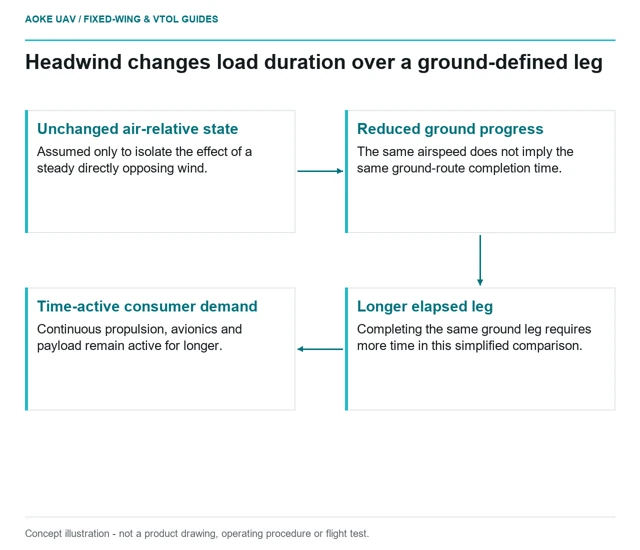
Distinguish airspeed from ground progress when reviewing how a headwind changes route duration and the duration of aircraft and payload loads.
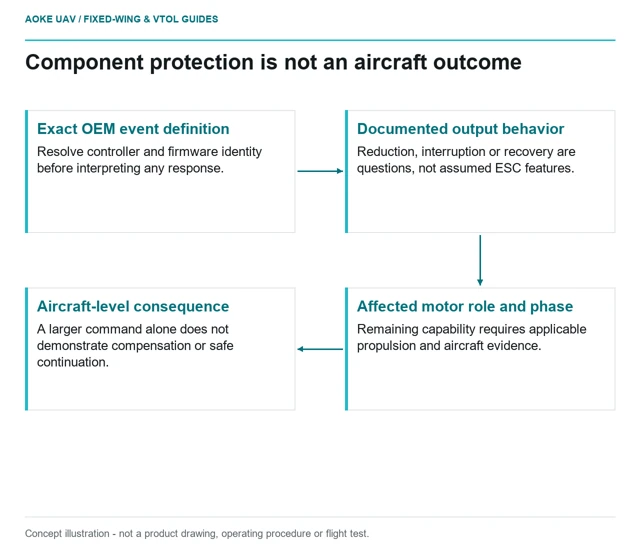
Controller protection must be reviewed as an aircraft interaction: ask what reduced output, shutdown and recovery mean for each propulsion role.
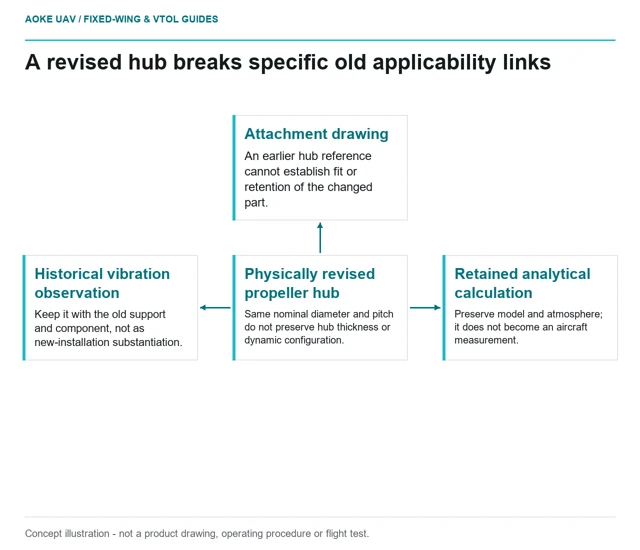
A documented APC hub revision illustrates why an old analytical propeller estimate and an old installed vibration observation need different change-impact decisions.
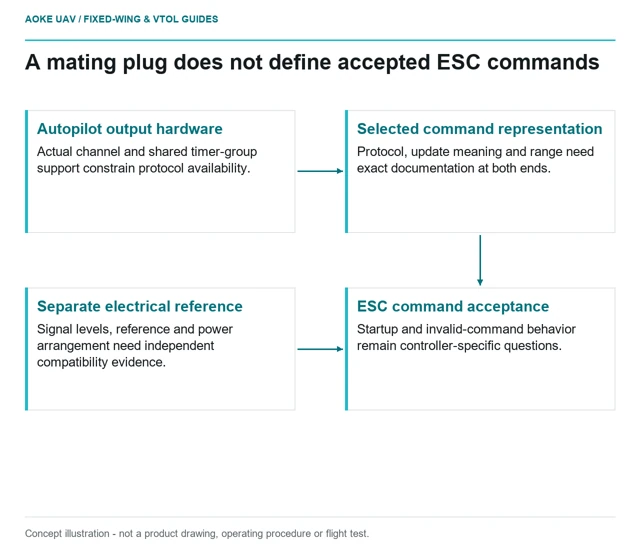
Connector fit does not establish ESC command compatibility. Review protocol, output hardware, startup, signal loss and configuration evidence together.
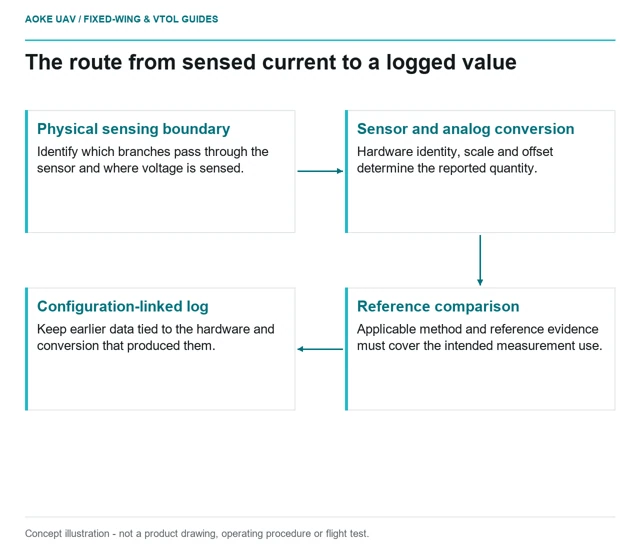
Power-monitor logs need sensor identity, measurement location, scaling and reference checks before they can support a mission-energy discussion.
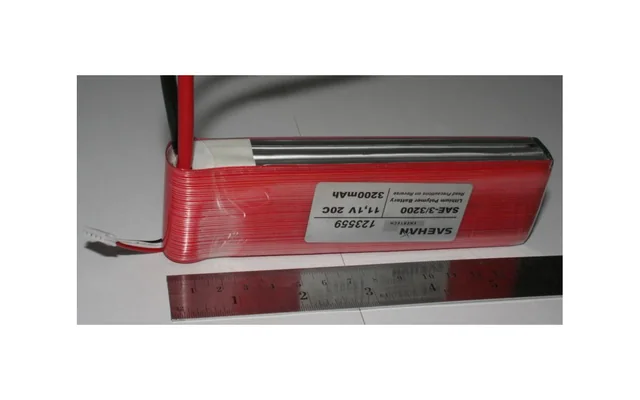
Battery nameplate energy is not an installed mission-energy guarantee. Preserve pack identity, rating conditions, protection and uncertainty.
Image: Achimd / public-domain. Resized for this page.
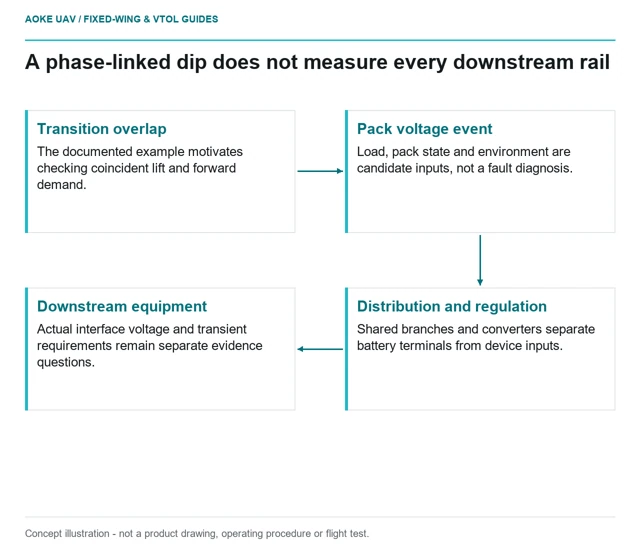
Voltage sag needs phase, load and sensing context. A cruise observation cannot by itself resolve transition supply questions or diagnose pack condition.