Reading Temperature Claims for Printed Cure Tools
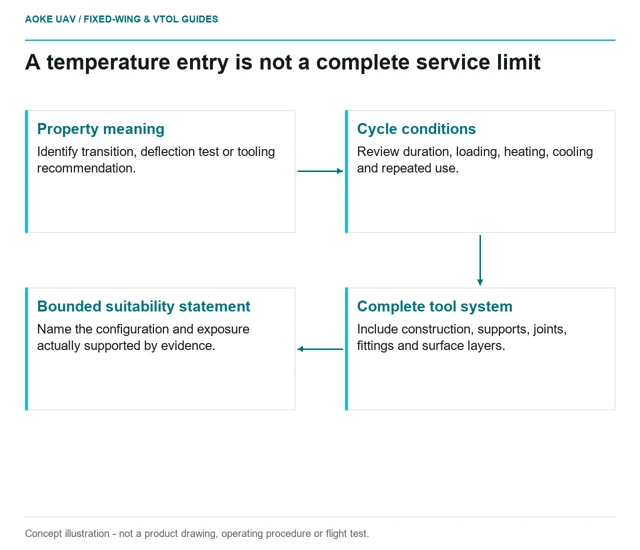
Read printed-tool temperature claims through property definitions, sustained exposure, pressure support and the complete assembled surface system.
GAUTEN UAV / TOPIC ARCHIVE
Read printed-tool temperature claims through property definitions, sustained exposure, pressure support and the complete assembled surface system.
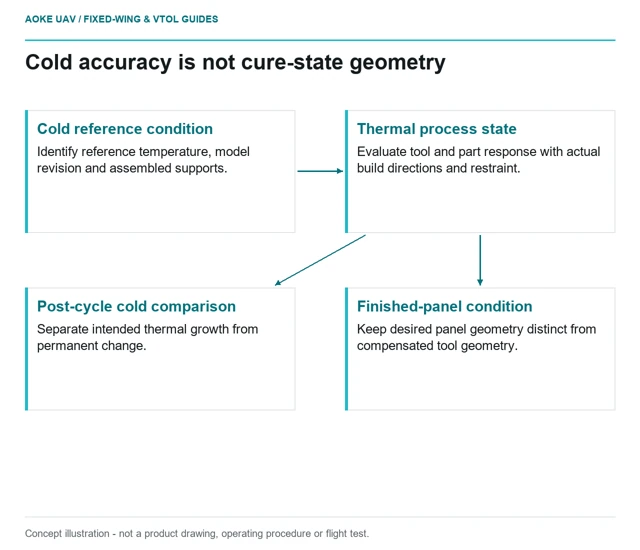
Understand what cold-tool measurements omit and how material, build direction, reference conditions and assembled-tool evidence shape thermal review.
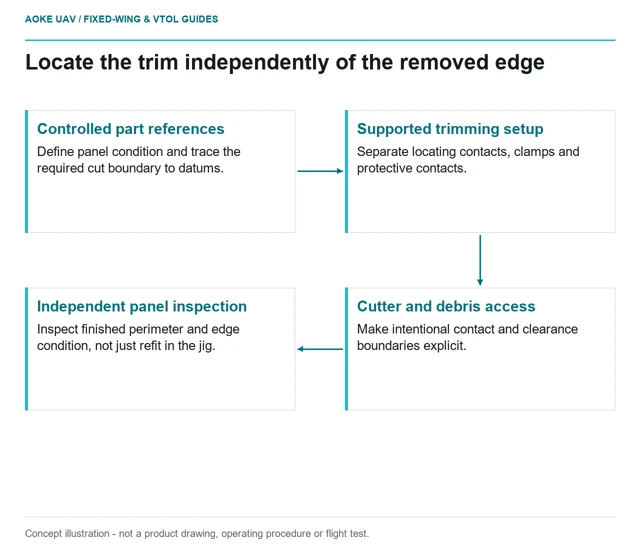
Plan printed wing-panel trim fixtures around support, datum control, cutting access and independent acceptance of the finished edge.
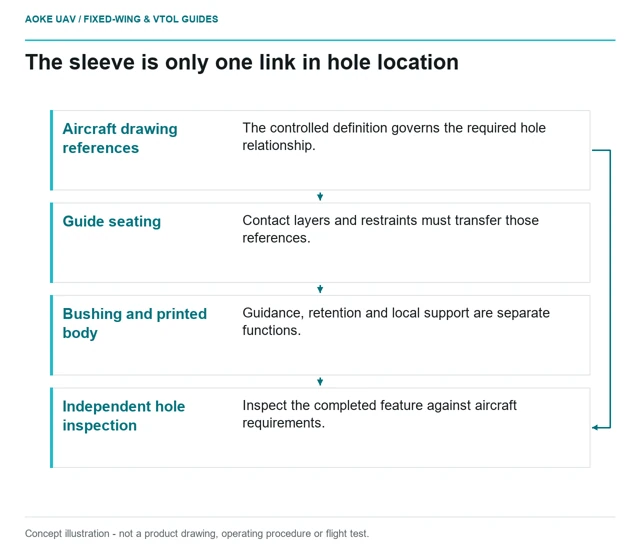
Review printed drill guides through drawing references, bushing retention, wear, process access and independent inspection of the finished hole.
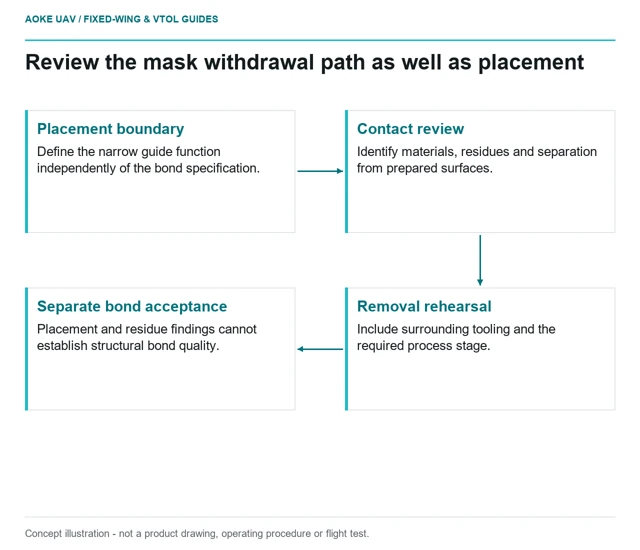
A placement mask can define an application boundary without establishing bond quality. Its contact, removal and residue controls need separate evidence.
A geometric payload model can expose access problems early, provided its missing mass, thermal behavior and electrical functions remain explicit.
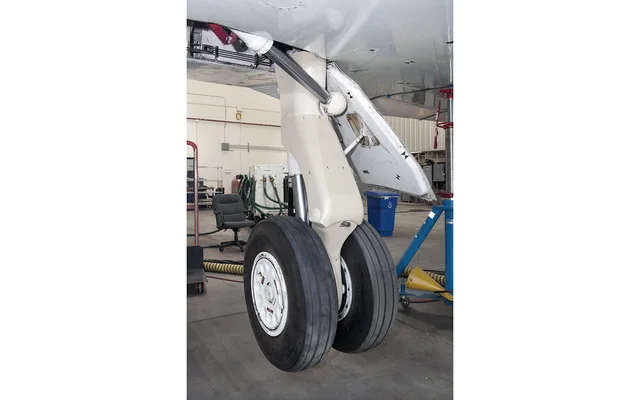
Image: NASA / Ken Ulbrich / public-domain. Resized for this page.
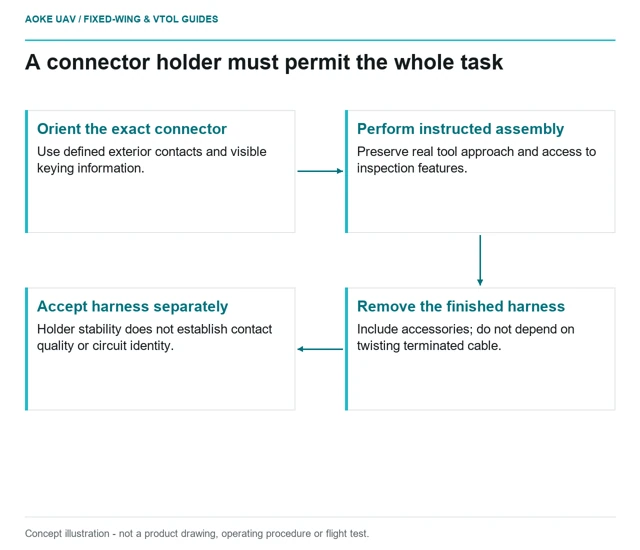
An off-aircraft connector holder can organize harness assembly, but connector instructions and independent electrical inspection remain authoritative.
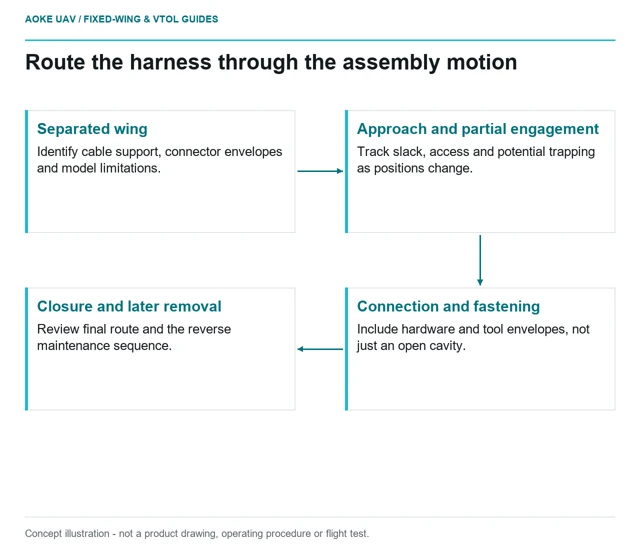
A wing-joint routing mockup should exercise the assembly path, not just show that cables fit in the final parked configuration.
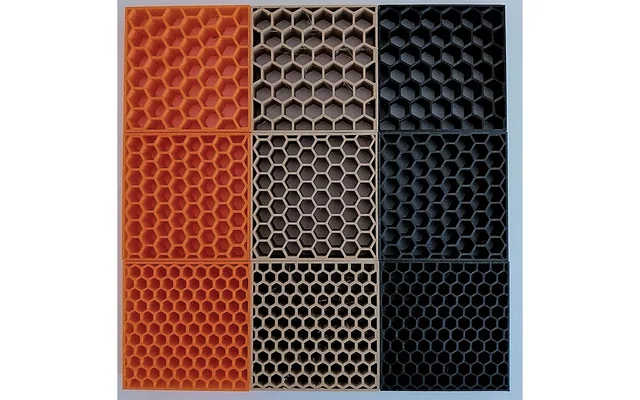
A printed coupon is evidence about a defined specimen and process. A long wing-assembly jig needs a separate argument connecting that evidence to its geometry and use.
Image: Nur Ainin Faissal / CC0. Resized for this page.
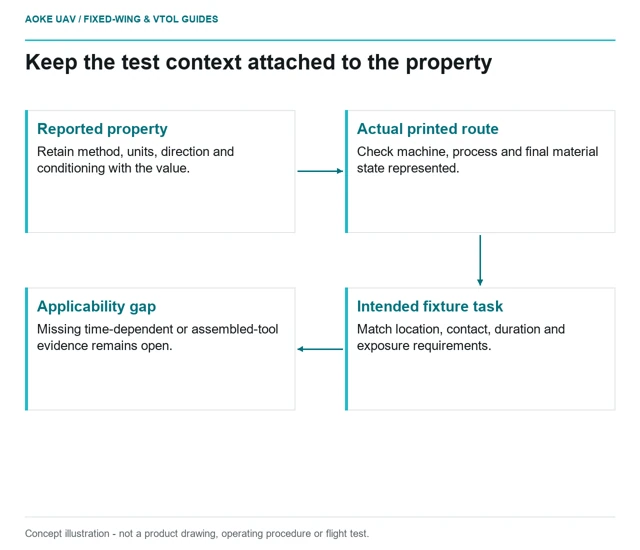
A tooling property should travel with its material identity, specimen direction, test method and conditioning. Missing context is a request for evidence, not an assumed best case.