 Additive Manufacturing
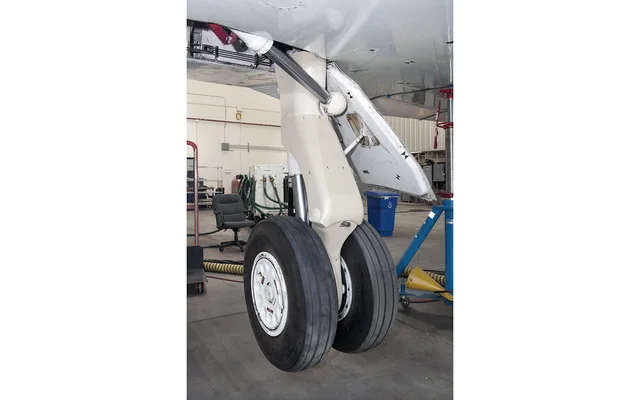
A supplier’s printable payload envelope should declare its model fidelity, datums, connectors, and omissions before it guides a bay review.
Image: NASA / Ken Ulbrich / public-domain. Resized for this page.
 Additive Manufacturing
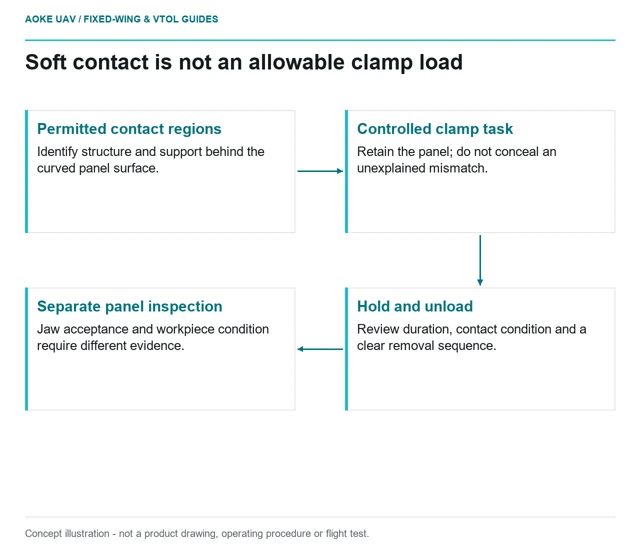
A custom jaw should be assessed as part of a controlled support and clamping system, not assumed harmless because its printed contact material is compliant.
 Additive Manufacturing
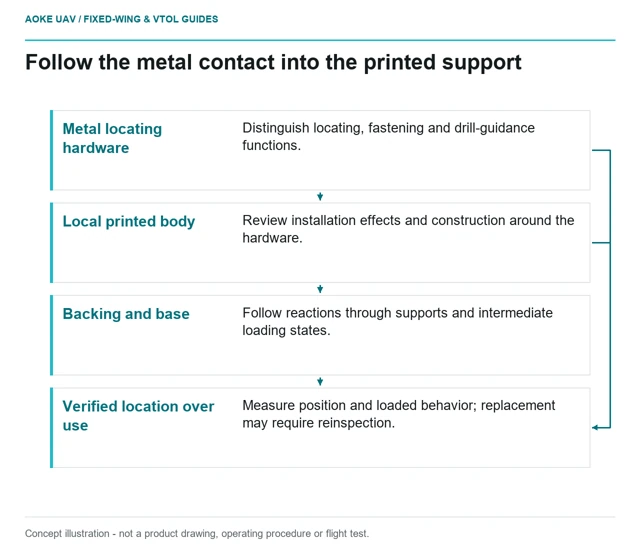
Metal contact hardware can be useful in a printed assembly fixture, but retention, local support and replaceability need their own verification.
 Additive Manufacturing
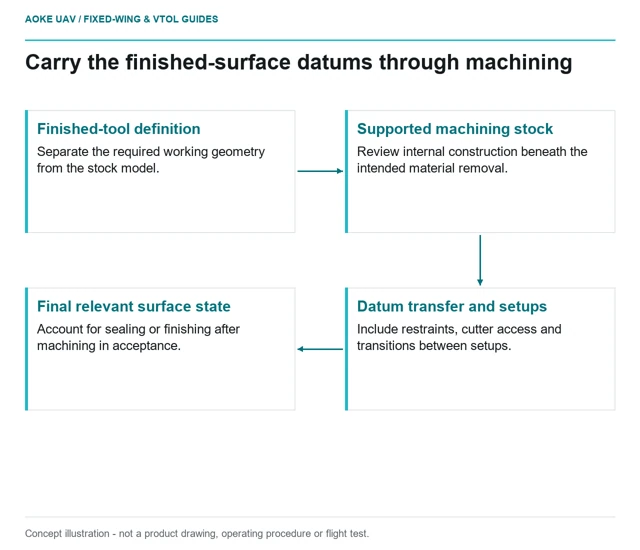
Near-net printing only helps a large aerodynamic tool when machining stock, internal support, datum transfer and final inspection form one controlled workflow.
 Additive Manufacturing
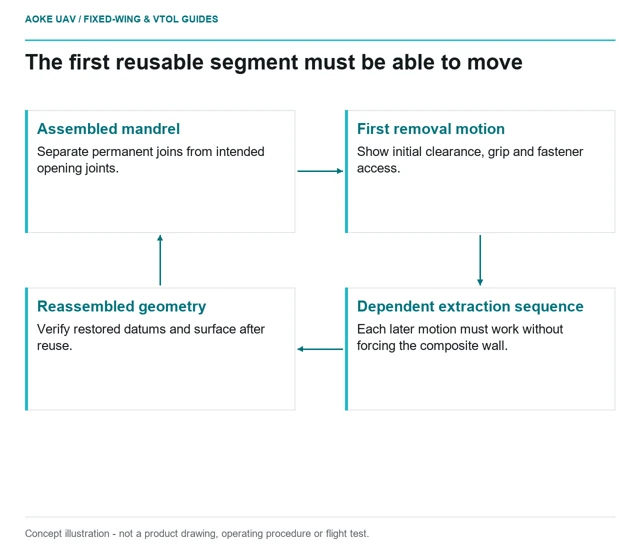
A reusable mandrel needs a credible extraction sequence and repeatable reassembly, not merely a CAD model split into printable pieces.
 Additive Manufacturing
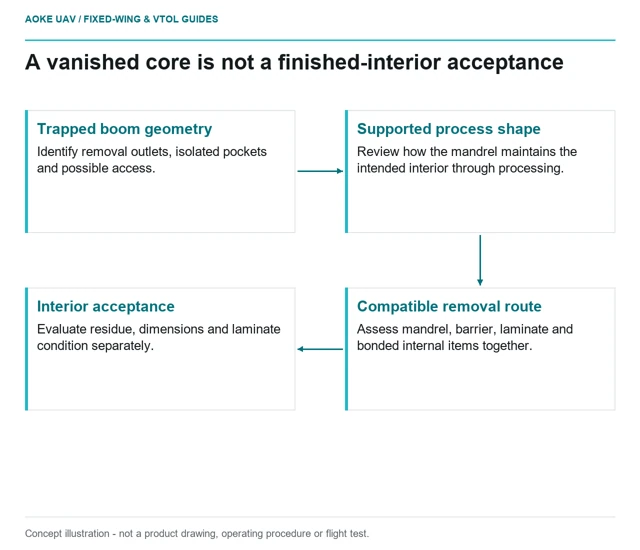
A sacrificial internal tool can unlock a hollow composite boom, but removal access, laminate compatibility and interior acceptance must be designed together.
 Additive Manufacturing
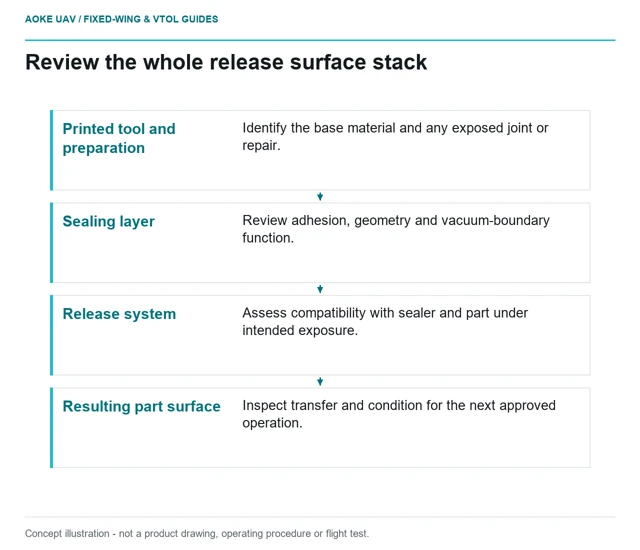
Review printed composite-tool surface stacks through sealer compatibility, release conditions, transfer observations and bounded development evidence.
 Additive Manufacturing
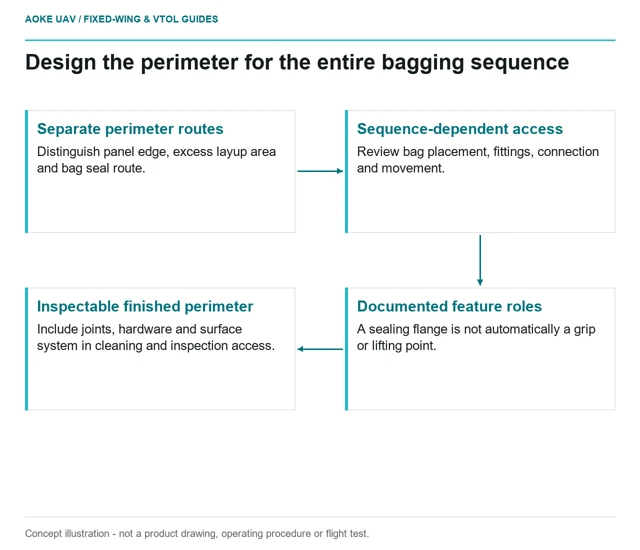
Check printed wing-tool perimeters for bag seal routing, fittings, handling, local hardware support and inspection access.
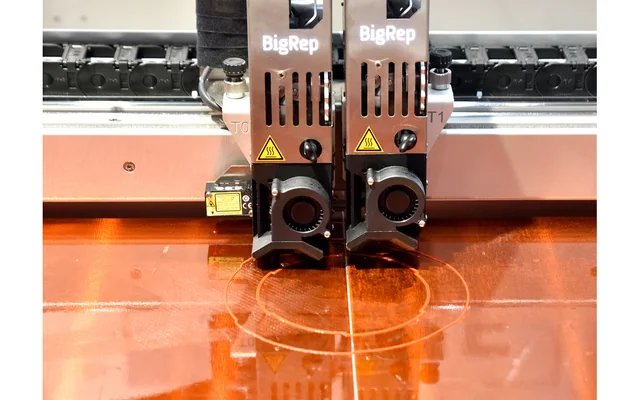 Additive Manufacturing
Review FDM mold sealing through the vacuum boundary, surface-stack compatibility, segment joints and process-specific checks.
Image: Frank Schwichtenberg / CC-BY-4.0. Resized for this page.
Additive Manufacturing
Compare mold build orientations through curved-surface texture, mechanical response, support access and final dimensional verification.
Image: Frank Schwichtenberg / CC-BY-4.0. Resized for this page.