Infill in Printed Composite Tools: Geometry Is Not Proof
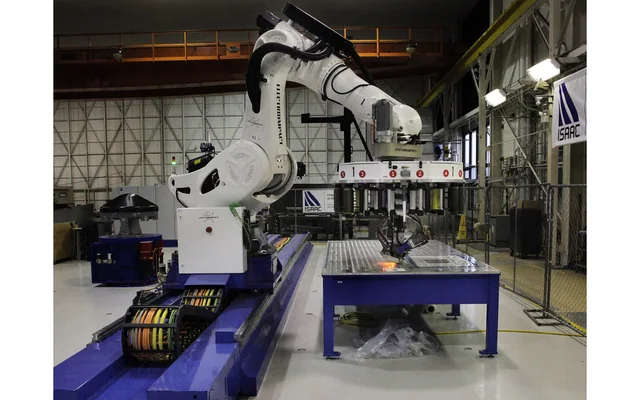
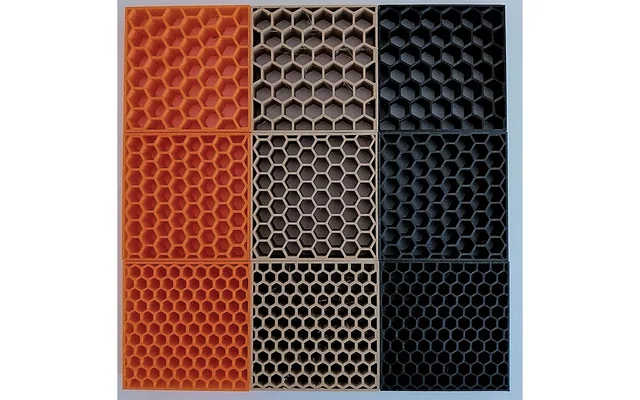
An infill percentage does not define the shell, load paths, thermal conditions, or local reinforcement needed by a composite layup tool.
Image: Nur Ainin Faissal / CC0. Resized for this page.
GAUTEN UAV / TOPIC ARCHIVE
An infill percentage does not define the shell, load paths, thermal conditions, or local reinforcement needed by a composite layup tool.
Image: Nur Ainin Faissal / CC0. Resized for this page.
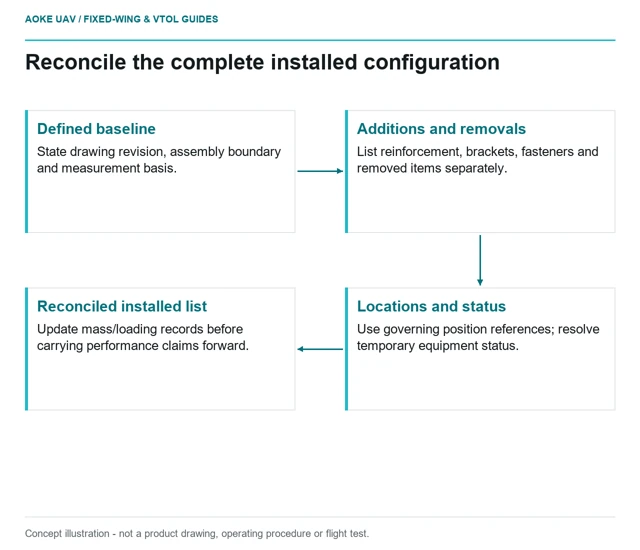
A configuration-led structural mass record for payload changes, including reinforcement, hardware and mass location.
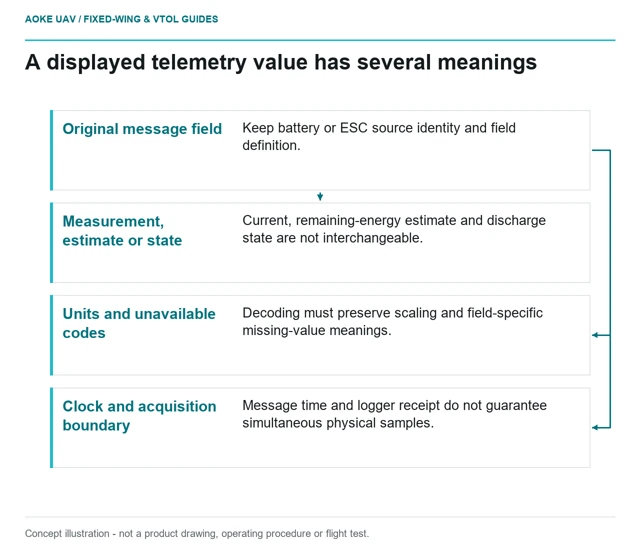
A worked MAVLink field dictionary separates battery measurements, remaining-energy estimates, ESC reports, status enums and message timestamps.
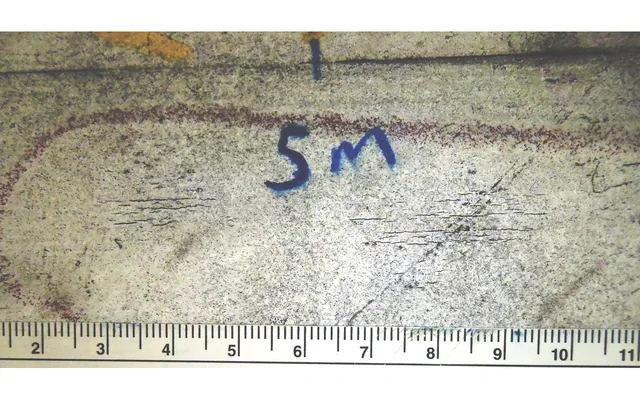
Ordinary aerial visual observations do not establish internal material condition; inspection methods must match the evidence required for the specific asset.
Image: Davidmack at en.wikipedia / CC0. Resized for this page.
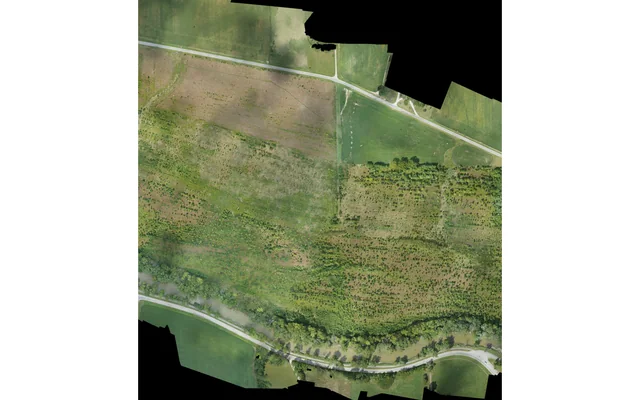
A bare-earth claim needs evidence of ground observations and classification beneath vegetation, not merely a smooth canopy model or a sensor label.
Image: U.S. Geological Survey, National Uncrewed Systems Office (individual creator not credited on asset page) / public-domain. Resized for this page.
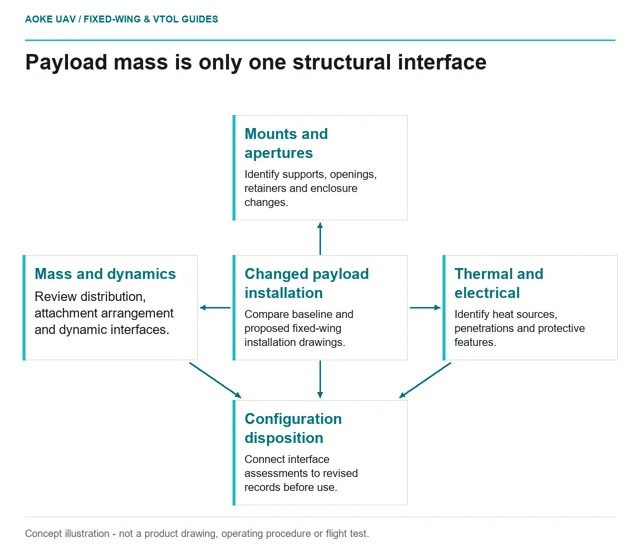
Why a payload change needs an interface comparison covering mounts, openings, dynamics, heat and configuration evidence.
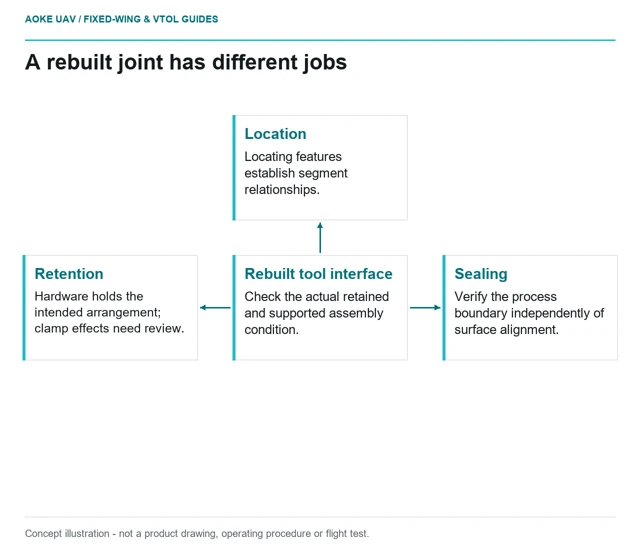
A rebuilt segmented mold needs assembled datum and sealing checks; separately correct pieces do not establish the condition of their joined surface.
How to document material, tool, process and inspection changes without assuming similar products are equivalent.
Image: NASA / David C. Bowman / public-domain. Resized for this page.
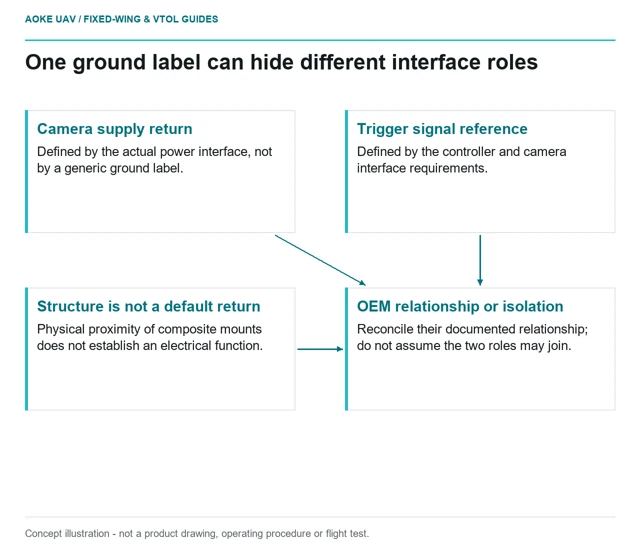
Payload integration needs an interface-by-interface reference and return-path definition; the word ground alone does not identify the intended electrical connection.
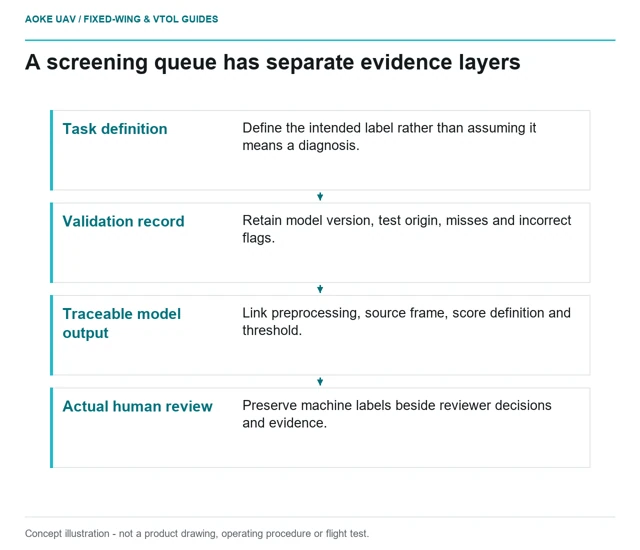
Algorithm-generated flags need source-image links, configuration records and task-specific validation evidence rather than an unsupported defect label.