Wing Torsion and Control-Surface Support
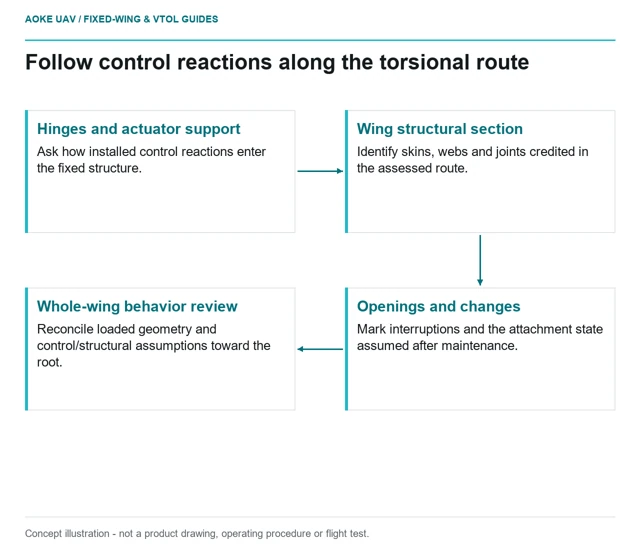
Trace wing-section torsion, hinge and actuator reactions, access-panel assumptions and the boundary of aeroelastic evidence.
GAUTEN UAV / TOPIC ARCHIVE
Trace wing-section torsion, hinge and actuator reactions, access-panel assumptions and the boundary of aeroelastic evidence.
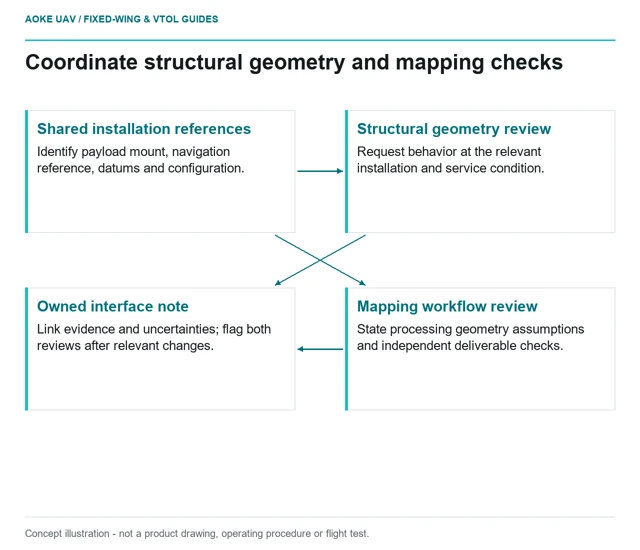
Coordinate structural deformation questions with payload geometry, calibration assumptions and independently checked survey output.
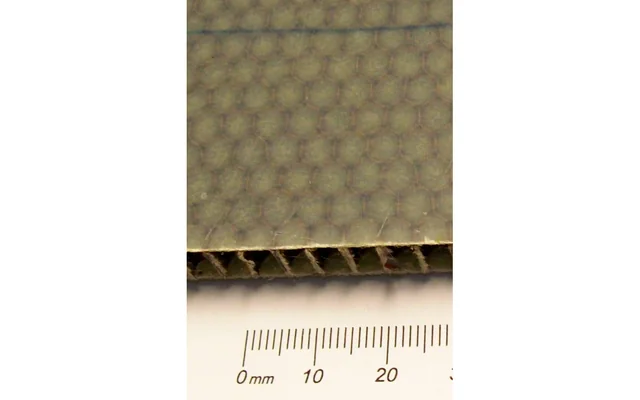
Map trimmed core, hatch boundaries and damaged closeouts before assuming that a large composite survey wing excludes moisture.
Image: Ulfbastel / public-domain. Resized for this page.
Review core duties, local hardware details, exposed edges and process-specific panel evidence for a hypothetical large survey wing.
Image: Ulfbastel / public-domain. Resized for this page.
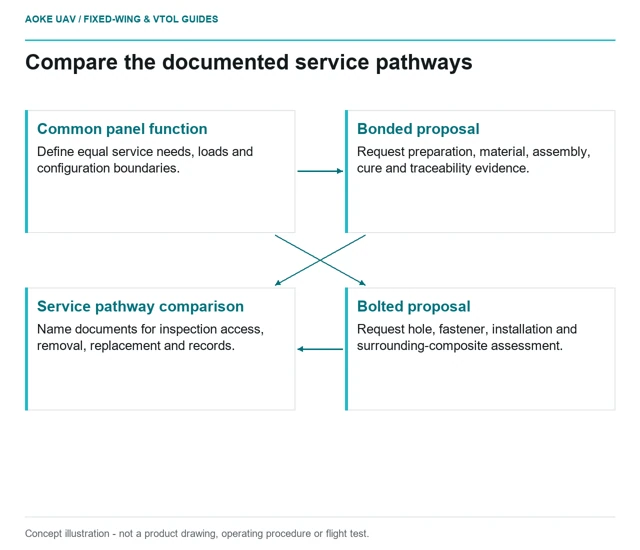
Compare the complete inspection and replacement burden of hypothetical bonded and bolted large-wing panel attachment concepts.
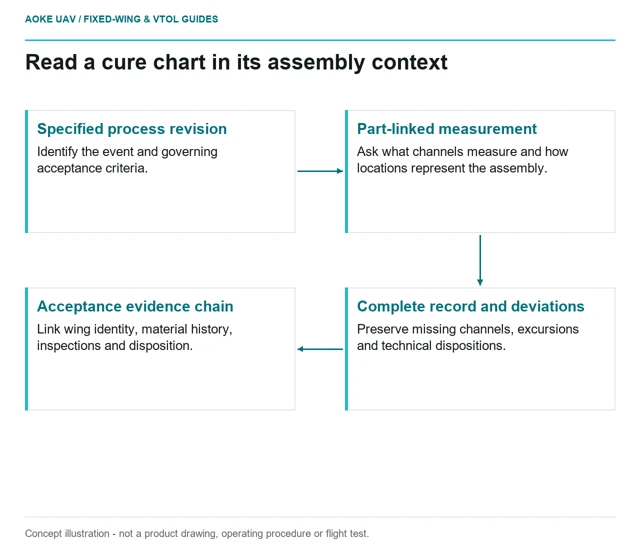
How to connect a composite wing cure chart to its governing cycle, measurement context, deviations, serialised hardware, and acceptance evidence.
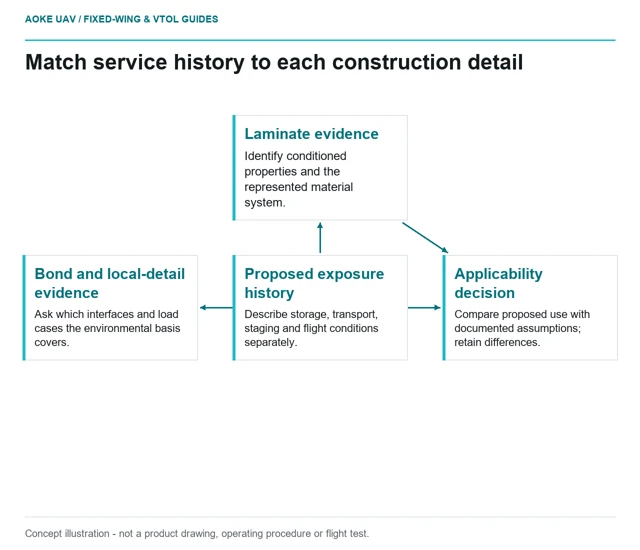
How to match environmental assumptions and conditioned material, bond, and structural evidence to recurring fixed-wing survey work in humid regions.
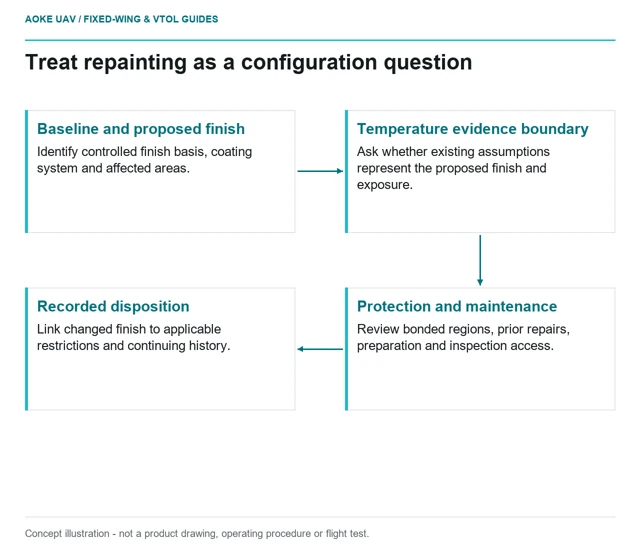
Why a composite survey fuselage repaint should be reviewed against temperature assumptions, coatings instructions, bonded details, and configuration records.
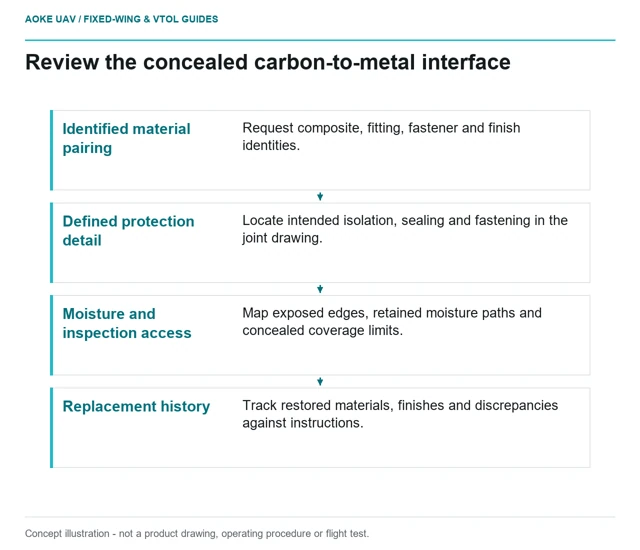
A configuration-specific review of material pairing, moisture paths, isolation evidence, inspection access, and replacement records at carbon-metal wing interfaces.
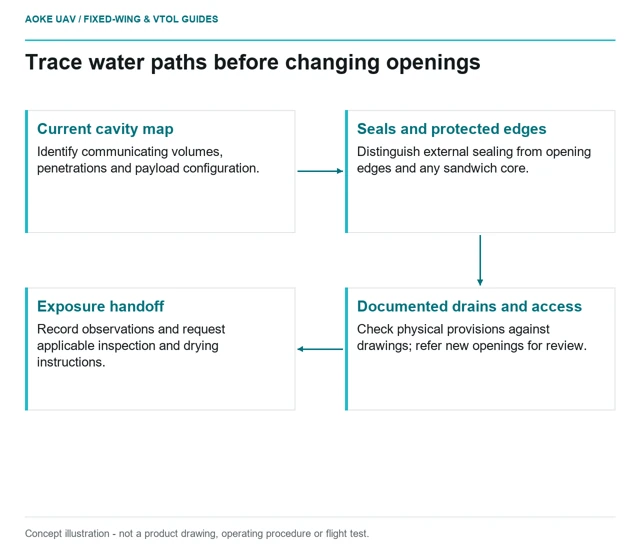
How cavity maps, protected core edges and documented drains inform moisture reviews for large composite aircraft.