Exposure Time and Motion Blur in Fixed-Wing Mapping
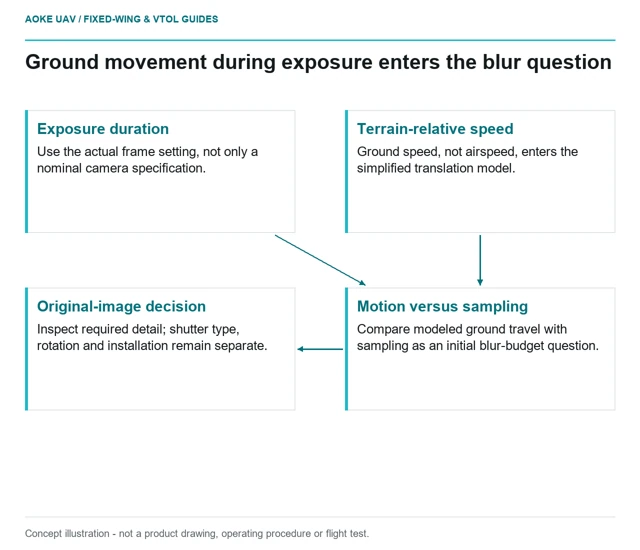
Build an image-motion budget around terrain-relative movement, exposure and the actual installed camera, then inspect original fixed-wing images.
GAUTEN UAV / TOPIC ARCHIVE
Build an image-motion budget around terrain-relative movement, exposure and the actual installed camera, then inspect original fixed-wing images.
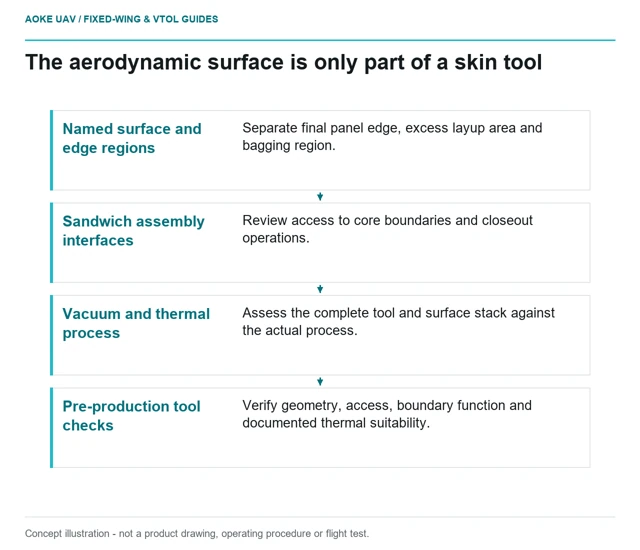
Build a printed sandwich-wing mold brief around layup allowances, core interfaces, vacuum compatibility and independent panel acceptance.
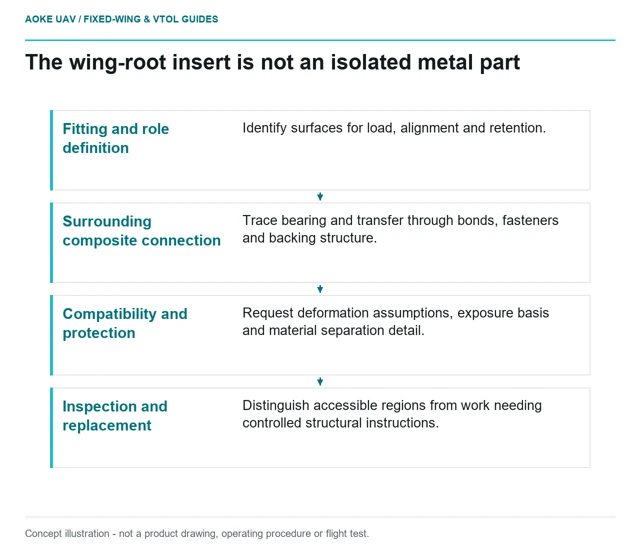
Ask how metal root inserts introduce loads, accommodate environmental differences and remain inspectable inside a composite survey wing.
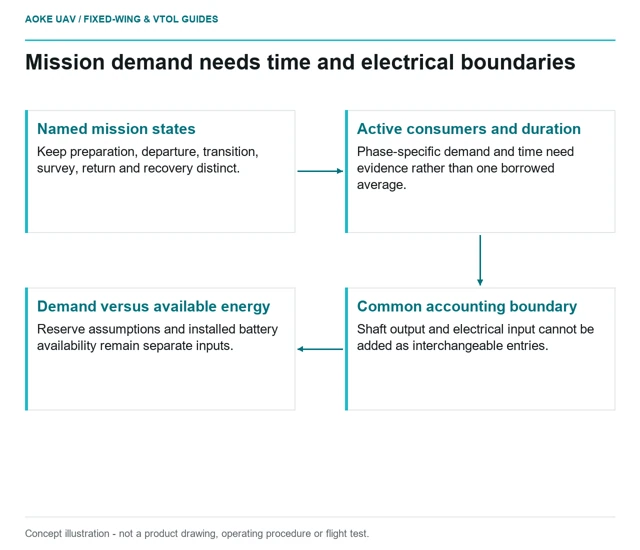
Use a phase-based demand ledger to expose payload consumption, conversion boundaries and uncertainty before making any aircraft endurance claim.
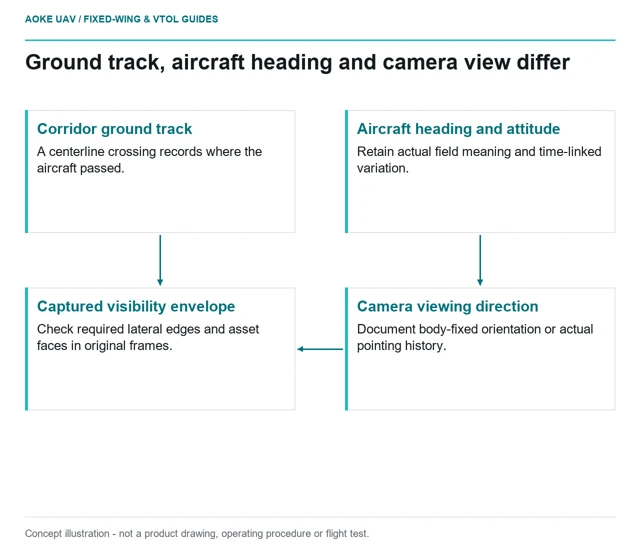
A corridor centerline is not the camera's visibility envelope. Review heading, ground track, camera orientation and the actual captured asset views separately.
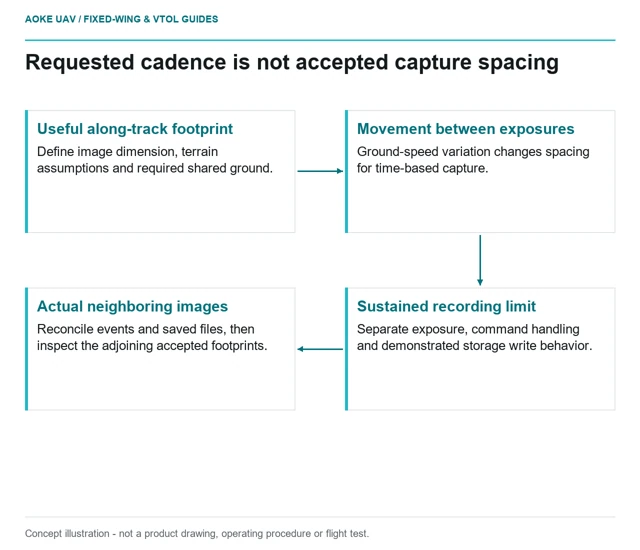
Check whether the installed camera can sustain real capture spacing through changing ground speed, not merely accept trigger commands.
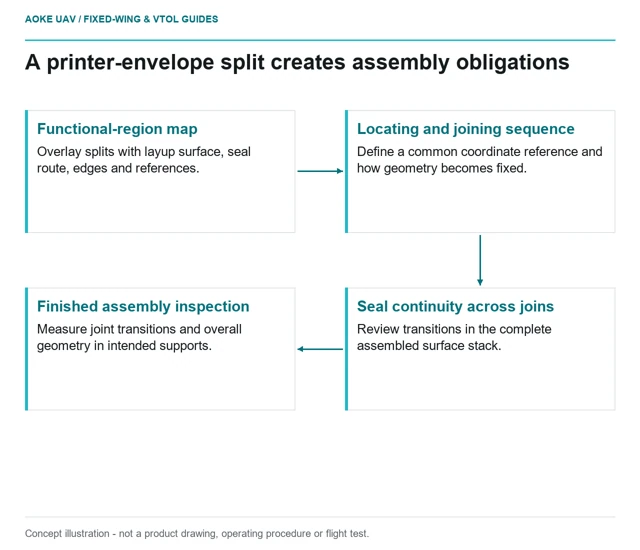
Choose printed wing-mold segmentation around surface regions, joint alignment, seal continuity and inspection of the finished assembly.
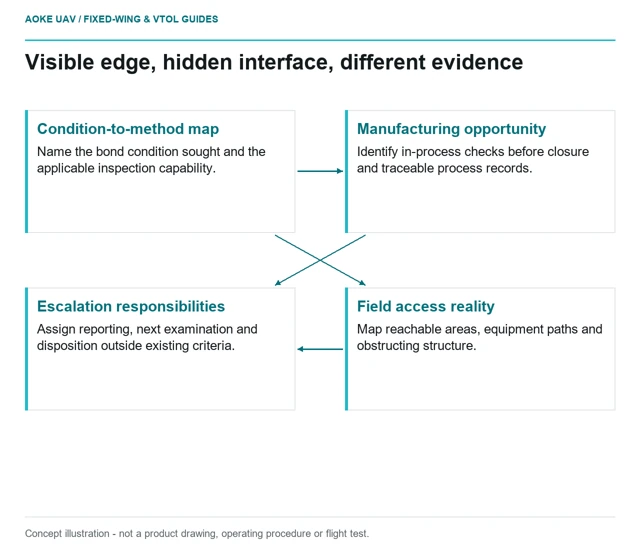
Separate visible seam condition from bond integrity and ask whether a large wing bondline has an applicable field inspection pathway.
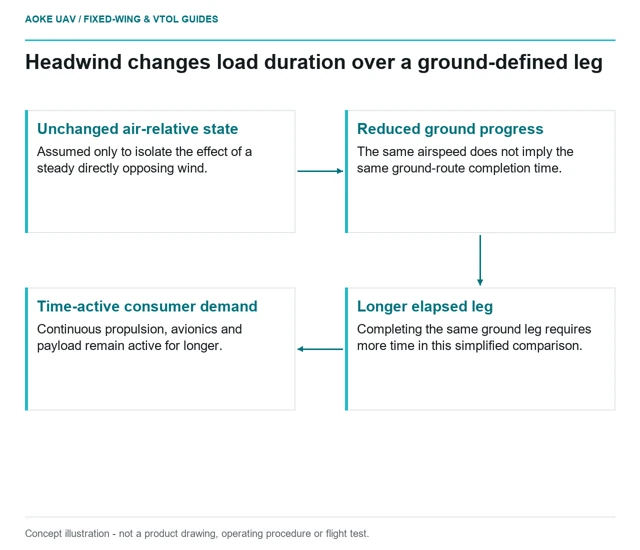
Distinguish airspeed from ground progress when reviewing how a headwind changes route duration and the duration of aircraft and payload loads.
A wind reading at the departure site cannot describe every route height and terrain setting. Organise weather evidence around the actual fixed-wing monitoring question.
Image: Charles Devaux (mclytir) / CC0. Resized for this page.