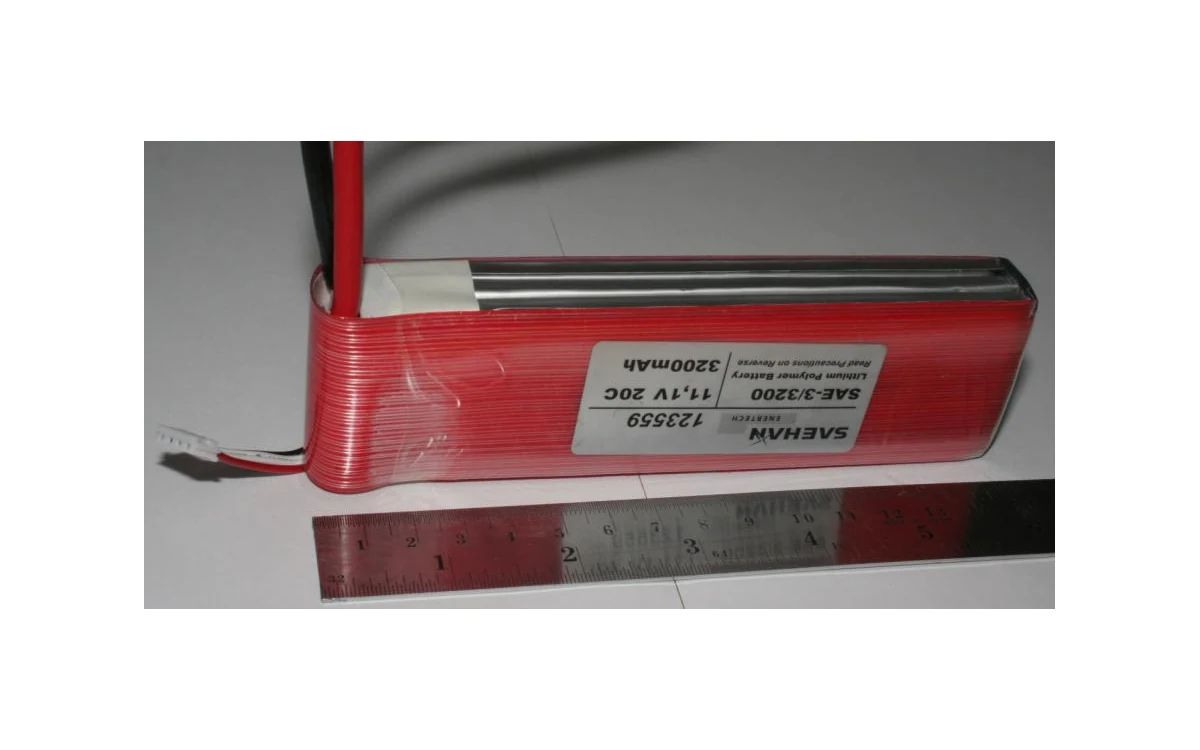
Two interchangeable packs appear to behave differently on a hypothetical large fixed-wing survey aircraft. One mission log shows a different voltage history, and the support team wants to call the pack worn out. That conclusion needs more than a visual comparison of traces. The useful task is to join each record to a pack identity, measurement method and mission context, then refer any maintenance disposition to applicable instructions. The example is not an observed fleet result.
Pack identity and service history
Create a record structure that distinguishes the pack assembly from its aircraft installation. Suggested fields include serial identity, part revision, installation history, relevant maintenance entries and the source of each recorded observation. If a pack moves between airframes, keep the association with both the pack and the aircraft configuration. Otherwise, a trend attributed to one battery could actually combine several assemblies or monitoring arrangements.
AC 20-184A discusses recording battery installation date and service age, following manufacturer maintenance instructions, and documenting replacements. Its aircraft certification context must be checked before applying it to a particular UAV. Here it supports the value of traceable maintenance information, not a retirement interval, fleet-health scoring algorithm or assurance that a specific pack remains serviceable.[1]
Capacity and impedance evidence
Request the actual pack manufacturer’s definitions and methods for any capacity or impedance entries. Preserve the measurement date, instrument or system, conditions and document revision alongside the result. Do not treat a capacity figure obtained under one method as directly interchangeable with a figure from another. Where methods differ, record the comparison as unresolved rather than silently combining the values into one health curve.
The FAA guidance includes maintenance requirements for capacity measurements and manufacturer-based replacement information. It does not provide the missing acceptance criteria for the hypothetical survey pack.[1] An impedance trend could be a useful question for its manufacturer, but this article supplies no numerical threshold or diagnostic rule. A measured change and a justified maintenance decision are separate records with separate evidentiary needs.
Environmental and load context
For the fixed-wing comparison, retain the payload configuration, relevant environmental observations and the broad load history associated with each trace. Distinguish lift-system demand in a VTOL configuration from the cruise segment. The proposed comparison should ask whether unlike conditions explain the apparent difference before assigning it entirely to the pack. This is a framework for reviewing existing evidence, not a flight-test procedure.
Also identify how the aircraft measured current and voltage. ArduPilot’s Common Power Module documentation describes analog measurement scaling and calibration, and warns that the example module has its own supply and measurement limitations.[2] That document is not a large-aircraft power-module specification. Its relevance is that a logged battery field depends on an identified measurement chain, rather than becoming a calibrated health measurement merely because it appears in a log.
Disposition belongs to applicable guidance
A useful review table separates observations, possible explanations and the next evidence owner. For example, an unexplained difference between two packs can be assigned to the pack manufacturer for method interpretation while an unidentified monitor revision is assigned to the aircraft integrator. Keeping those questions separate avoids diagnosing the pack from a sensor-documentation gap or dismissing a real discrepancy as ordinary mission variation.
For this large fixed-wing support scenario, the deliverable is a comparable pack history and a clear list of unresolved questions. Serviceability, inspection, replacement and storage decisions remain governed by the exact applicable maintenance instructions and responsible personnel. Do not invent a cycle count, allowable impedance rise or remaining-life promise. Better records make a maintenance decision auditable; they do not replace the authority or evidence needed to make it.
Related reading
- Battery Nameplate Energy Versus Installed Usable Energy
- Operating-State Metadata for Industrial Inspection
Sources
- [1] Guidance on Testing and Installation of Rechargeable Lithium Battery and Battery Systems on Aircraft, AC 20-184A
- [2] Common Power Module
Visual summary
Concept illustration
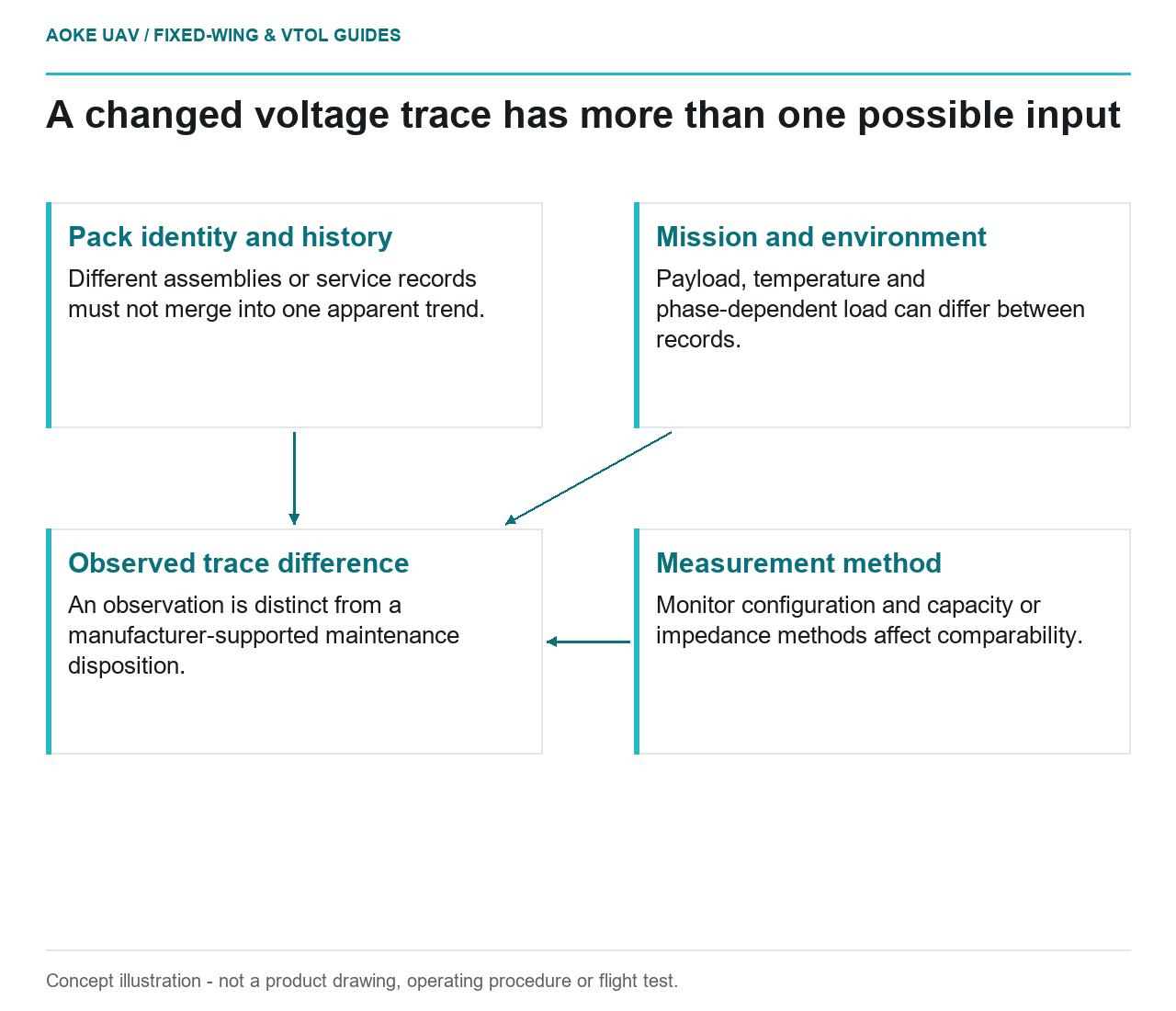
Read diagram notes
- Pack identity and history: Different assemblies or service records must not merge into one apparent trend.
- Mission and environment: Payload, temperature and phase-dependent load can differ between records.
- Measurement method: Monitor configuration and capacity or impedance methods affect comparability.
- Observed trace difference: An observation is distinct from a manufacturer-supported maintenance disposition.