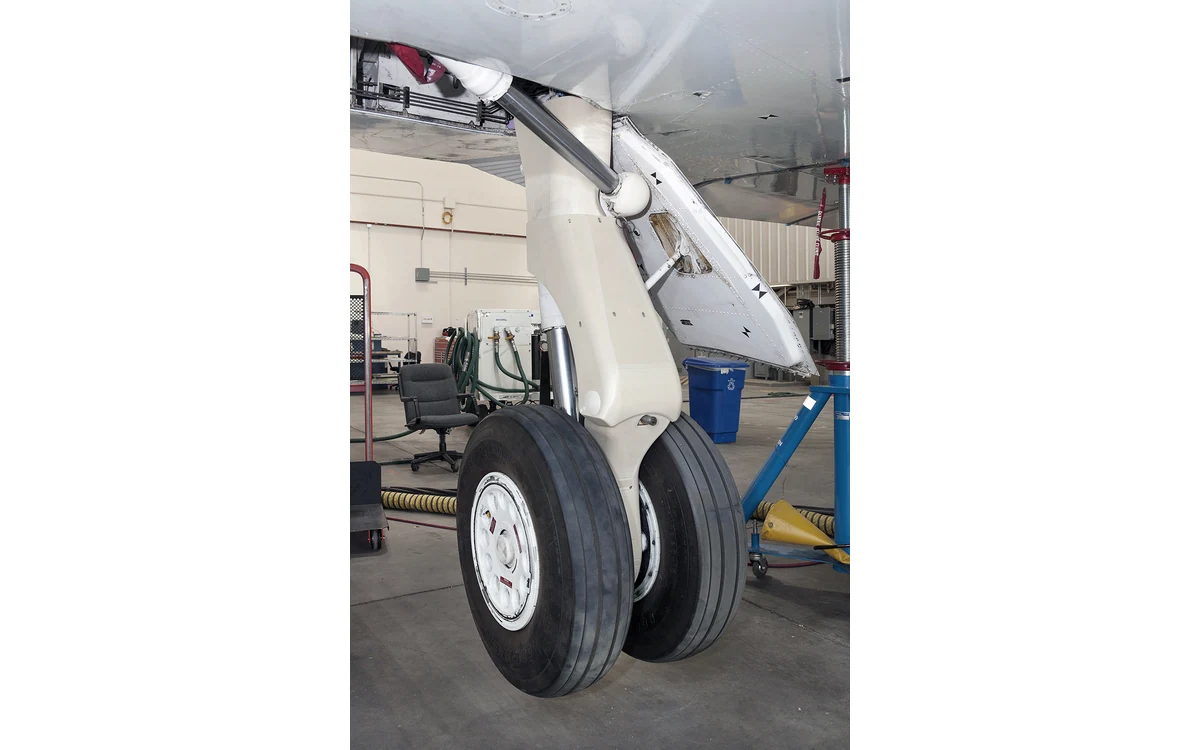
Consider a hypothetical workshop preparing a large fixed-wing civil survey aircraft. Its printer produces a wing assembly cradle, a sensor clearance model and a proposed airborne bracket. These objects may share a material name, but this editorial example assigns them different decisions: permission to use a manufacturing aid, acceptance of a fit-check model and authorization of flight hardware. None is an observed GAUTEN product or test result.
Classify function before choosing a process
Start the item record with its intended function, where it will be used and whether it stays aboard. Formlabs describes manufacturing aids as devices supporting manufacturing operations and includes assembly fixtures and inspection jigs among its applications. That supports a tooling classification, not a statement about airborne suitability. [2]
For this fixed-wing project, label the cradle as ground tooling and the clearance model as a geometry-only prototype. Put the bracket in a separate proposed-hardware workflow before discussing printing. If a supposedly temporary item could be left inside a wing bay, include removal and accountability in the proposed tool-use instructions. Calling an object non-flight does not answer what accidental retention would mean.
Failure consequences in tooling and flight
In the hypothetical review, ask what each failure could change. A distorted cradle could mislead an assembly check; an inaccurate model could hide a cable conflict; an airborne bracket requires a different assessment of installed function and consequences. These are scenario questions, not quantified predictions or a generic criticality classification.
NASA-STD-6030 is a useful illustration of a more demanding control framework: it separates foundational manufacturing controls from part-production controls. Its stated domain is spaceflight systems, and it explicitly does not replace other structural design or certification criteria. It is not a UAV qualification route, nor evidence that this workshop’s printed bracket is acceptable. [3]
Keep three decisions separate in meeting notes: the tool is suitable for its named operation; the aircraft component meets its own acceptance criteria; the installed aircraft is released through its applicable engineering process. Do not let a signature against the first sentence silently authorize the other two.
Process evidence and traceability
Formlabs calls for dimensional inspection against the CAD model and functional testing of seating and support. Its guidance also identifies continuous loading and high-wear areas as limitations requiring attention. For a cradle, these are relevant acceptance topics; they do not establish wing strength or a bracket’s installed performance. [2]
The NASA document’s digital-thread discussion connects design files, derivative geometry, build information and subsequent records through configuration control. Used only as a conceptual reference, that suggests asking whether the inspected item can be traced to the geometry and process actually used. A familiar filename alone should not close the hypothetical review. [3]
For the large fixed-wing workshop, the proposed record would identify the CAD revision, printed item identity, material documentation, relevant post-processing instructions and inspection result. Where the selected process has no substantiated evidence for the intended use, record the gap. A coupon result should not be substituted for an unexamined assembly interface.
A decision record for each printed item
Write a short use boundary beside the disposition. The cradle might be accepted only for locating specified surfaces during an unloaded geometry check. The clearance model might be accepted for access demonstrations only. The bracket remains a proposal until its separate engineering evidence is complete. These illustrative boundaries require project-specific review before use.
Assign responsibility for changes as well as first acceptance. If the cradle’s locating face is repaired, if the prototype becomes a permanent installation or if the bracket’s load path changes, reopen the relevant decision. Preserve the earlier record rather than relabeling it as approval of a new function.
The practical output is an item-by-item decision register, not a list of printable aircraft parts. It should make misuse visible: intended operation, prohibited interpretation, evidence reviewed, unresolved questions and the person responsible for the next disposition. That keeps manufacturing convenience from becoming an unsupported flight claim.
Related reading
- A Composite Airframe Supplier Evidence Pack
- A Propulsion Supplier Evidence Checklist for Industrial UAVs
Sources
- [2] Jigs, fixtures, and manufacturing aids
- [3] NASA-STD-6030: Additive Manufacturing Requirements for Spaceflight Systems
Visual summary
Concept illustration
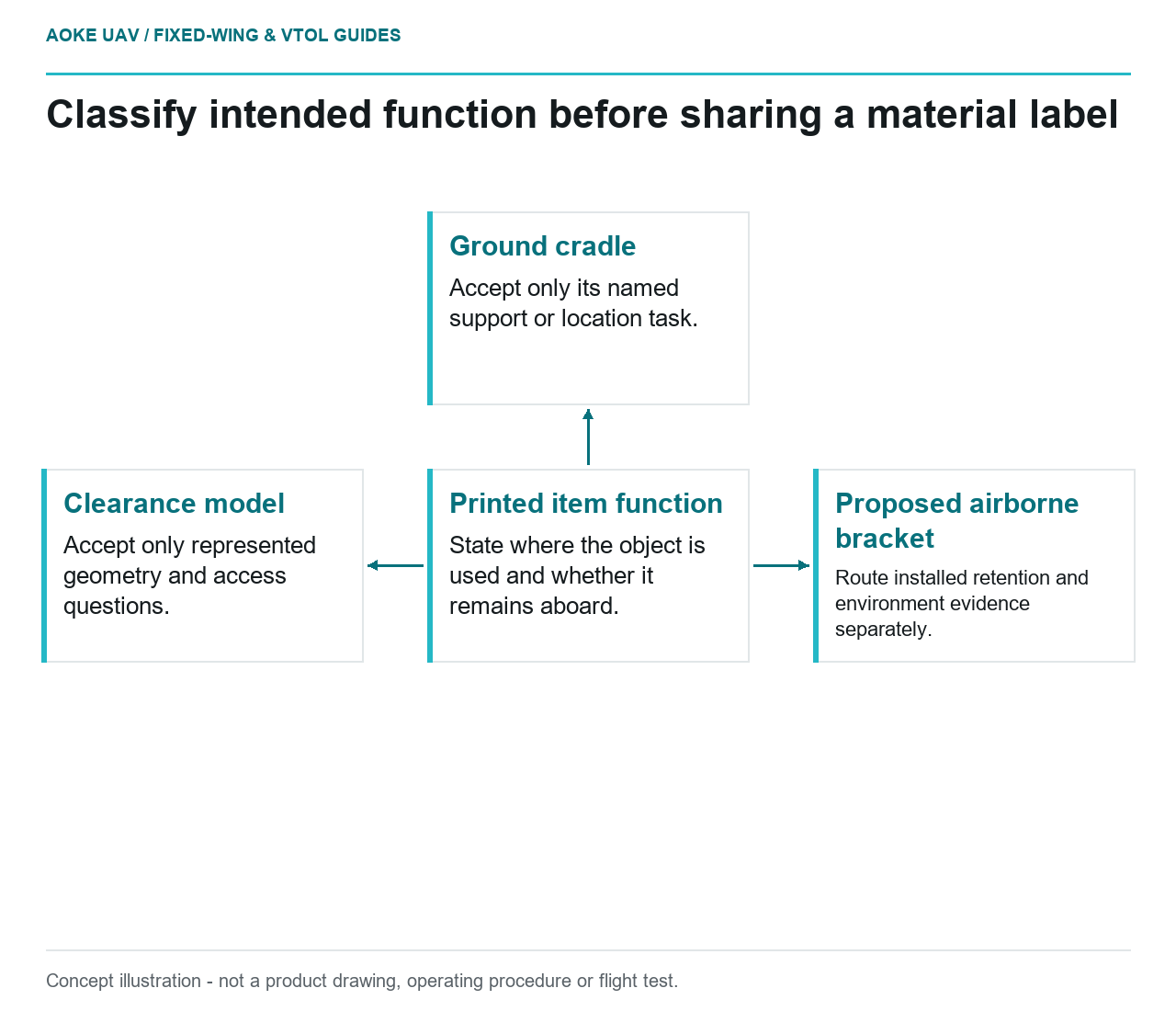
Read diagram notes
- Printed item function: State where the object is used and whether it remains aboard.
- Ground cradle: Accept only its named support or location task.
- Clearance model: Accept only represented geometry and access questions.
- Proposed airborne bracket: Route installed retention and environment evidence separately.