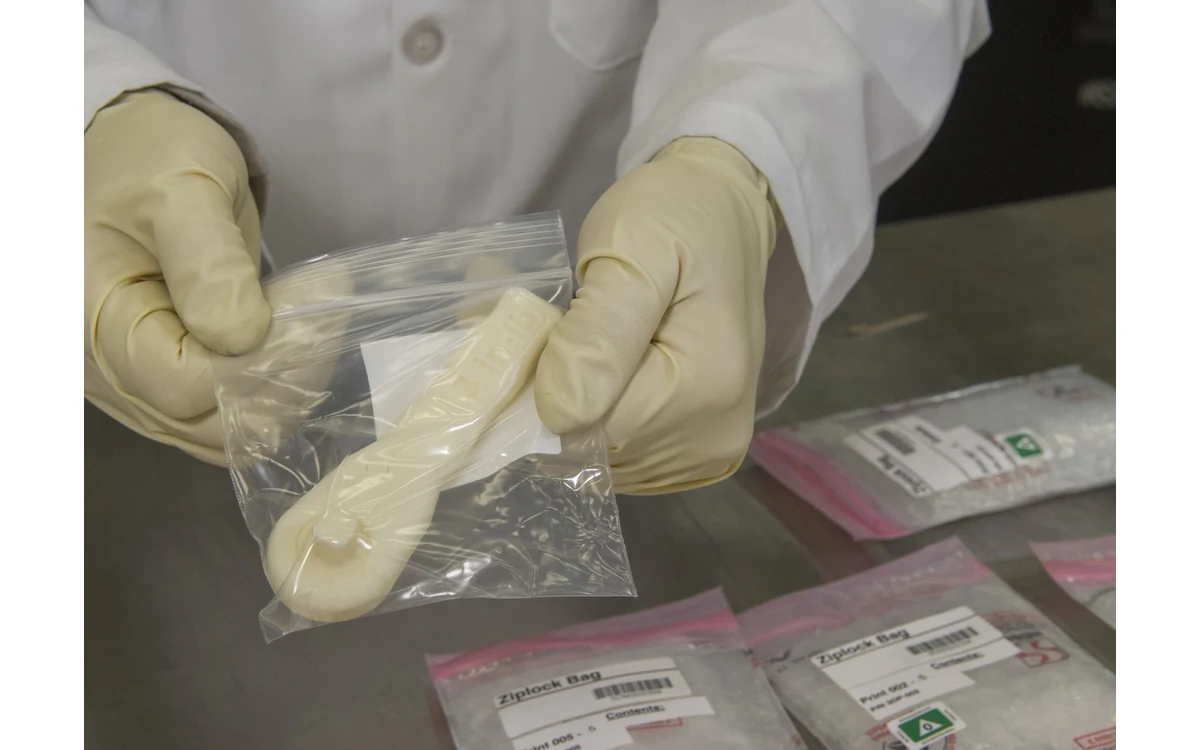
A remote civil survey workshop needs a replacement ground-service fixture for a large fixed-wing aircraft. Sending the geometry file is quick; reproducing the accepted tool is a different task. In this hypothetical support arrangement, the handoff must explain what to manufacture, how the completed item will be evaluated, and who can release it locally. The file is one part of that package, not the entire manufacturing definition.
Geometry versus manufacturing definition
State the fixture’s intended function and the limits on its use. Identify the applicable aircraft interface and controlled drawing revision, including features or requirements absent from the printable model. A simplified mesh can convey shape without communicating tolerances, datums, inserted hardware, or the conditions of acceptance. The remote team should not have to infer those items from an old photograph.
NASA-STD-6030 describes a digital product definition that includes the information needed to reproduce a build, including relevant manually set processing parameters. Its digital-thread requirements concern spaceflight AM and are not UAV approval. [5] The useful lesson for this handoff is narrower: preserve the manufacturing definition behind the geometry instead of assuming that an identical mesh guarantees an equivalent physical fixture.
Material and machine requirements
Include the actual feedstock definition, permitted equipment and process configuration, and the instructions governing the intended build. If the receiving workshop cannot meet those requirements, route the proposed difference for review. Do not let a local substitution remain invisible because the replacement material has a similar name or the resulting fixture appears to fit the aircraft interface.
NASA distinguishes feedstock, build controls, and post-processing when defining a candidate material process. [5] Those categories help structure questions for the remote workshop, while leaving its specific tooling requirements to the responsible authority. This article supplies no printer settings, feedstock substitutions, or environmental controls for an unidentified fixture. The remote team needs applicable instructions, not a generic recipe attached to an email.
Post-processing and inspection instructions
Describe the complete route to the accepted tool, including any prescribed washing, curing, finishing, hardware installation, and final verification. Formlabs directs users to material-specific processing guidance and recommends inspection against CAD plus functional seating checks. [4] That guidance supports a completed-article review; it does not establish that every workshop’s instruments or inspection setup can resolve the intended feature.
For this fixed-wing service scenario, request a local inspection record tied to the actual fixture identity and reference arrangement. Define who provides the reference data and who assesses any discrepancy. A remote photograph can document some conditions but cannot replace an unperformed measurement. State which checks were completed, which were unavailable, and which questions therefore remain open before the fixture enters normal service use.
Local release and record ownership
Assign responsibility for the design package, local manufacturing record, nonconformance disposition, and release of the completed ground aid. The receiving workshop should know where to send a proposed deviation and how to determine whether an updated file supersedes its package. Keep the physical tool identity connected to those records even when printing, finishing, and inspection occur in different places.
The final large fixed-wing handoff should return an evidence package, not just confirmation that the printer completed the job. File identity can establish that the same digital content arrived; manufacturing and inspection evidence addresses the tool actually produced. Neither statement releases aircraft hardware or changes the aircraft’s maintenance instructions. Distributed printing is useful here only when the local acceptance decision remains as explicit as the digital transfer.
Related reading
Sources
- [5] NASA-STD-6030: Additive Manufacturing Requirements for Spaceflight Systems
- [4] Jigs, fixtures, and manufacturing aids
Visual summary
Concept illustration
Read diagram notes
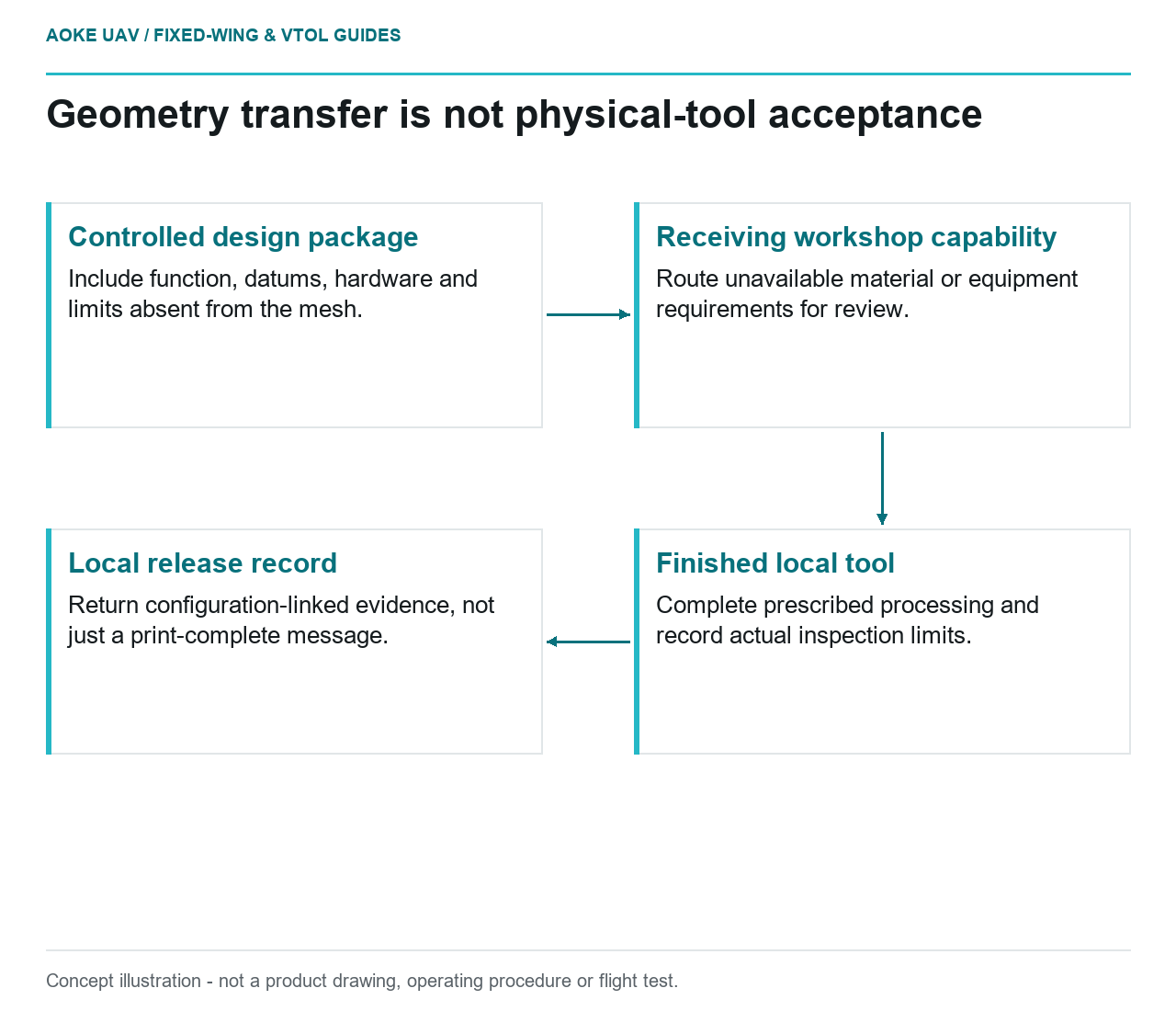
- Controlled design package: Include function, datums, hardware and limits absent from the mesh.
- Receiving workshop capability: Route unavailable material or equipment requirements for review.
- Finished local tool: Complete prescribed processing and record actual inspection limits.
- Local release record: Return configuration-linked evidence, not just a print-complete message.