Concept illustration
Read diagram notes
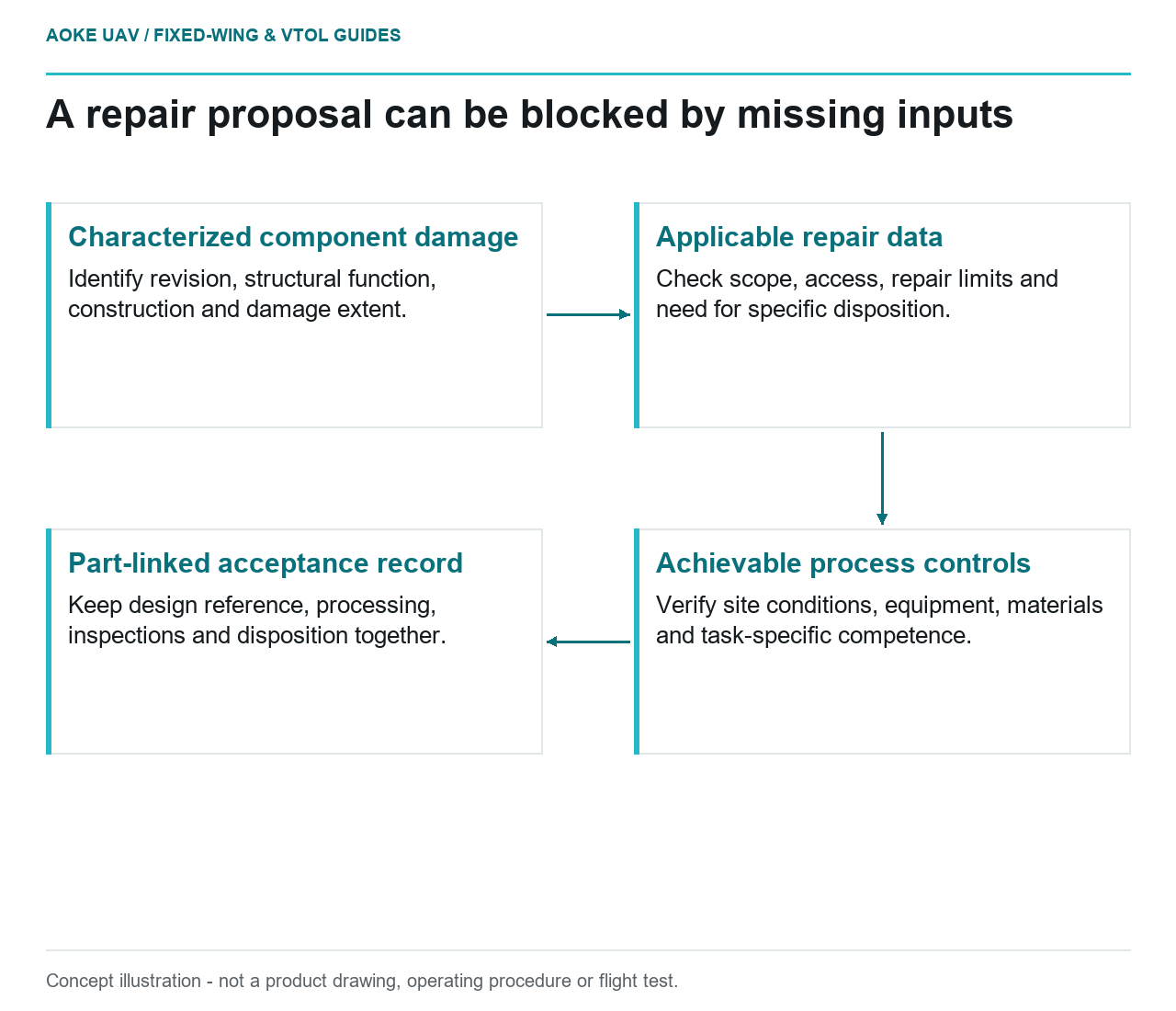
- Characterized component damage: Identify revision, structural function, construction and damage extent.
- Applicable repair data: Check scope, access, repair limits and need for specific disposition.
- Achievable process controls: Verify site conditions, equipment, materials and task-specific competence.
- Part-linked acceptance record: Keep design reference, processing, inspections and disposition together.
A proposed patch can sound routine before anyone has identified what is damaged. In this hypothetical civil operation, a large fixed-wing survey panel has damage and the field team proposes a composite repair without applicable repair data. The right editorial question is what information must exist before treating that proposal as a controlled engineering task. This is not an GAUTEN repair case and gives no patch dimensions, material recipe, or flight-release instruction.
Identify laminate and structural function
Request the component identity and revision, its structural function, the actual laminate or sandwich construction, and the established damage characterization. Keep the observed indication separate from any assumption about internal extent. For the hypothetical wing, ask whether the damaged area includes a joint, support, or other detail whose behavior differs from a plain panel. A generic description such as “carbon fiber” leaves too much undefined.
FAA composite guidance connects repair design to the particular structure, compatible materials, processing, and substantiation. It also distinguishes initial damage detection from characterization of the full damage extent. The document concerns certificated aircraft; it is contextual guidance, not applicable repair authorization for this fixed-wing UAV. [1] Ask the responsible organization to identify the exact technical data that would govern the proposed work.
Approved repair limits and access
Distinguish damage permitted without repair from damage that may be repaired using existing data. FAA guidance treats allowable damage limits and repairable damage limits as separate, documented boundaries supported by analysis and tests. It says additional substantiation is generally needed for damage not previously considered. [1] Neither category can be inferred from a generic article or a repair material supplier’s description.
For the hypothetical large fixed-wing panel, request the repair instruction’s applicability statement, access assumptions, inspection requirements, and restrictions. Ask whether both sides are accessible as the method expects and whether adjacent systems or finishes change the work. If the damage falls outside the cited data, identify the need for a specific engineering disposition. Do not enlarge an existing instruction’s scope by analogy to a similarly shaped panel.
Process control outside a factory
Field conditions are part of the evidence question, not merely a matter of technician convenience. FAA guidance identifies bond surface preparation, material compatibility, thermal management during cure, machining, installation techniques, and process controls as repair concerns. It also emphasizes task-specific skills and supporting structural data. [1] A familiar adhesive name does not answer whether the actual process can be executed and verified at the project site.
Request the applicable requirements for workspace conditions, material storage and handling, equipment, personnel competence, and in-process checks. Ask how each requirement will be demonstrated rather than assuming that a shelter or portable heater is sufficient. These are requests for the governing procedure, not recommendations for improvised processing. If the required conditions cannot be established, the proposed location remains a constraint to resolve, not a reason to relax the procedure.
Post-repair records and substantiation
FAA guidance explains that some processing defects, including weak bonds, cannot be reliably detected at the end of a repair. It therefore couples repair quality with process controls and substantiation, rather than relying solely on a final visual check. It also calls for repair information to be entered in the maintenance records for the particular part. [1]
For this fixed-wing civil scenario, request a record linking the damage assessment, repair design reference, materials, process record, inspections, deviations, and final engineering disposition to the actual component. Ask how the repaired configuration will affect later inspection or maintenance instructions. A completed work sheet should not be described as proof of restored capability unless the applicable acceptance and substantiation chain is present. Keep the repair record with the wing’s continuing history, not only with the departing field team.
Decision boundary
The missing-document list is the deliverable: applicable construction and repair data, characterized damage, achievable process controls, competent personnel, and part-linked acceptance evidence. This article cannot decide whether the hypothetical large fixed-wing wing is repairable in the field. When those inputs are absent, record a blocked repair proposal rather than converting an attractive patch concept into a routine fix.
Related reading
- Visible Marks and Hidden Damage in Composite Airframes
- Printed Support Tools for an Approved Composite Repair