Concept illustration
Read diagram notes
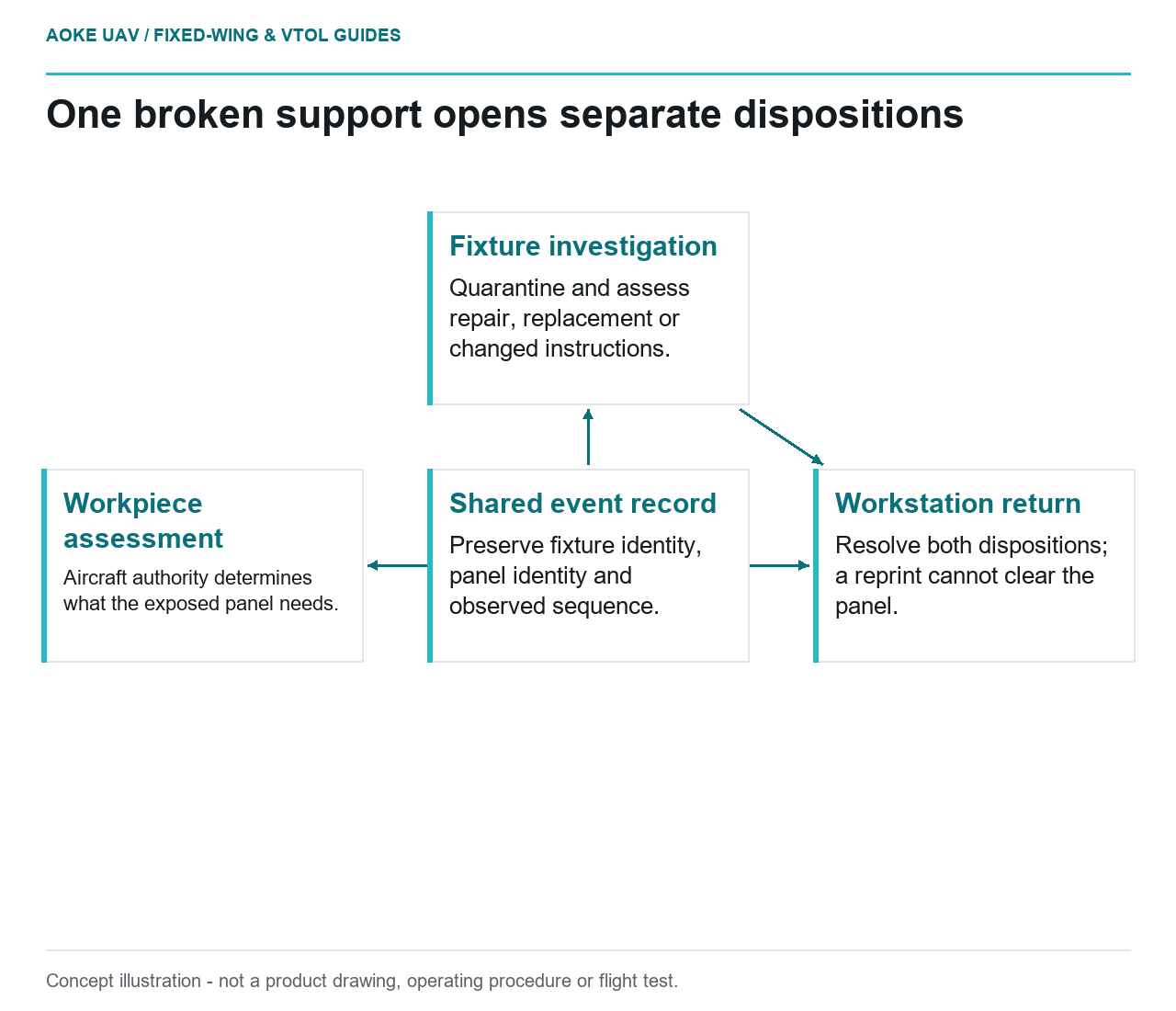
- Shared event record: Preserve fixture identity, panel identity and observed sequence.
- Fixture investigation: Quarantine and assess repair, replacement or changed instructions.
- Workpiece assessment: Aircraft authority determines what the exposed panel needs.
- Workstation return: Resolve both dispositions; a reprint cannot clear the panel.
A printed support breaks while a composite wing panel is seated in it. Reprinting the support may restore the workstation, but it cannot explain what happened to the panel. In this hypothetical large civil fixed-wing workshop event, the record needs to preserve two questions: why the tool is unserviceable and whether the aircraft workpiece requires independent assessment. Closing one question must not silently close the other.
Event history and fixture function
Identify the fixture, workpiece, current configurations, task, and observed sequence before discarding or modifying evidence. Record what is known, what was only inferred, and which details remain uncertain. Include the support location, restraints, visible fragments, and any unexpected workpiece movement. Do not turn a witness description into a calculated aircraft load or an unverified failure cause.
Formlabs recommends checking functional seating against locating surfaces and supports and cautions about unsupported features, wear, and sustained loading in printed aids. [4] Those topics can inform a fixture investigation, but the guidance does not diagnose this break. Preserve the actual construction and use history so that the responsible reviewer can assess relevant mechanisms rather than selecting one from a generic list.
Possible loads into the workpiece
Ask the aircraft authority which aspects of the event need evaluation against the applicable workpiece and handling information. Do not estimate that a wing was unharmed simply because the support was lightweight or the surface looks normal. Equally, do not claim hidden damage occurred without evidence. The event creates an assessment question whose answer must come from the appropriate inspection and engineering process.
FAA composite-structure guidance discusses service damage reporting, inspection, damage limits, and substantiation of repairs in a certificated-aircraft context. [1] That supports keeping event history and airframe disposition explicit. It does not prescribe an inspection method or allowable damage for this UAV panel, and it cannot establish airworthiness merely because an unrelated general circular was consulted.
Separate fixture and aircraft disposition
Open distinct records linked to the same event. The fixture record can address quarantine, investigation, repair or replacement, and revised use instructions. The aircraft or workpiece record should follow the applicable authority’s requirements for assessment and release. A tooling technician’s decision to discard a broken print is not a decision about the composite panel that was resting in it.
For this fixed-wing scenario, document where the workpiece went after the event and which tasks remain on hold under the responsible process. Keep the scope of each conclusion narrow: a surface observation, an engineering assessment, and a release decision are different record entries. This proposed workflow supplies no invented test outcome, acceptable damage size, or assurance that replacing the support removes the need for further review.
Replacement tool verification
Review whether the replacement repeats an accepted definition or incorporates a change prompted by the event. Record the chosen design, material, build, processing, and inspection status. Formlabs advises inspection against CAD and evaluation of fixture function. [4] Those checks remain necessary even when the replacement comes from a familiar file; file reuse cannot establish the condition of the newly manufactured object.
Before returning the workstation to normal use, confirm that the tool disposition, any changed instructions, and the independent workpiece disposition have reached their required owners. A large fixed-wing team benefits from a traceable explanation of what was known and decided, not a tidy story that invents causation. Preserve uncertainties where evidence is missing and avoid calling the aircraft cleared on the strength of a new fixture alone.
Related reading
- Visible Marks and Hidden Damage in Composite Airframes
- Repairing a Printed Tool Without Losing Process Control