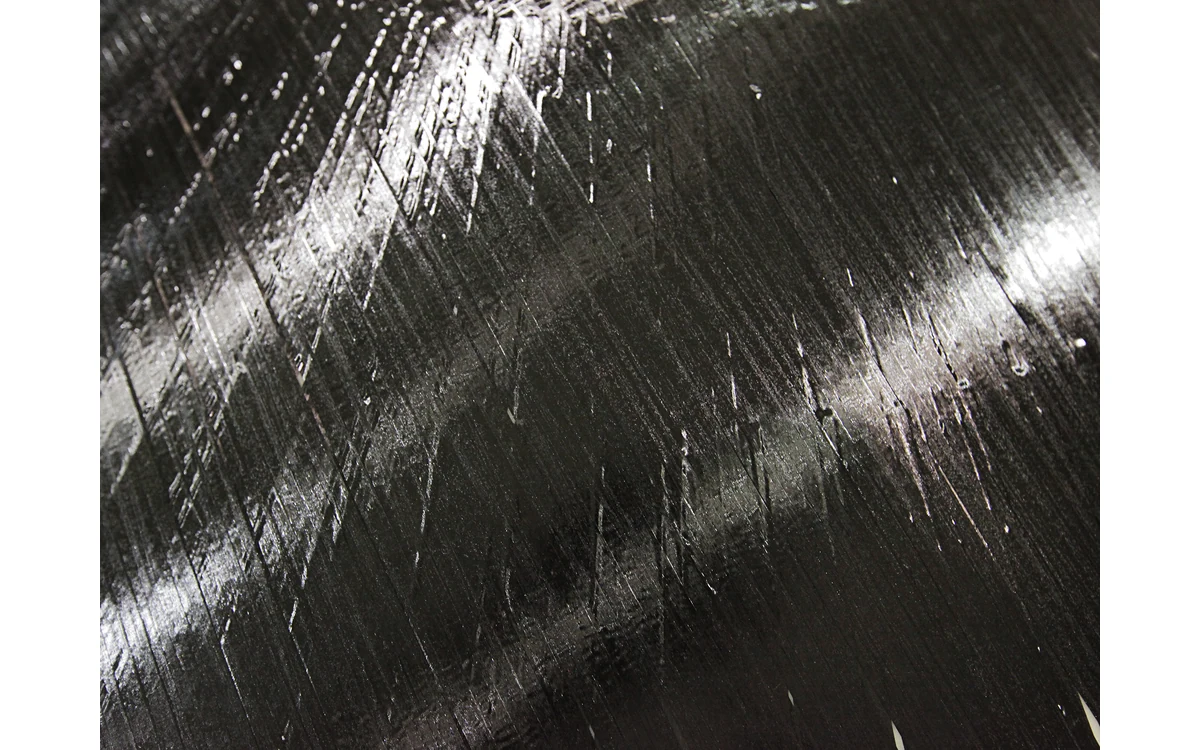
A supplier offers a beautifully finished wing panel for a hypothetical large fixed-wing environmental-mapping aircraft. The photographs show a uniform gloss, but the procurement file contains no explanation of internal-defect acceptance. The missing question is not whether the finish is attractive. It is what evidence connects the manufactured laminate, its inspection coverage and the criteria used to accept it. This article separates those records and does not provide a void-content threshold, an inspection technique or a method for diagnosing laminate quality from appearance.
Cosmetic layer versus load-carrying laminate
Ask the supplier to identify the finish system separately from the load-carrying laminate. Request the drawing revision and the inspection stage represented by the photographs. A photograph taken after filling and painting is an observation of that finished surface; the review should not silently treat it as an internal laminate measurement.
FAA composite guidance distinguishes production controls and structural substantiation from surface appearance. It also explains that visual damage indications provide limited information about hidden damage and may require further characterization. [1] This US certificated-aircraft guidance does not diagnose the hypothetical fixed-wing panel, but it establishes why a cosmetic assessment and a structural acceptance record answer different questions. The record should identify both without allowing one to stand in for the other.
Internal defects and detectability
Request the defect classes covered by the manufacturing acceptance plan and the basis for identifying them in the actual wing geometry. Ask which regions are inspected, which are inaccessible and which quality attributes rely on validated process controls. Do not infer the absence of a defect because an inspection report lists only a pass result with no method or coverage description.
FAA guidance includes porosity among examples of manufacturing defects whose acceptability requires substantiation in the relevant structural context. It does not offer a universal acceptable percentage for every laminate. [1] For this large industrial fixed-wing review, the useful question is whether the specified criteria relate to the panel’s design and manufacturing process. A limit from an unrelated flat specimen would need a justified applicability argument, not just a matching fiber name.
Process controls and inspection coverage
Follow the panel backward through its fabrication records: material identity, lay-up definition, process revision, cure record and inspection report. Ask where the report identifies the inspected part and whether it refers to the same configuration now offered. A process summary without that linkage may be useful background while still leaving the individual panel unaccounted for.
The FAA expects manufacturing records to support parts acceptance and discrepancies, and it notes that some flaws require process controls because they are not end-item inspectable. [1] Accordingly, asking only for one final inspection can miss the supplier’s actual control strategy. In the hypothetical fixed-wing procurement, request a clear division between evidence created during manufacture and evidence obtained after cure. Neither should be presented as complete assurance for unrelated defect types.
Acceptance data for the specific structure
Ask the responsible design authority to identify the acceptance criteria, the evidence supporting permitted discrepancies and the disposition route for findings outside those criteria. Preserve the defect location and report reference instead of rewriting a technical result as cosmetic. No inference about remaining strength or repairability is established by this explainer.
For this hypothetical fixed-wing panel, a complete response could still contain limitations: an inaccessible region, a bounded inspection capability or a specific deviation needing further review. Keeping those limitations visible is more useful than replacing them with a glossy image. FAA guidance requires substantiating data for defects and anomalies allowed to remain without rework or repair. [1] The procurement decision should therefore turn on applicability and traceability, not on whether the finish makes an internal quality concern difficult to see.
Related reading
Sources
Visual summary
Concept illustration
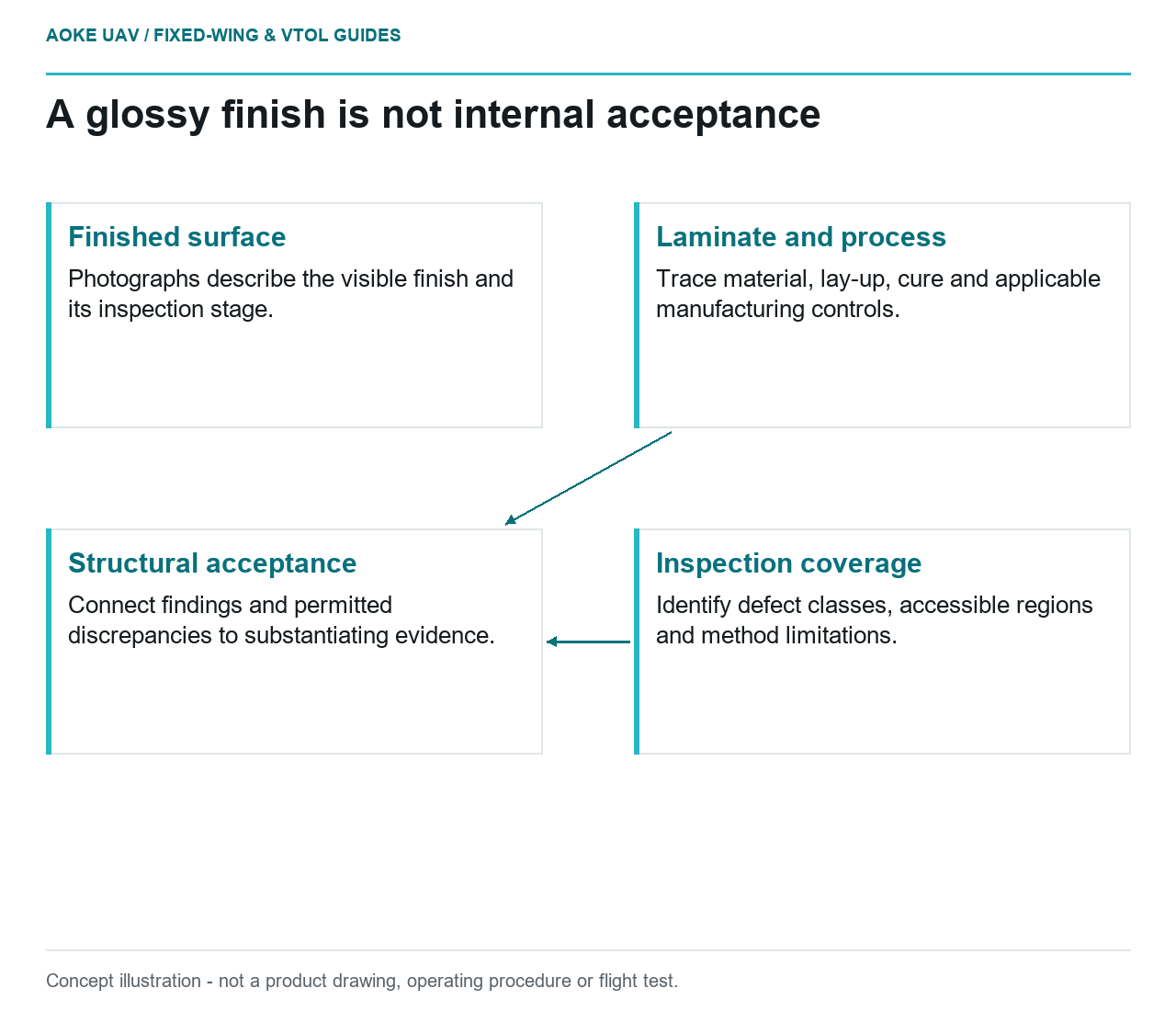
Read diagram notes
- Finished surface: Photographs describe the visible finish and its inspection stage.
- Laminate and process: Trace material, lay-up, cure and applicable manufacturing controls.
- Inspection coverage: Identify defect classes, accessible regions and method limitations.
- Structural acceptance: Connect findings and permitted discrepancies to substantiating evidence.