Concept illustration
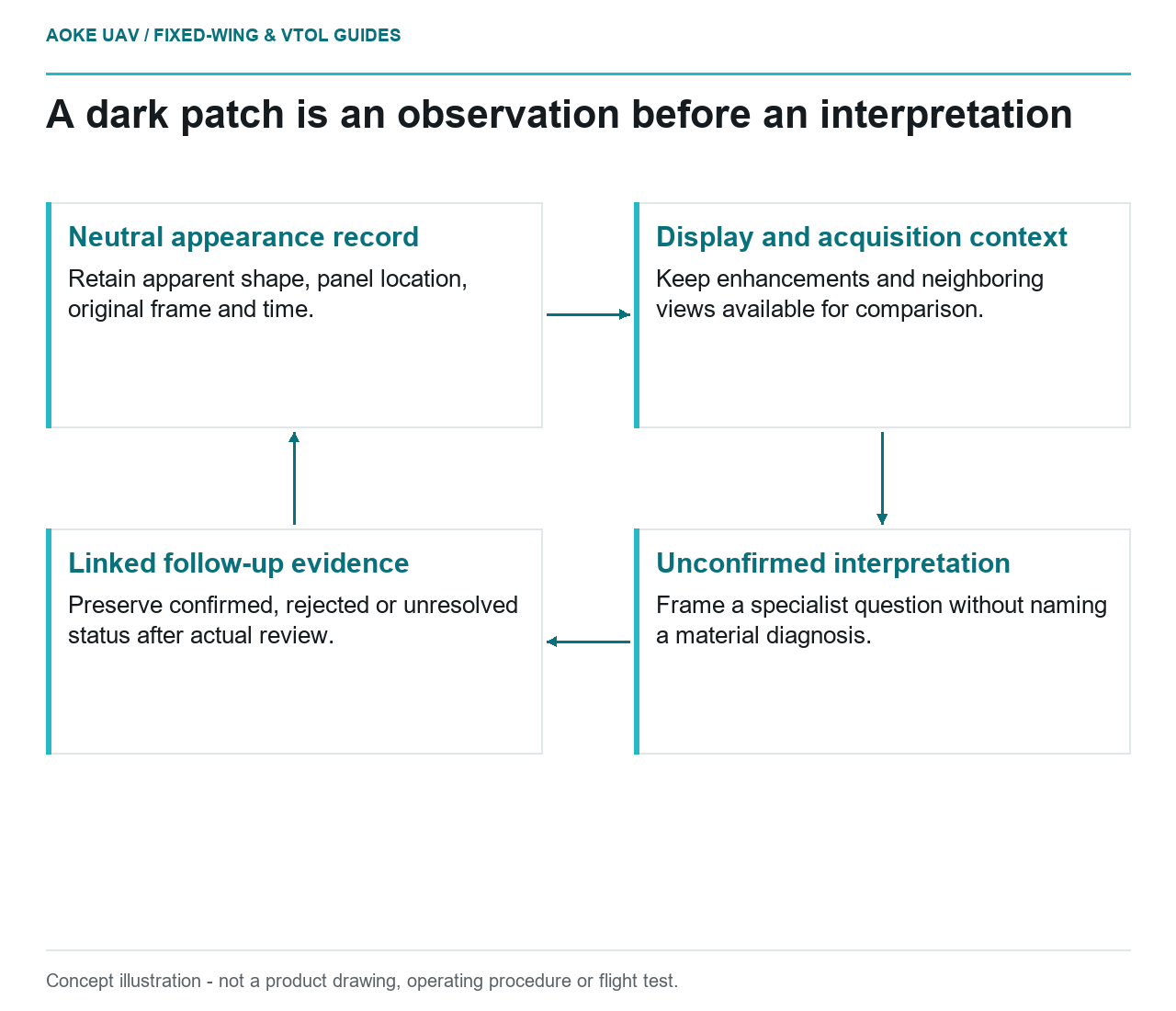
Read diagram notes
- Neutral appearance record: Retain apparent shape, panel location, original frame and time.
- Display and acquisition context: Keep enhancements and neighboring views available for comparison.
- Unconfirmed interpretation: Frame a specialist question without naming a material diagnosis.
- Linked follow-up evidence: Preserve confirmed, rejected or unresolved status after actual review.
Report the visible patch before naming its cause
Imagine a hypothetical civil facility with long composite-clad service shelters beside an access corridor. A large industrial fixed-wing overview shows a darker patch on one roof panel. A draft annotation calls it delamination, although the analyst has only the overview image. The useful question is how to preserve the observation and organize a qualified follow-up without converting a color difference into a material diagnosis. This is not an GAUTEN inspection or an observed defect.
Write a neutral description first: the patch’s apparent shape, location within the visible panel, source frame and acquisition time. Record whether its boundary can be distinguished in the original image. Keep the proposed interpretation in another field, marked unconfirmed if appropriate. An owner can then investigate the patch without inheriting a diagnosis that the evidence never established.
Separate appearance from measurement
USGS imagery guidance explains that sensor digital numbers require radiometric calibration for quantitative relationships to quantities such as reflectance. Its metadata discussion includes illumination, viewing geometry and processing information. This supports careful treatment of image appearance, not a method for diagnosing a roof panel from aerial color. [1]
For the illustrative fixed-wing images, retain the original frame beside any contrast-adjusted crop. Record enhancement settings and avoid comparing a processed crop with an unprocessed historical frame as though their display colors were directly measured material properties. Ask whether the patch is also visible in neighboring frames and whether those views show the same surface under a different viewing relationship.
List alternative questions for the responsible asset specialist rather than asserting alternative causes as facts. Could surface treatment records, cleaning history, recent work or a site visit clarify the observation? Which of those records exists? The point is to identify discriminating evidence, not to replace one unsupported diagnosis with a list of equally unsupported conclusions.
Understand what a visual indication leaves unresolved
FAA composite-aircraft guidance states that visual indications provide limited information about hidden portions of damage and that characterization can require different inspection procedures. It also discusses access, lighting and surface condition in visual inspection. That guidance concerns certificated aircraft structures; it is conceptual context here, not an inspection standard for the hypothetical shelter or proof of any damage. [2]
The proposed report should therefore avoid treating color as a direct observation of an internal material state. It should also avoid a converse claim that an unchanged-looking surface is intact. Keep the boundary between the visible evidence and the unmeasured material question explicit. The applicable assessment method must be selected by the owner using the actual component, material and maintenance documentation.
In this scenario, the large fixed-wing overview provides location and surrounding context. If the owner needs close access, contact testing or an internal assessment, define that as a separate task with suitable equipment and qualified review. Do not describe a broad-area flight as having completed an investigation that depends on a different observation method.
Preserve a testable follow-up record
Propose an observation record linking the original image, annotated region, appearance description, acquisition context and specialist question. Add a status for each interpretation, such as awaiting review or superseded after field evidence. Record the actual reviewer only when review occurs; a polished annotation does not establish that a materials specialist has examined it.
Suppose a later visit supplies component-specific information. Link that evidence to the original observation and explain whether it confirms, rejects or leaves the initial concern unresolved. Preserve the earlier neutral description so the report remains an honest account of what the aerial image showed at acquisition.
The fixed-wing monitoring value is a traceable prompt for investigation, not a material label generated from a dark pixel region. Keeping description, interpretation and follow-up separate makes the report useful even when the final cause is unknown, while avoiding an unsupported assertion about corrosion, delamination or structural condition.
Related reading
- Leading-Edge Erosion and Composite Inspection Planning
- Sun Angle and Surface Reflectance Comparisons