Concept illustration
Read diagram notes
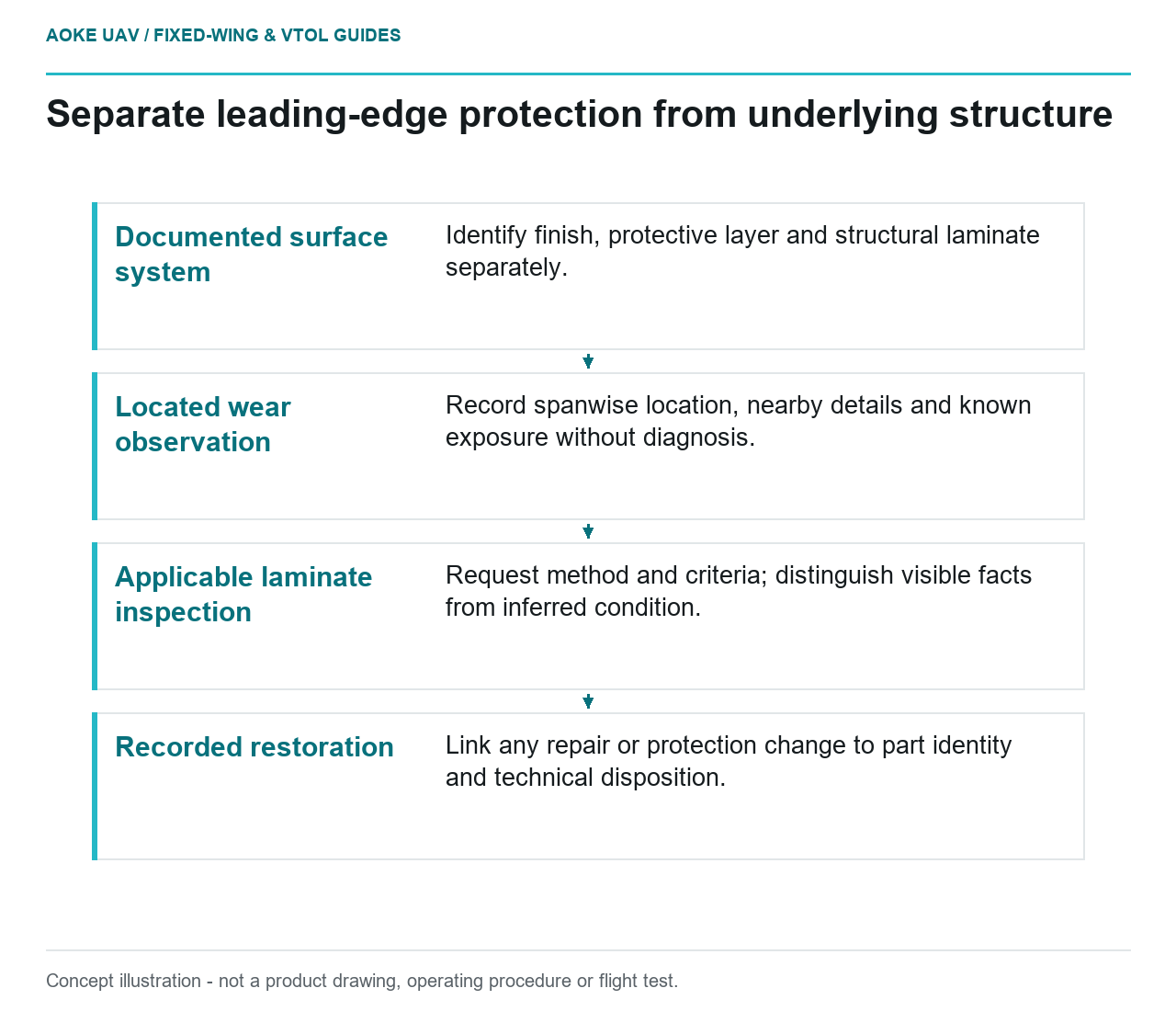
- Documented surface system: Identify finish, protective layer and structural laminate separately.
- Located wear observation: Record spanwise location, nearby details and known exposure without diagnosis.
- Applicable laminate inspection: Request method and criteria; distinguish visible facts from inferred condition.
- Recorded restoration: Link any repair or protection change to part identity and technical disposition.
During a hypothetical civil mapping campaign, a crew notices uneven wear along the leading edge of a multi-meter wing. The aircraft is a large fixed-wing UAV, and the immediate question is which observations belong in a structural inspection request. This is not a landing-load or skid-wear problem, and it is not a guide to refinishing the wing. The article separates protective surface condition, underlying structure and documented disposition. It establishes no allowable erosion depth, remaining-strength estimate or field repair method.
Coatings and sacrificial protection
Identify the surface system described by the aircraft documentation. Ask which layer is intended as a finish, which provides protection and which forms the structural laminate. If a sacrificial strip or coating is present, record its part or material identity and the configuration in which it was installed. Do not assume an aftermarket-looking strip is part of the assessed design.
FAA composite guidance identifies erosion, abrasion, weathering and other exposures as possible causes of deterioration and calls for suitable protection or consideration of degradation. [1] Its context is US certificated aircraft rather than an acceptance standard for this fixed-wing wing. The useful implication is to request the actual protection definition. A worn protective layer and a finding in load-carrying material require distinguishable records, even when both appear in one photograph.
Exposure and local geometry
In the proposed review, record where the wear occurs using the aircraft’s reference system, including nearby joints, tips or other identifiable features. Note the reported exposure circumstances without attributing a specific damage mechanism that has not been established. Preserve previous photographs when available so the reviewer can understand what changed.
Ask the design authority whether the recorded location and geometry affect the applicable inspection requirements. FAA guidance emphasizes that local structural details and service environment influence assessment and that protective features should be appropriate to expected conditions. [1] For the hypothetical industrial fixed-wing mission, do not extrapolate a wear observation from one region to the entire span. Likewise, an apparently uniform surface change does not supply a measurement of underlying material loss or establish a remaining service period.
Inspection of underlying laminate
Request the aircraft-specific inspection instructions and acceptance criteria for the observed condition. A useful report should distinguish what was directly visible from what was inferred. Record exposed edges, missing finish or other observations plainly; avoid diagnosing internal laminate condition from colour or gloss. Any additional inspection must use the applicable method and qualified personnel requirements.
FAA maintenance guidance explains that visible indications can provide limited information about hidden composite damage and that characterization may require different procedures from initial detection. [1] This is why the hypothetical fixed-wing team should not accept a cosmetic assessment as a structural disposition. Nor should it remove finish or sand the area merely to improve the view without an authorized procedure. The explainer provides no basis for deciding how much material may be removed.
Documented repair and finish changes
Ask how a proposed repair or finish change will be documented and how its applicability is established. Record the affected part identity, disposition and installed material system. If a new protective product is suggested, ask what evidence covers its use on this structure rather than assuming its general durability claim applies to the aircraft.
FAA guidance calls for proper restoration of protective surface layers during repair and notes that paint-related thermal effects can matter; it also expects part-specific repair records. [1] For this hypothetical large fixed-wing wing, the closing record should explain the condition found and the documented response. It should not declare remaining strength from appearance, promise an erosion-free service life or substitute a coating supplier’s brochure for the aircraft authority’s acceptance criteria. The objective is a traceable inspection decision, not a polished surface alone.