Concept illustration
Read diagram notes
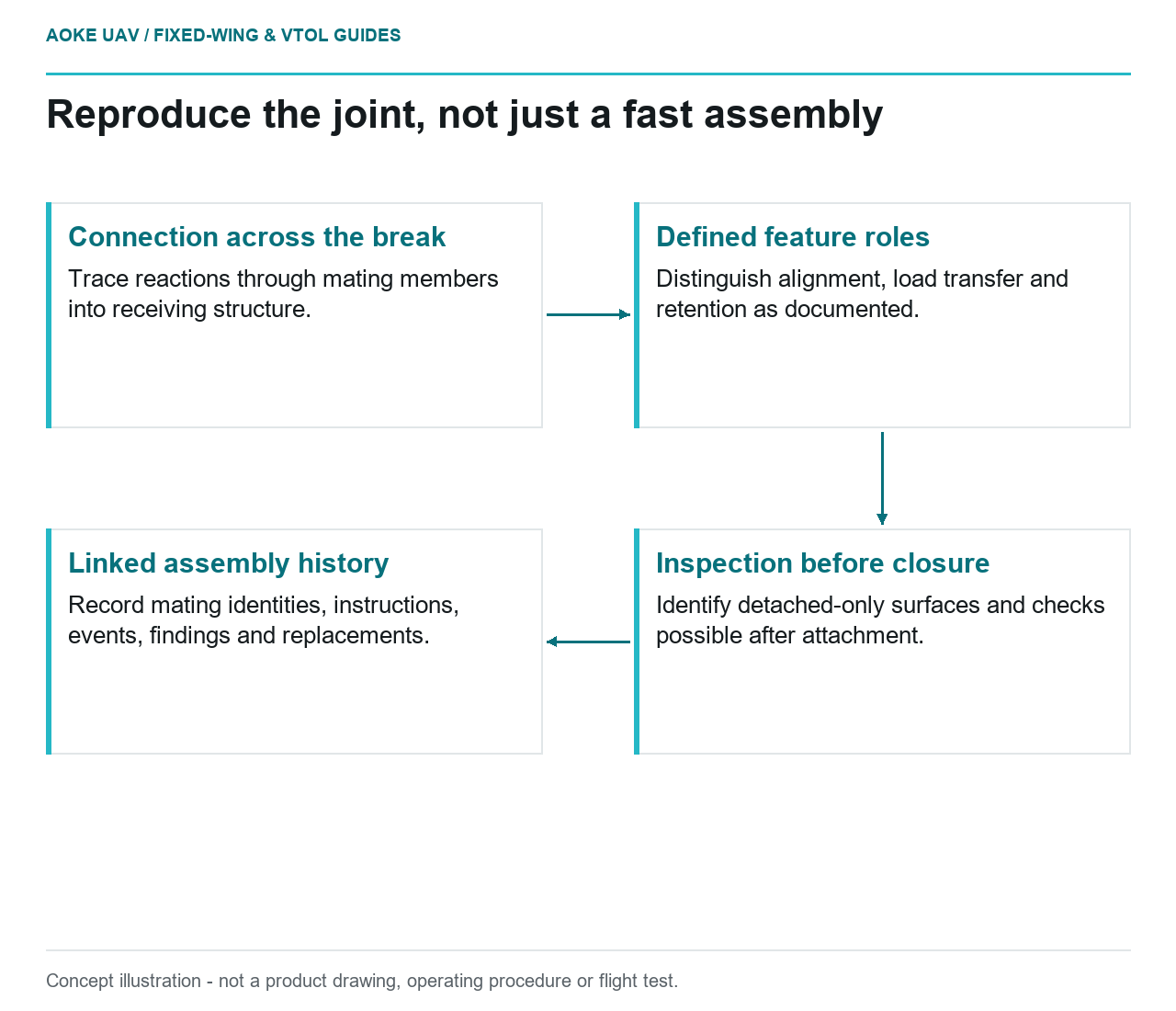
- Connection across the break: Trace reactions through mating members into receiving structure.
- Defined feature roles: Distinguish alignment, load transfer and retention as documented.
- Inspection before closure: Identify detached-only surfaces and checks possible after attachment.
- Linked assembly history: Record mating identities, instructions, events, findings and replacements.
A transport break is an engineering interface
Imagine a civil mapping team carrying a large fixed-wing aircraft by road, removing its multi-meter wings between assignments. The review question is not simply whether the wing can be detached. It is whether the specified assembled configuration can be reproduced, inspected and traced after repeated field handling. This hypothetical integration example is not an GAUTEN product description or an observed operating history.
FAA composite guidance discusses representative structural details, production processes and field maintenance access. Its context is certificated aircraft, not approval of this UAV. It provides a reason to ask for joint-specific evidence rather than treating transport convenience as proof of structural adequacy. [1]
Trace continuity across the break
Ask the designer to mark how the intended wing reactions cross the separation plane and reach the receiving structure. Identify the mating members and the evidence boundary on both sides. If an analysis represents the root with an idealized support, request the assessment connecting that assumption to the actual transport joint.
For this fixed-wing concept, a useful document request is a sectioned drawing accompanied by a load-path explanation. It should distinguish the main structural connection from nearby fairings, covers and electrical connectors. A tidy assembled photograph cannot answer which hidden surfaces were included in the assessment. FAA’s building-block approach addresses structural details and combined-load component behavior, rather than relying only on material-level tests. [1]
Separate location from retention
As a proposed review method, list each feature under alignment, load transfer or retention, allowing multiple roles only where the designer confirms them. Ask how the specified fit is established and how correct engagement is checked. Do not assume the feature that makes assembly easy is the feature intended to resist the important loads.
Request the actual assembly instructions, permitted condition of mating parts, replacement criteria and the documentation controlling any tightening or locking procedure. This article supplies none of those values. An operator should not derive a torque, clearance or service life from a different aircraft’s instructions, or from the appearance of similar hardware.
Plan the inspection before closing the joint
In the hypothetical road-transport workflow, identify which surfaces are visible only while the wing is detached. Ask when they are inspected, what access remains after attachment and how findings are escalated. A confirmation that the exterior seam is flush should be recorded separately from confirmation that the specified inspection was completed.
FAA guidance says composite structures should accommodate field inspection and repair access, and it distinguishes initial visual indications from investigation of hidden damage. It also notes that access, surface condition and lighting matter to visual detection. These are contextual inspection principles, not a validated method for this particular joint. [1]
Request a demonstration using the actual covers, tools and proposed maintenance environment. The review should establish whether a documented inspection is practicable without adding unauthorized openings or removing unrelated assemblies. If necessary access is absent, raise a design or maintenance planning question rather than inventing an informal workaround.
Make assembly history useful
For the proposed fleet record, link the wing and receiving assembly identifiers, applicable instruction revision, inspections, reported handling events and any replacements. This is an editorial suggestion for traceability, not a claim that an undocumented number of assembly cycles is acceptable. FAA guidance calls for repair records tied to part numbers and feedback on service damage to the manufacturer. [1]
Record an unusual fit or damaged locating feature as a specific discrepancy, not merely an extra minute spent during setup. Ask the responsible organization how such a report affects inspection and disposition. Avoid introducing an improvised wear limit just because the aircraft remains easy to assemble.
Judge repeatability, not speed alone
The decision record for this large fixed-wing mapping concept should explain the connection, the reproducible assembly checks and the available evidence. Fast installation is a logistical benefit only within an adequately documented configuration. No GAUTEN joint limits, assembly tests or repair manual were supplied; this explainer therefore ends with evidence requests, not a claim of field readiness or a universal assembly procedure.