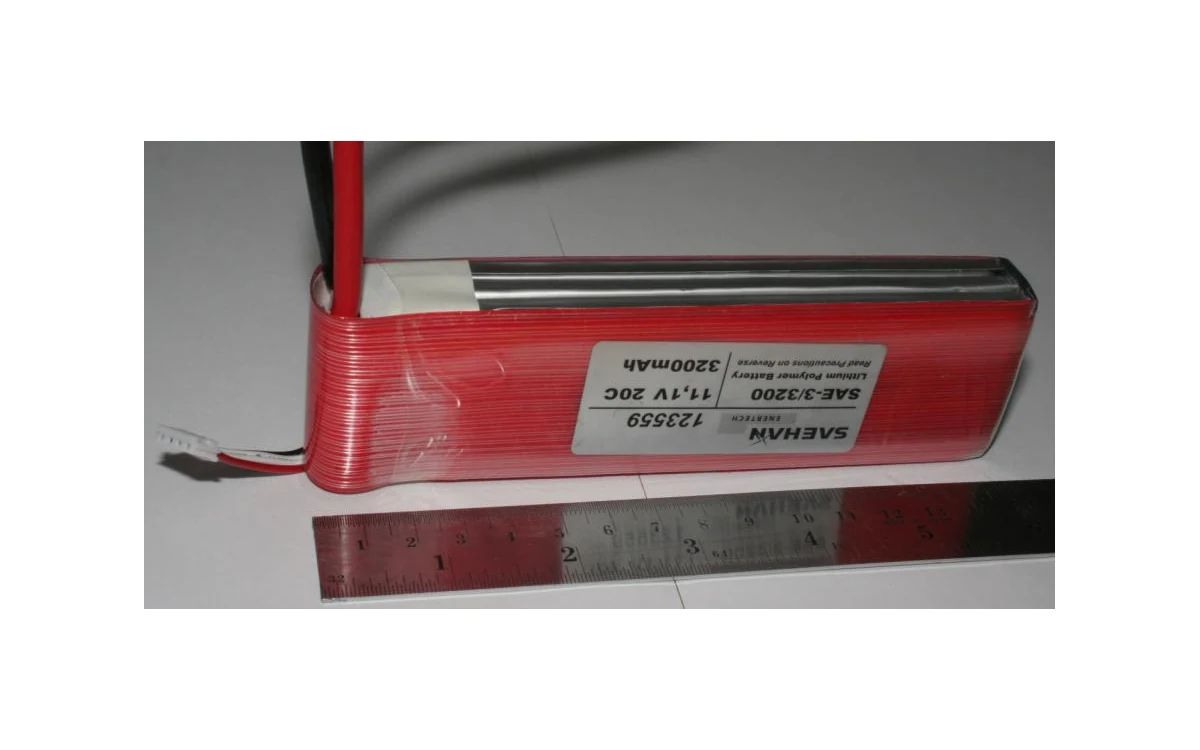
A support team for a hypothetical large fixed-wing mapping operation wants one short charging and storage card for every rechargeable pack it handles. The inventory contains different pack assemblies and charger arrangements, and the underlying instructions have not been reconciled. The immediate task is document control and compatibility clarification, not choosing universal settings. This article explains how to define that evidence boundary without publishing charge rates, storage voltages or an unattended-use assurance.
Chemistry and pack architecture differ
Identify the actual pack assembly, revision and associated manufacturer instructions before discussing a support requirement. A chemistry label alone does not identify the complete assembly or its approved support equipment. Ask whether the relevant documents address the delivered pack, a cell used within it or a different product family. That distinction is particularly important when multiple packs share a similar commercial description.
FAA AC 20-184A states that aircraft lithium battery maintenance and inspection requirements vary with chemical technology and physical construction, and directs attention to manufacturer procedures.[1] It is certification-oriented aircraft guidance, not the maintenance manual for this hypothetical fixed-wing fleet. Here it supports rejecting an unsupported universal recipe; it does not supply settings or make different packs interchangeable.
Charger compatibility and monitoring
Request the documented relationship between each pack, its charger and any required monitoring or support equipment. Preserve hardware and software revisions where the applicable instructions make them relevant. If a charger is described as suitable for a chemistry family, ask which primary evidence extends that statement to the exact pack assembly. Do not infer compatibility from a fitting connector or from an available menu option.
The FAA guidance separately discusses maintenance of battery charging and monitoring systems under manufacturer recommendations.[1] That distinction matters to the hypothetical fixed-wing support record: knowing a pack identity is not the same as knowing that its support equipment and maintenance status are defined. This article does not authorize a charger combination or describe how to program it. Missing compatibility evidence remains a supplier question.
Environmental and maintenance requirements
Build a document matrix rather than a settings table. Suggested columns include pack identity, applicable charger instructions, storage guidance, maintenance reference and unresolved conflicts. The matrix should point to the actual instructions instead of copying isolated numbers without their conditions. Where an instruction depends on a particular environment or pack state, preserve that context rather than reducing it to an all-purpose fleet rule.
AC 20-184A discusses manufacturer-recommended storage procedures, recording charging dates and handling precautions that vary with battery size and configuration.[1] The document does not establish a universal storage interval for the proposed packs. For the large fixed-wing example, its role is to keep storage and support history connected to applicable instructions, not to let a general article invent an acceptable period or a method for treating an abnormal battery.
Applicable instructions and responsible decisions
Ask the responsible maintenance owner to reconcile conflicts or missing documents with the pack and charger manufacturers. Do not silently choose the most convenient instruction from several unrelated sources. Retain the resolution and its configuration scope so a later pack or charger revision prompts the right review. A short support reference can be useful only if it remains traceable to the instructions and decisions that actually govern the equipment.
For this hypothetical large fixed-wing operation, the defensible deliverable is a controlled index of pack-specific requirements with clear unresolved items. Actual charging, storage, handling and abnormal-condition actions remain with the exact applicable primary guidance and responsible personnel. No universal rate, voltage, temperature, containment arrangement or supervision promise is provided here. The article’s value is preventing a convenient summary from acquiring authority that its source documents never gave it.
Related reading
- Battery Health Records and Comparable Mission Evidence
- Composite Material Storage and Shelf-Life Records
Sources
Visual summary
Concept illustration
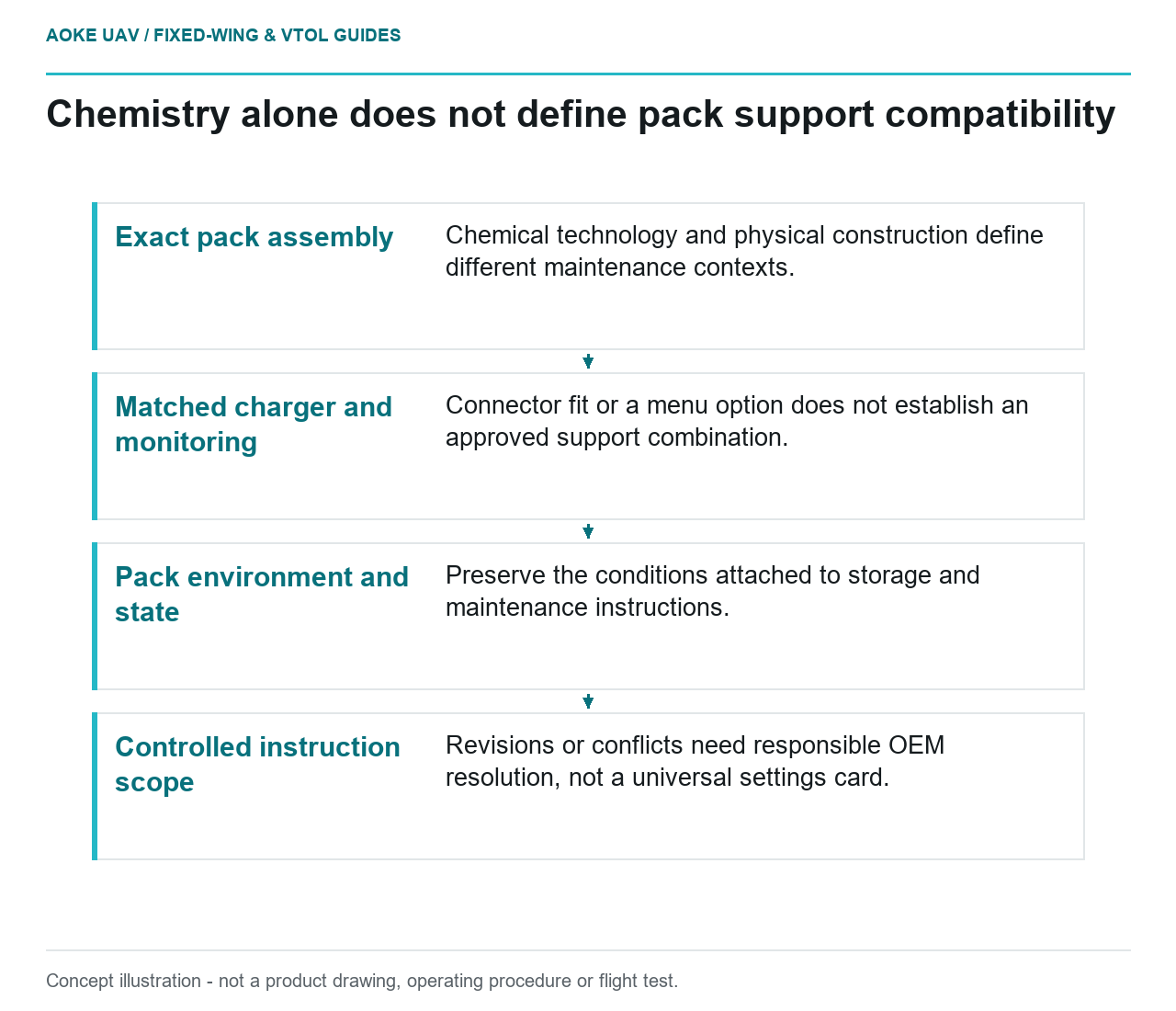
Read diagram notes
- Exact pack assembly: Chemical technology and physical construction define different maintenance contexts.
- Matched charger and monitoring: Connector fit or a menu option does not establish an approved support combination.
- Pack environment and state: Preserve the conditions attached to storage and maintenance instructions.
- Controlled instruction scope: Revisions or conflicts need responsible OEM resolution, not a universal settings card.