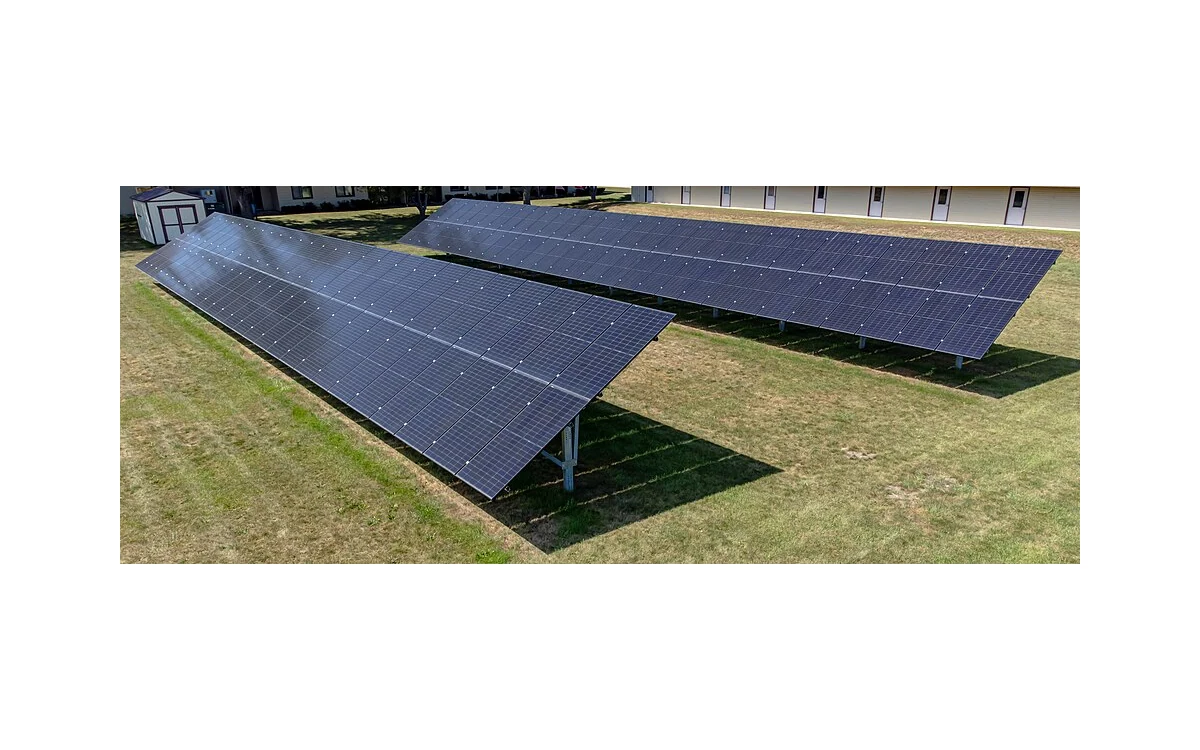
A solar-site thermal proposal needs a defined question before it needs a colorful map. In this hypothetical integration scenario, a large fixed-wing UAV is proposed to acquire a broad overview of a civil solar installation. The asset team wants a list of locations for follow-up. No actual GAUTEN aircraft, inspection result or power-loss estimate is implied. The discussion deliberately stops at reconnaissance scoping because an applicable PV diagnostic method has not been established here.
Required anomaly evidence and module visibility
Ask the asset team what constitutes a useful observation in its own workflow. Is the intended unit a site block, row, module or smaller feature? Must an analyst identify an individual module unambiguously, or is a bounded area sufficient for a later visit? Write that distinction into the deliverable so an overview is not subsequently treated as component-level evidence.
For the proposed fixed-wing dataset, request a sample showing how an observation would be traced back to a row identifier and original frame. Include the asset-register version and a way to distinguish adjacent rows. If identity cannot be resolved, use a location requiring confirmation rather than assigning an uncertain module number. A tidy report is not a reason to hide ambiguity.
Describe the thermal observation without naming a PV defect class. An unusual spatial pattern may justify a review request, but deciding its electrical cause needs the owner’s applicable method and corroboration. This article supplies neither fault-temperature limits nor an electrical acceptance standard.
Sampling and viewing geometry
FLIR’s distance-measurement guidance explains that seeing an object is not equivalent to measuring its temperature accurately and that display zoom does not create additional target sampling. Its discussion is OEM guidance, not validation of a particular airborne solar inspection. [4]
Use that distinction to structure a demonstration. Require the proposed camera, lens, recording mode and viewing geometry to show the actual feature that the owner needs to review. Evaluate the raw thermal frame, not only a resampled mosaic or slide. Ask how observations at the edge of a flight strip will be handled and how unusable views will be excluded.
A large fixed-wing mission should not be priced on the assumption that the aircraft can pause over a selected module for a close view. If the broad survey geometry cannot support the requested detail, narrow the reporting unit or plan a separate appropriate follow-up. Coverage efficiency and diagnostic detail are separate decisions, not interchangeable marketing descriptions.
Operating and environmental context
For the hypothetical contract, request capture times, available site operating-state records, cloud and shadow observations, relevant weather records and image-quality exceptions. These are evidence questions, not invented PV weather thresholds. Ask the owner which environmental and electrical records its actual PV method requires before setting a collection window.
Retain the thermal measurement assumptions as well. FLIR identifies emissivity, reflected apparent temperature, object distance, relative humidity and atmospheric temperature as measurement inputs. Those parameters explain why an image requires context; they do not establish a PV defect diagnosis. [1]
Have the payload integrator demonstrate what is actually recorded. A promised radiometric deliverable should include an example that the asset team can open and examine using the intended software. Avoid assuming that a thermal video stream, a screenshot and an original measurement file contain equivalent evidence.
Separate screening from electrical diagnosis
Propose a handover with distinct fields for observation, measurement limitations, asset identity and follow-up question. Leave electrical interpretation to the asset team’s established procedure. Do not calculate lost production from a warm area, use a palette color as a severity class, or assign a repair priority without the missing method.
The appropriate PV-specific primary inspection procedure remains a prerequisite to diagnostic claims. Until it is supplied, a defensible fixed-wing scope is narrower: document where sufficient imagery exists, identify review candidates, disclose where evidence is inadequate, and preserve the originals. That can support a solar maintenance investigation without pretending the overflight has measured electrical performance or certified the installation.
Related reading
Sources
Visual summary
Concept illustration
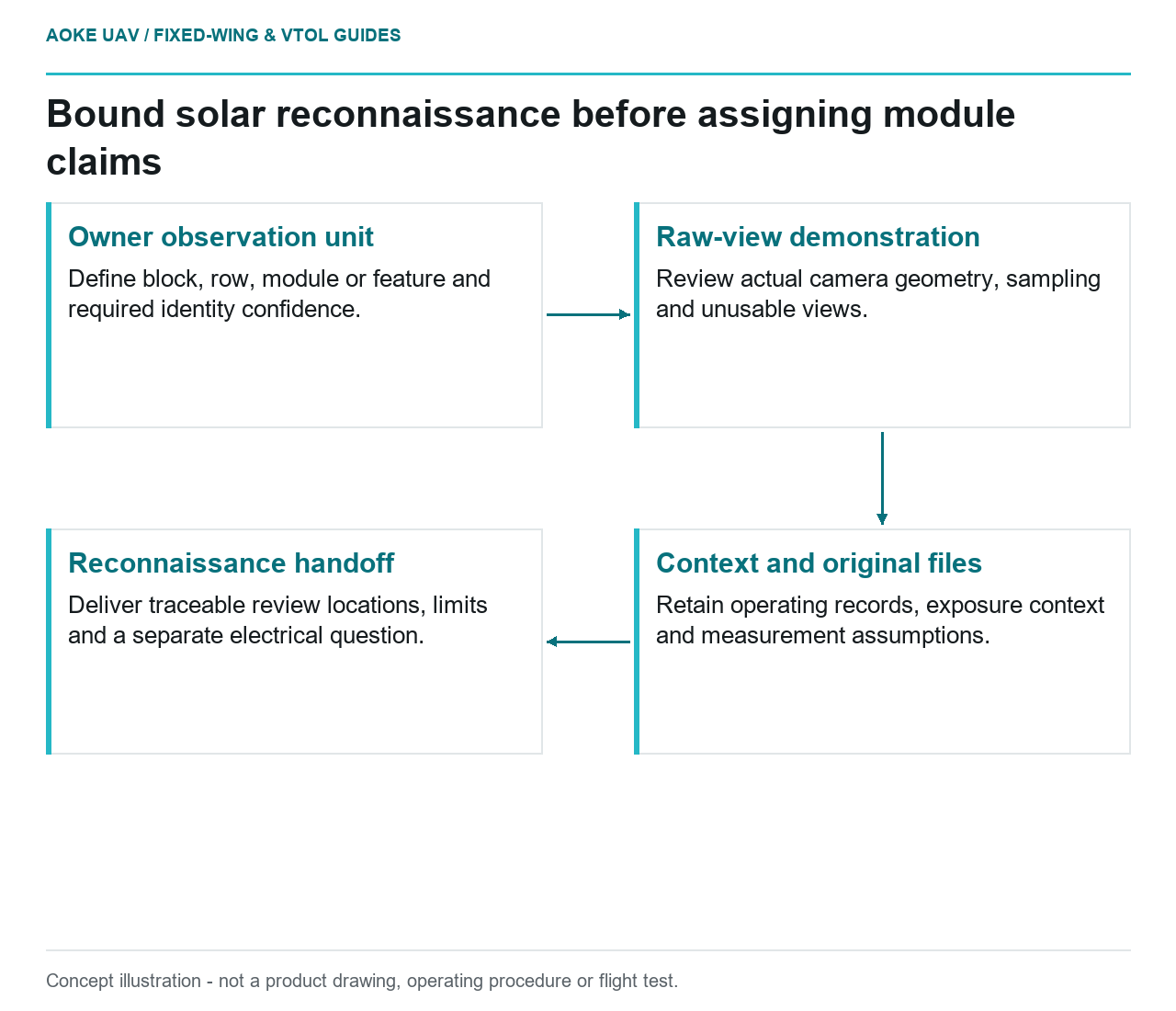
Read diagram notes
- Owner observation unit: Define block, row, module or feature and required identity confidence.
- Raw-view demonstration: Review actual camera geometry, sampling and unusable views.
- Context and original files: Retain operating records, exposure context and measurement assumptions.
- Reconnaissance handoff: Deliver traceable review locations, limits and a separate electrical question.