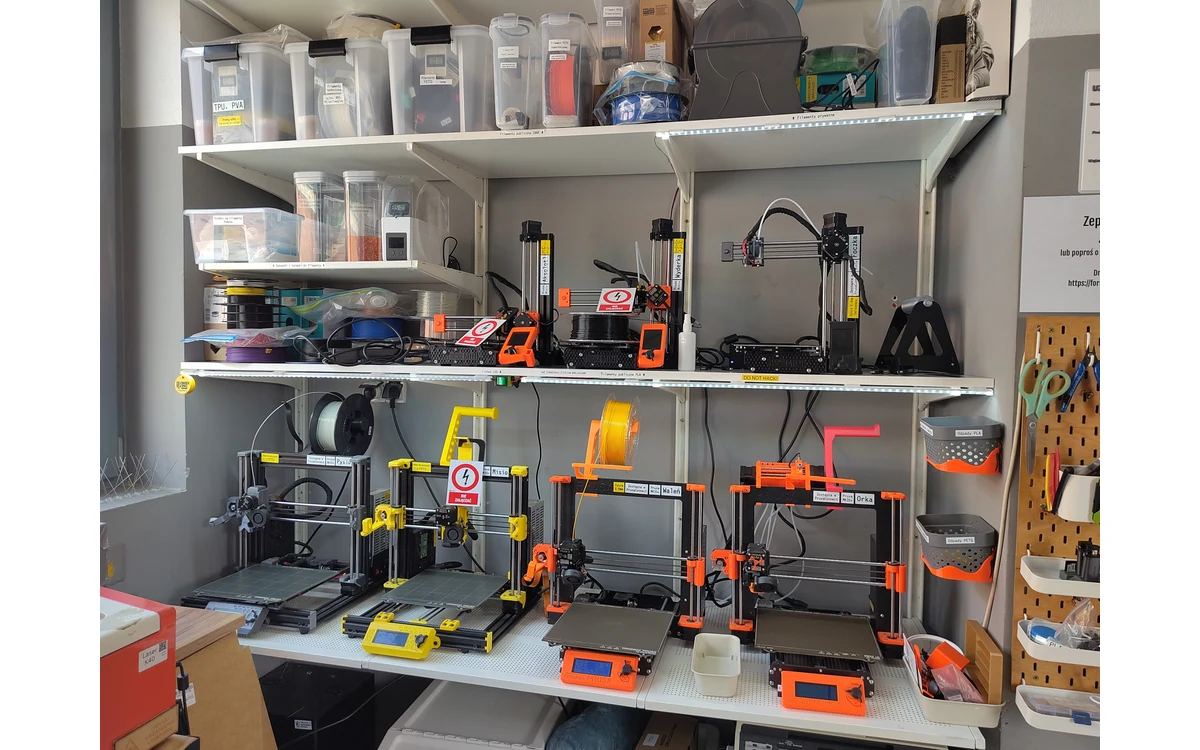
A replacement section of a wing mold prints differently from its predecessor. Blaming the machine immediately could miss a changed material lot or an undocumented storage history. In this hypothetical large civil fixed-wing tooling program, the goal is not to diagnose a failure from appearance. It is to preserve enough information to compare the actual inputs and identify which differences require review before accepting the replacement.
Material lot and supplier identity
Begin with the specified feedstock, its supplier designation, relevant version, and lot identity. Keep delivery and compliance records linked to the actual material used rather than to a generic stock-bin name. If multiple containers or lots contribute to a build, record that relationship where the applicable process requires it. Do not assume an unopened container and a partly used one share identical history.
NASA-STD-6030 defines feedstock control as part of its candidate material process and identifies controls for different feedstock forms. Its spaceflight framework distinguishes material specification from the build process and post-processing. [5] That structure offers useful traceability questions, but its requirements are not automatically a UAV tooling specification, nor does the document establish the condition of this workshop’s material.
Storage and conditioning instructions
Retrieve the instructions for the actual feedstock and equipment combination before selecting storage or conditioning conditions. Record their identifiers and any departures for review. Avoid generic drying times or temperatures: a process intended for one material cannot simply be assigned to every filament, powder, or liquid resin. This article establishes no moisture limit, storage environment, shelf life, or drying recipe.
NASA includes feedstock handling and storage among potential influences on the AM build process. [5] Stratasys also discusses moisture considerations for its ULTEM 1010 composite tools, but that finished-tool characterization is not a universal incoming-feedstock conditioning instruction. [3] Distinguishing those two contexts prevents a plausible-looking temperature from being borrowed from the wrong stage of manufacturing.
Machine-to-build traceability
For the proposed fixed-wing record, connect the issued material to the machine, build identity, tool section, and controlled build definition. Capture processing interruptions and authorized deviations through the relevant workflow. The intention is to let a reviewer reconstruct what was used, not to infer material condition from an attractive finished surface or from the fact that the same CAD model was selected.
A useful comparison starts with the predecessor’s accepted configuration and lists known differences without assigning blame. Was the material designation unchanged but the lot different? Did the build move to another machine? Were finishing instructions revised? NASA’s process-control discussion includes machine settings, software, and material-related variables, illustrating why feedstock records should remain connected to the wider process rather than become an isolated inventory exercise. [5]
Link deviations to the finished tool
Have the responsible tooling authority decide what evidence is needed when a material record is incomplete or a conditioning departure occurred. Mark the affected build and prevent an unresolved input from disappearing when the tool is assembled. An absence of records is not proof of a defect, but it is also not evidence that the build repeated the previously accepted process.
For a large fixed-wing mold set, the final acceptance concerns the finished tool and its intended manufacturing use. Preserve material provenance alongside dimensional, assembly, and process checks rather than substitute one for the others. The resulting record supports a specific decision about that section. It does not establish aircraft material allowables, prove a root cause, or qualify every later build made from the same supplier’s feedstock.
Related reading
- Composite Material Storage and Shelf-Life Records
- Changing Printer or Material During Tool Production
Sources
- [5] NASA-STD-6030: Additive Manufacturing Requirements for Spaceflight Systems
- [3] FDM for Composite Tooling: Design Guide 2.0
Visual summary
Concept illustration
Read diagram notes
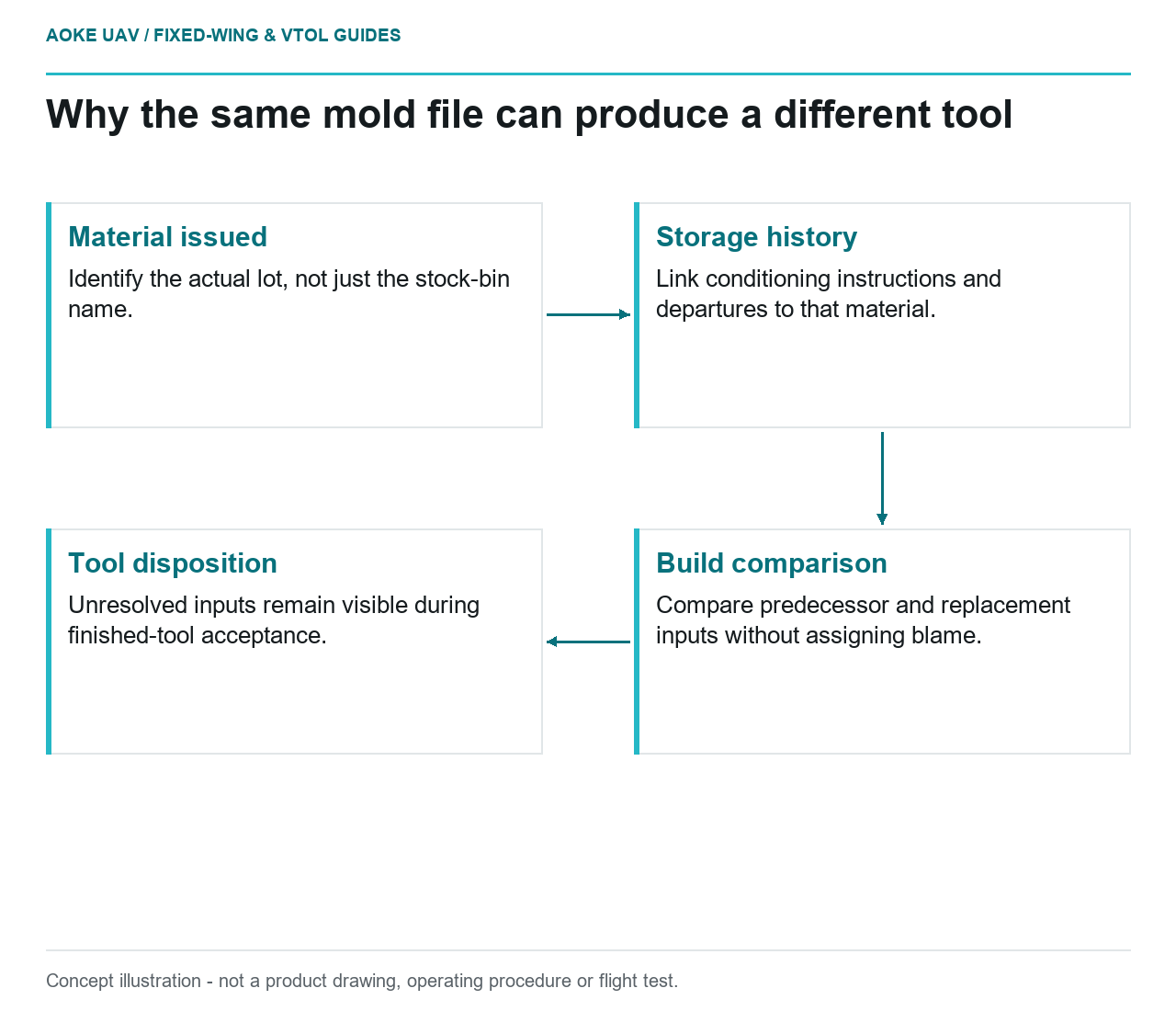
- Material issued: Identify the actual lot, not just the stock-bin name.
- Storage history: Link conditioning instructions and departures to that material.
- Build comparison: Compare predecessor and replacement inputs without assigning blame.
- Tool disposition: Unresolved inputs remain visible during finished-tool acceptance.