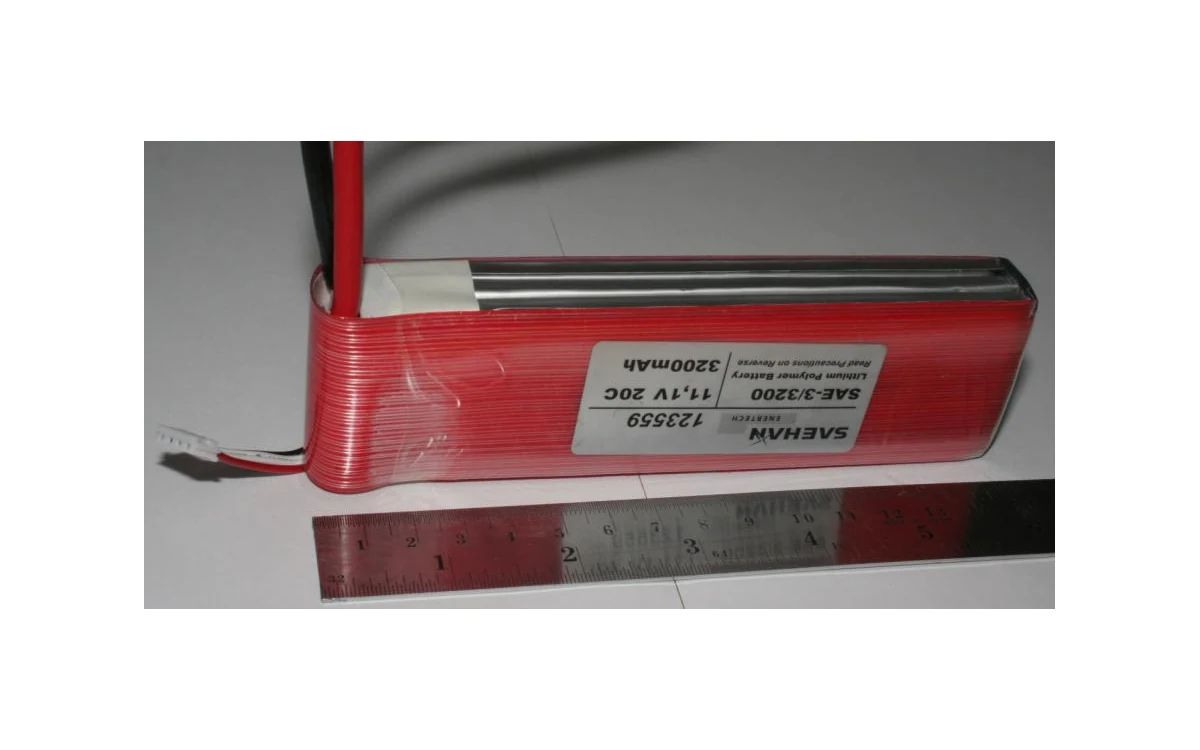
A hypothetical large fixed-wing survey fleet rotates several battery packs between aircraft. The packs have similar labels, and the support record notes only battery changed. That entry leaves the next reviewer unable to connect a mission log or maintenance history to the actual assembly. The useful task is to control the approved configuration relationship, not to make a generic battery-swap procedure. This article asks what records and applicable documentation should define interchangeability for the intended aircraft.
Pack identity and compatibility
Record the exact pack assembly identity and revision together with the aircraft configuration to which its compatibility claim applies. Request the primary document defining that relationship. Similar nominal voltage, connector appearance or external shape should not be substituted for the missing compatibility evidence. If the supplier offers several revisions under one commercial name, ask which revisions the applicable installation documents actually cover.
AC 20-184A includes installation particulars, configuration-control information and aircraft-specific battery replacement considerations.[1] Its certification context is not automatically the basis for every civil UAV. The relevant editorial lesson is that replacement is connected to a defined installation and maintenance record. The circular does not identify an interchangeable pack for this hypothetical large fixed-wing aircraft, so that approval relationship remains a requested input.
Mass and loading configuration
For the example aircraft, ask whether each candidate pack’s documented mass, location and retention arrangement are represented in the applicable aircraft loading and installation information. This is a configuration question rather than a proposed balance calculation. The article supplies no allowable center-of-gravity range or mass tolerance. Those requirements must come from the actual airframe’s engineering and operating documentation, not a generic discussion of rechargeable batteries.
Keep the evidence association explicit if a tray, restraint or pack geometry differs. A record should show which combination has been assessed, rather than treating a battery part change as purely electrical. If an offered substitute lacks the relevant physical installation evidence, identify that gap separately from its electrical documentation. This prevents one apparently compatible attribute from standing in for the whole fixed-wing installation.
Connectors and monitoring configuration
Ask which electrical interfaces and monitoring definitions accompany each pack. Retain the applicable harness and monitor configuration references with the pack-to-aircraft association. Do not assume that a physically mating connector proves all relevant electrical requirements are met. Nor should this evidence review become a sequence for making or breaking live connections; actual handling belongs to the exact aircraft and pack instructions.
ArduPilot’s Common Power Module documentation describes measurement scaling, offsets and calibration for its example analog monitor.[2] It does not establish settings for this aircraft or a replacement pack. Its relevance is traceability: a mission log should identify the measurement configuration that produced its battery fields. If that configuration changes with a swap, the record needs to preserve the change without guessing new parameters.
Maintenance status and traceability
Request the maintenance and storage status required by the applicable pack documentation, linked to the individual assembly. AC 20-184A discusses replacement records and manufacturer-based maintenance information.[1] Do not invent a service interval or accept a generic ready label as proof that the relevant instructions have been satisfied. A pack can have a complete identity record while its maintenance disposition remains unresolved.
A useful handoff is a controlled compatibility matrix plus a pack history that references each aircraft installation. For the hypothetical large fixed-wing fleet, the matrix should expose missing documentation rather than silently declaring all similar packs interchangeable. The result is not a new operating procedure or assurance of serviceability. It is an auditable connection between exact hardware, applicable installation evidence, monitoring records and the maintenance decisions made under the responsible guidance.
Related reading
- Tracking Structural Mass Growth During Payload Integration
- Revision Control for Printed Airframe Tooling
Sources
- [1] Guidance on Testing and Installation of Rechargeable Lithium Battery and Battery Systems on Aircraft, AC 20-184A
- [2] Common Power Module
Visual summary
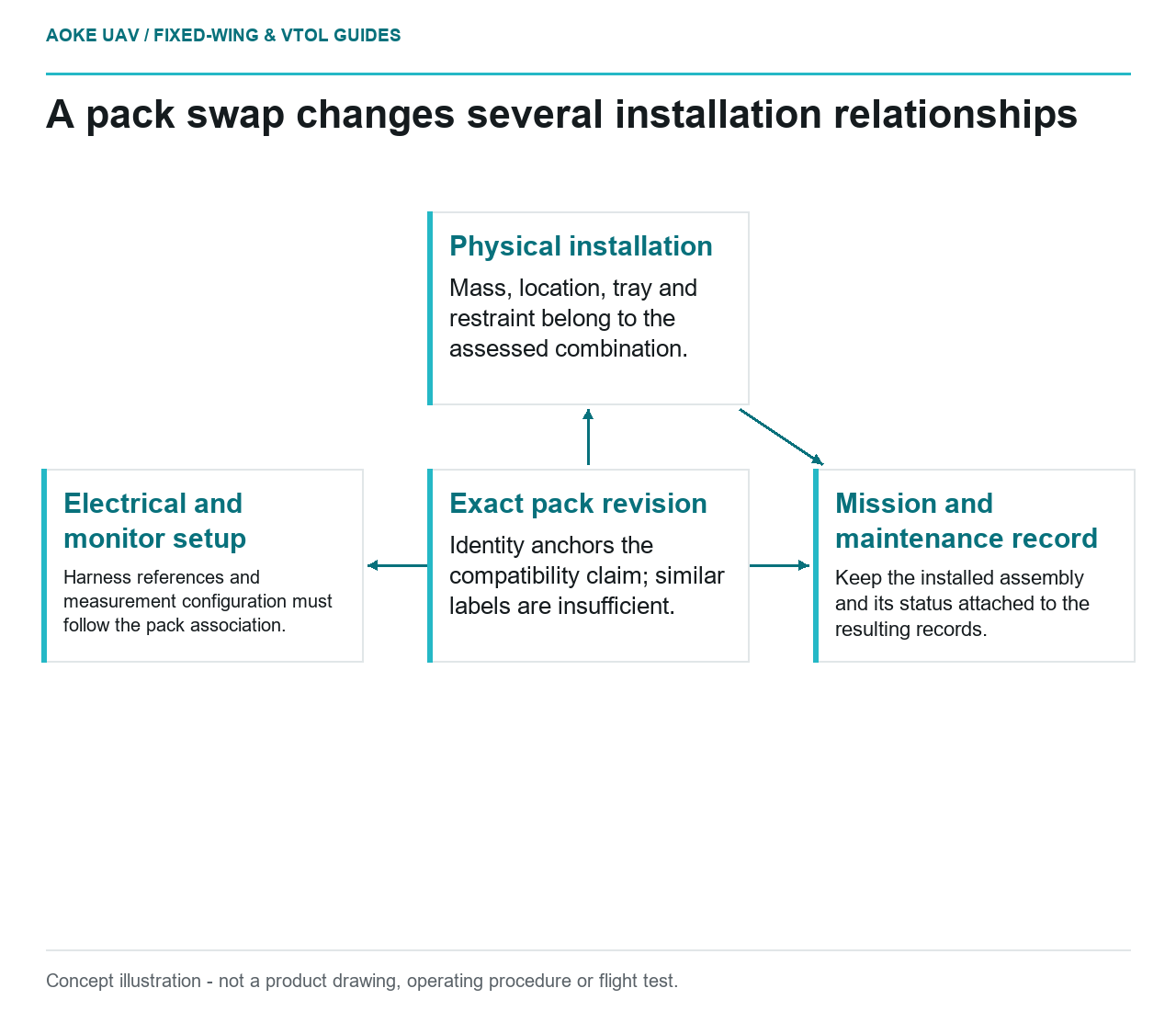
Concept illustration
Read diagram notes
- Exact pack revision: Identity anchors the compatibility claim; similar labels are insufficient.
- Physical installation: Mass, location, tray and restraint belong to the assessed combination.
- Electrical and monitor setup: Harness references and measurement configuration must follow the pack association.
- Mission and maintenance record: Keep the installed assembly and its status attached to the resulting records.