Concept illustration
Read diagram notes
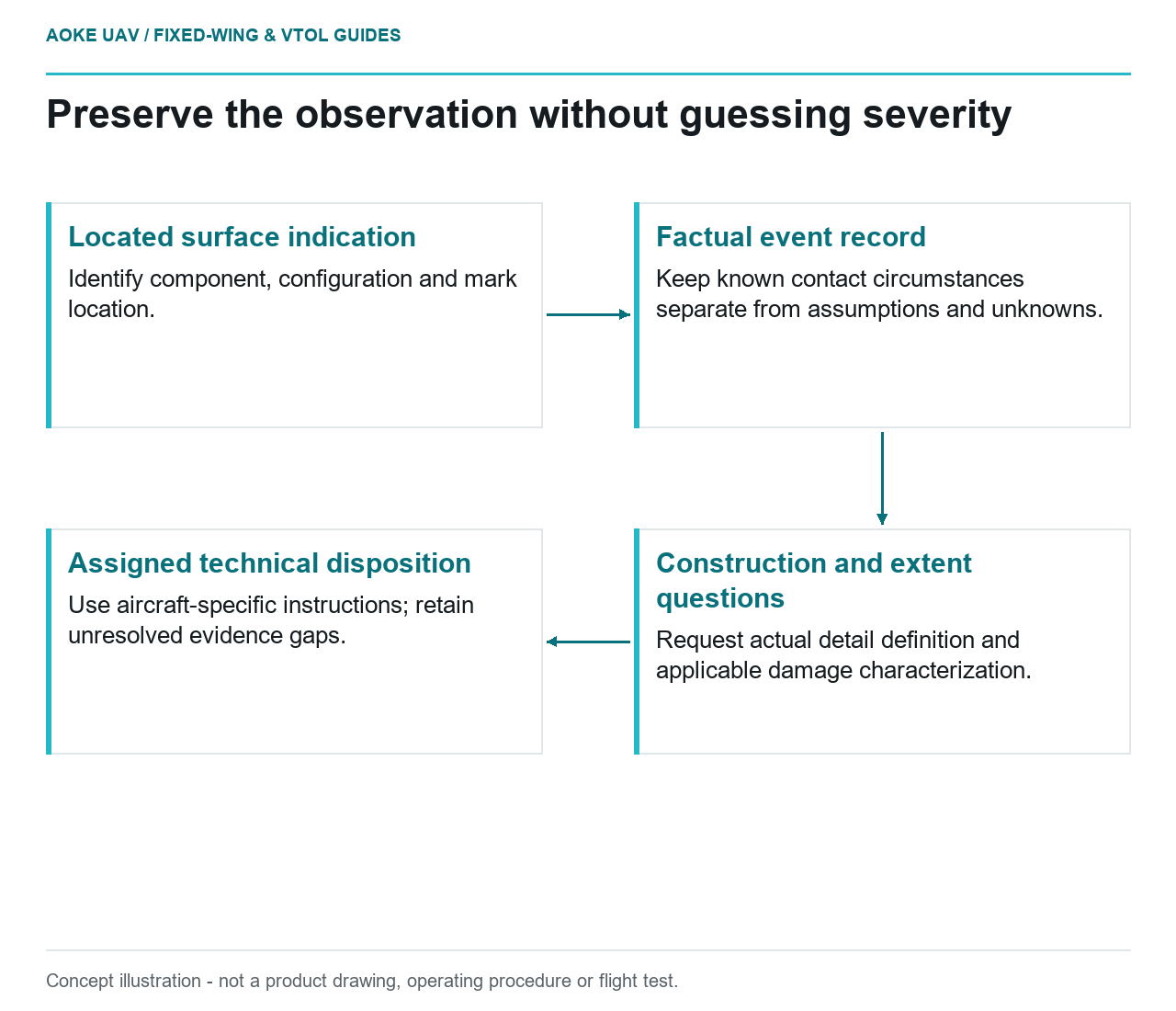
- Located surface indication: Identify component, configuration and mark location.
- Factual event record: Keep known contact circumstances separate from assumptions and unknowns.
- Construction and extent questions: Request actual detail definition and applicable damage characterization.
- Assigned technical disposition: Use aircraft-specific instructions; retain unresolved evidence gaps.
A small mark on a wing is an observation, not a measurement of its remaining strength. Imagine a hypothetical large fixed-wing survey aircraft whose composite wing touches transport equipment at a remote civil project site. The mark looks minor, but the team has no applicable damage limits in front of it. This original scenario concerns evidence collection and escalation, not a diagnosis, a repair instruction, or a disposition of an actual aircraft.
Surface appearance and internal damage
FAA composite guidance distinguishes visible damage indications from the hidden damage that may require additional investigation. It also explains that visual inspections depend on prescribed conditions, including access, lighting, surface finish, cleanliness, and changes in dent appearance over time. Surface appearance is therefore only part of a documented detection method. The guidance provides certification and maintenance context, not an acceptance threshold for this UAV. [1]
In the hypothetical fixed-wing transport event, record what can actually be observed without assigning structural severity. Locate the mark against a recognizable aircraft reference and identify the component and configuration. Describe the surface indication separately from the reported event. “Small mark” should remain an observation, not silently become “small internal damage” or “safe to continue.”
Sandwich crushing and delamination concepts
Conceptually, the review must distinguish damage in a skin, an interface between laminate layers, and the interior of a sandwich construction. The purpose of that distinction here is to frame questions for the responsible specialist, not to identify the wing’s construction from its appearance. Ask for the actual drawing or material definition before choosing which damage mechanisms are relevant.
FAA guidance discusses damage characterization, residual strength, and structural detail effects, including the need for supported consideration of damage location and combined loads. It also calls for procedures capable of determining the extent of damage before repair. [1] For a large fixed-wing aircraft, a mark close to a joint or attachment should prompt a location-specific question, not a universal rule that all marks of the same visible size are equivalent.
Documenting an event without guessing severity
Build the proposed event record around facts: when contact was noticed, what object was involved if known, how the wing was supported, and which configuration was present. Preserve original photographs and distinguish first-hand observations from later assumptions. If the contact force or earlier condition is unknown, state that uncertainty rather than estimating an impressive-looking number. These are editorial recordkeeping recommendations, not a substitute inspection procedure.
The FAA guidance connects service-event reporting with damage-threat assessment and future maintenance decisions. It also calls for maintenance documentation to carry part-specific repair information. [1] For this civil fixed-wing scenario, that supports asking how event details will reach the organization responsible for disposition. A photograph filed only in a project chat may not be available to the person later assessing the same wing.
Escalation to approved inspection procedures
Escalation should identify the question that remains unanswered: construction identity, internal extent, applicable allowable damage data, or a suitable inspection method. FAA guidance says documented allowable and repairable damage limits need supporting analysis and tests. It also states that complete damage characterization may require methods different from initial detection. [1]
Request the applicable aircraft or component instructions, the coverage expected from the proposed inspection, and the authority responsible for deciding the next action. If those documents are unavailable, record the gap explicitly. Do not create a field acceptance rule from a thumbnail photograph, a fingernail comparison, or another aircraft’s maintenance manual. The article intentionally separates reporting an indication from determining whether this large fixed-wing aircraft may return to service.
Decision boundary
The useful result is a traceable observation and a clearly assigned technical assessment, not reassurance based on appearance. This article supplies no allowable mark size, tap-test acceptance rule, or continued-flight authorization. Preserve uncertainty until the applicable procedure and responsible reviewer resolve it; an honest unresolved damage question is more informative than an unsupported cosmetic label.
Related reading
- Belly Protection and Landing Loads in Composite UAVs
- What to Do With a Damaged Printed Fixture Record