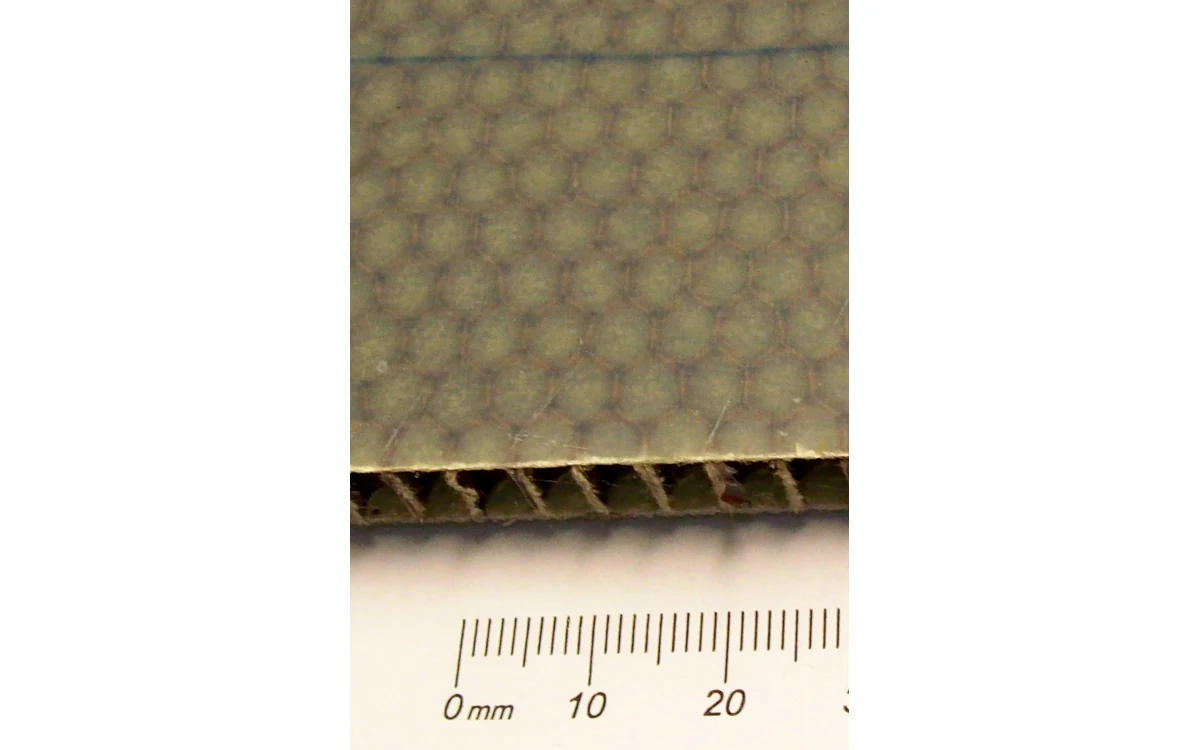
A familiar sound is not the same thing as an answered damage question. In this hypothetical scenario, a large fixed-wing civil survey aircraft has a sandwich wing, limited rear access, and an uncertain internal indication. Someone proposes tapping the surface and listening for a difference. The useful discussion is what such an inspection would need to demonstrate, not how to perform a homemade test or declare the wing fit for flight.
What an inspection is trying to detect
First identify the defect being investigated and the construction in the affected region. FAA repair guidance discusses tap testing for voids or delaminations in thin-face-sheet honeycomb construction and notes that its reliability has limits. That is a narrower description than “a test for any composite damage.” The circular supplies maintenance context, not a universal acceptance method for a fixed-wing UAV. [5]
For the hypothetical wing, request the material definition and the suspected damage mechanism before choosing an inspection. Is the question about a local disbond, internal laminate damage, core condition, or something not yet identified? Record that uncertainty. A method that answers one of those questions should not be reported as having answered them all. The article provides no tapping force, tool selection, or sound-based acceptance threshold.
Geometry and access limitations
Map the proposed inspection area against the actual wing detail. Ask how thickness changes, internal supports, repairs, edges, and access restrictions are represented in the applicable procedure. These are proposed coverage questions for the scenario; they are not claims that every change in sound indicates damage. The purpose is to prevent an operator from comparing unlike regions without recognizing the difference.
FAA composite guidance emphasizes that methods for characterizing damage must be able to establish its extent and that initial detection and subsequent characterization can require different procedures. It also identifies access as an inspection consideration. [1] For a large fixed-wing wing with limited rear access, ask which faces and internal regions the method actually assesses. Any unassessed region should remain visible in the report rather than disappearing behind the phrase “wing inspected.”
Reference conditions and operator training
Ask what reference condition makes the proposed comparison meaningful. FAA tap-test guidance includes a caution about reliability without a calibration standard for some construction. It does not establish a transferable laminate or damage limit for the example aircraft. [5] Request the actual procedure and applicable reference basis rather than improvising one from an apparently healthy area of unknown history.
Personnel competence is a separate requirement from owning a tool. FAA composite guidance says people involved in damage disposition and repair need the skills for the specific supporting tasks and composite part. [1] In this proposed review, ask who is qualified to conduct the inspection, interpret the result, and resolve indications. Do not assume that an experienced survey pilot or a general mechanical technician automatically has the relevant composite inspection competence.
When another method is required
Before work begins, define what happens when the method cannot resolve the question or cannot cover the required region. FAA guidance distinguishes limited visual indications from a complete damage characterization and requires documented, substantiated inspection capability. It also explains why some weak bonds are not reliably detected after processing. [1] No normal-sounding response should be promoted into evidence for bond strength or airworthiness.
For the hypothetical civil fixed-wing project, request a report that separates the area examined, method reference, observed indications, unresolved coverage, and the responsible technical disposition. Another method may be needed, but selecting it requires the actual construction and defect question, not a generic ranking of inspection technologies. If no applicable procedure has been identified, the correct deliverable is an unresolved inspection requirement, not a completed pass box.
Decision boundary
Tap testing may belong in a qualified inspection plan, but the plan must define its purpose, applicability, references, coverage, and acceptance basis. This article cannot supply those aircraft-specific elements. For the large fixed-wing scenario, keep the observation, the method’s limitations, and the eventual aircraft disposition as separate records. A reassuring sound is not permission to fly.
Related reading
Sources
- [1] Composite Aircraft Structure, AC 20-107B including Change 1
- [5] Repairs and Alterations to Composite and Bonded Aircraft Structure, AC 43-214A
Visual summary
Concept illustration
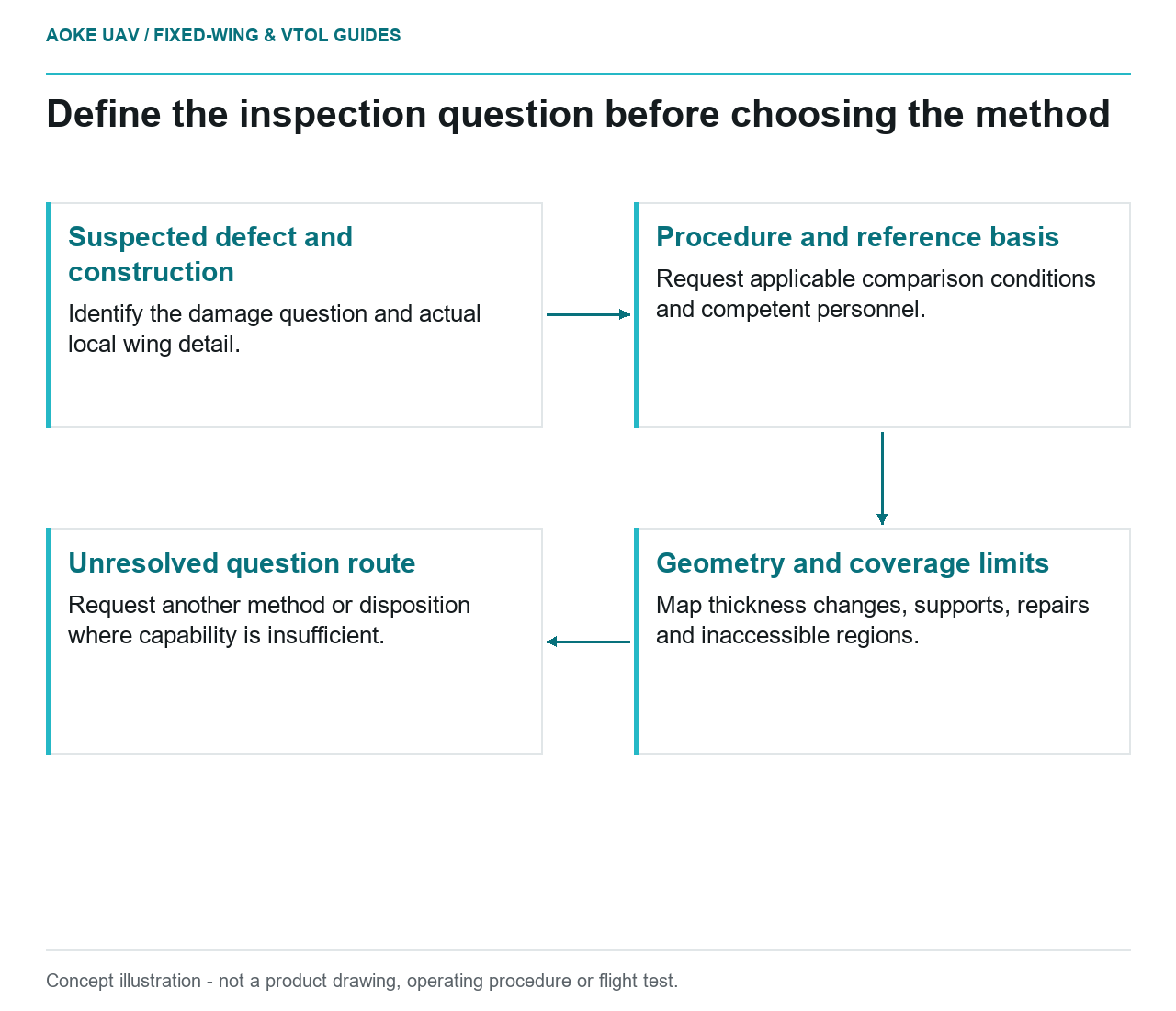
Read diagram notes
- Suspected defect and construction: Identify the damage question and actual local wing detail.
- Procedure and reference basis: Request applicable comparison conditions and competent personnel.
- Geometry and coverage limits: Map thickness changes, supports, repairs and inaccessible regions.
- Unresolved question route: Request another method or disposition where capability is insufficient.